AI Search Blog

A Freelance Writing Reality: Loneliness
For the most part, I love the fact that I get to work from home.
I get to walk my dog, wear sweatpants, and don’t have the office interruptions that are productivity’s worst nightmare. I can really knock out some writing assignments with long, uninterrupted stretches of silence.

For the most part, I love the fact that I get to work from home.
I get to walk my dog, wear sweatpants, and don’t have the office interruptions that are productivity’s worst nightmare. I can really knock out some writing assignments with long, uninterrupted stretches of silence.
But lately, I’ve been feeling really lonely. And I think this is something freelancers who work independently need to talk about more than we do.
Sure, I have Slack groups and a few fellow freelancers I go back and forth with online on a fairly regular basis, but it’s not a real substitute for face-to-face human interaction. And because I live in a fairly rural area, there aren’t a lot of industry meet-ups for me to attend. Co-working spaces aren’t realistic for me here, either.
So what’s a freelance writer to do?
Admitting Freelance Writing Has Its Caveats
I think the first step is admitting, openly, that freelancing/working from home isn’t always all rainbows and unicorns.
For a long time, I never wanted to share that I was struggling with loneliness because I felt guilty. Guilty that I had the opportunity to create my own schedule, to earn more than if I had a set annual salary, and to not wash my hair for three days if I didn’t want to.
I saw people I love having to go to jobs they don’t even like, day in and day out. And here I was, living the dream, being my own boss. So how could I complain?
But the thing is, as time passes, I realize I actually do miss some of the things that come from working with other people.
It gives you something to talk about at night over dinner. You build relationships with your co-workers, who act as a support network for you when you’re having a crap day. There are people around for you to go out to lunch with.
But when you work alone, you don’t exercise those social brain muscles. And not only is it hard on you emotionally at times, but mentally, it can be isolating.
Taking Steps Toward Better Mental Health
I know the fact that I spend 90% of every day within the exact same square footage (since I both work and live at home) is not necessarily a good thing.
There’s no outside stimulation in this space, which can curb my ability to be creative and inspired. Plus, I can go four hours without speaking a word out loud or hearing a sound (I can’t listen to music or watch TV while I write—too distracting.)
I know that it’s important for my mental health to step out of this environment every once in a while, so I’ve been trying to go work in a coffee shop once every week or so (to at least have the noise and scenery of human activity around me.)
Along with this, I’ve been making it a priority to go to exercise classes, where I get to interact with some familiar faces each week. I’m also working toward using the warm summer weekends as opportunities to travel—to get out of town and experience new things. That sometimes means taking on less work, too. I’m okay with that—I think this is important.
And finally, I’ve been asking fellow freelancers how they cope with loneliness. Just starting a dialogue about this helps me feel less alone.
I'd love to hear from you: Do you struggle with loneliness while freelancing? How do you cope? Tweet me @kaleighf.
This article originally appeared in my newsletter, A Cup of Copy. Sign up and get these free tips sent right to your inbox every other Wednesday.




Things I Wish I’d Known When I Started Freelance Writing
I started freelance writing about two and a half years ago. I was doing it on the side, and eventually, I realized that with the referrals I was getting, it was feasible to make it my full-time gig.
I started freelance writing about two and a half years ago. I was doing it on the side, and eventually, I realized that with the referrals I was getting, it was feasible to make it my full-time gig.
(This story is longer, and I shared it last week on Being Freelance if you’re interesting in hearing the whole thing.)
But when I finally made the switch, I quickly learned a few key lessons that only experience can teach.

I want to save you from those experiences. Learn from me, won’t you?
Save for Tax Season
I work with an accountant for the bookkeeping and taxes of my business, because I abhor it. I’m completely intimidated by that side of things, so I defer to an expert. But even though I faithfully pay my estimated quarterly taxes (both federal and state, mind you) I have owed at tax time every year on April 15. Not a ton, but I owed. No tax return for me.
The lesson here is that even though you’re getting as close to your projected income as you can with those estimated payments, there’s a chance you’ll still end up owing at the end of the year. This is an issue for freelance writers because our overhead is so low that deductions are limited. You’ve got a computer, a desk chair, and desk…and not a lot else.
Keep a reserve of at least $2,000-$5,000 in the account you pay your taxes from in April, ‘cause there’s a good chance Uncle Sam is gunna claim it.
Make Retirement a Priority
I had a nice retirement match at my first job out of college, and setting that whole situation up was a breeze because the employer helped me through the process. Once I left that job, I quickly realized that to keep on pace with my retirement planning, I needed to make it a priority and set up some accounts of my own.
I worked with a local broker to establish a Roth IRA and a SEP IRA that I could contribute to on my own, and make regular, monthly contributions to these investments.
It’s really easy to let this slip down the priority list when you’re doing a million other things, but be sure to do this early on when you start as a freelance writer. Time is money when it comes to compound interest, so don’t put it off. It’ll cost ya.
Find a Niche
Hungry, new freelance writers often take any job because, MONEY. I get it. I did it, too. But as soon as I defined my niche as a writer (for me, it was with SaaS companies) I started getting more consistent work and better, more relevant referrals. I came to know a lot about the subject matter they were interested in. I could showcase testimonials that were impressive for new, like-minded clients.
Once your workload picks up and you’re no longer sweating the need for more freelance writing gigs to pay your bills, transition your way into a niche. The sooner the better.
There is so much more I could talk about on this subject, but these three topics are a good start.
Have more questions for me? Just tweet me.
This article originally appeared in my newsletter, A Cup of Copy. Sign up and get these free tips sent right to your inbox every other Wednesday.

Juicy, In-Depth Lessons on Creating Effective Copy
Do you see that title? It’s wordy.
Just like the posts I want to share with you today.
Part of my daily work as a freelance writer is putting together long, in-depth pieces on…you guessed it…writing.
Do you see that title? It’s wordy.
Just like the posts I want to share with you today.
Part of my daily work as a freelance writer is putting together long, in-depth pieces on…you guessed it…writing.
Why? Because people want data-backed approaches to writing.
They want to write to drive conversions, to tap into emotions, and to ultimately increase sales.
Great Posts Aren’t Short
When I write a meaty piece of content on these topics, they’re never short. Instead they’re thorough, researched, and loaded with examples.
But, I know not everyone is up for reading 3,000+ words.
That’s why I wanted to condense some of my most helpful articles into short summaries (and then you can decide if you want to read more from there.) We’ll call this the TL;DR edition.
How to Use Scarcity to Increase Sales (as seen on SumoMe)
There’s a simple marketing strategy that has been time tested and has worked over and over again: Scarcity. Here's a quick summary of the tactics I'll cover:
- Purchase Countdowns
- Sale Price Countdowns
- Next-Day Shipping Countdowns
- Seasonal Offers
- Low Stock Notices
- Limited Production (Exclusivity)
- Spotlight Customer Behavior
- Use Numbers to Indicate Popularity & Demand
- Leverage Real-Time Activity
Writing to Activate Mirror Neurons (as seen on CopyHackers)
Mirror neurons make us feel empathy. Learn how:
- Scientists studied monkeys to discover them
- How they work within the human brain
- How to activate them in your copy via character-driven stories
As a result, you’ll consistently increase sales.
Effective Writing Formulas Proven by Psychology (as seen on Kissmetrics)
Need simple, step-by-step formulas to accomplish different psychological effects (like persuasion and trust)? In this post, I outlined seven formulas you can use right away, including:
- Illusory Truth
- Rhyming
- Serial Positioning
- Justification
- But You Are Free
- P.S. Line
- Textural Adjectives
This post is a bit shorter this week (so you have more time to read!)
This article originally appeared in my newsletter, A Cup of Copy. Sign up and get these free tips sent right to your inbox every other Wednesday.

Where to Find Freelance Writing Gigs
OMG, I need more freelance writing work.
Whether you’re just starting your freelance writing career, or if business is a little slow, you might feel the above sentiment.
OMG, I need more freelance writing work.
Whether you’re just starting your freelance writing career, or if business is a little slow, you might feel the above sentiment.
I’ve said it before, but freelancing is generally a stressful career choice.
One minute you’re swamped with work, the next you’re thinking—I’m not busy…something is wrong.
But finding freelance writing gigs is actually easier than you might think. In today’s post, we’ll look at places you should explore to help keep your queue of writing projects full.
Use Your Existing Connections
As humans, we all have our little spiderwebs of personal connections. You know people. People you went to school with. Family friends. Former co-workers. Internet friends.
And even though it may have been a while since you last spoke to all of those different people, you should check in with your connections to do two things:
Tell them that you’re available for freelance writing opportunities
See if they need help in that department, or if they know someone who does
Why? Because it’s far more likely to land a gig based on a personal referral than almost any other medium. Do I get work through my website and social media? Sure. But 9 times out of 10, the freelance writing jobs that pan out are the ones that come through past and current clients.
Touch base with your people and re-introduce yourself in this new capacity. It’s not desperate. It’s part of being a responsible businessperson.
Join a Group of Fellow Freelancers
There are so many different Facebook groups, Twitter chats, Slack groups, etc. that bring groups of freelancers, writers, and content marketers together. These groups are places where you can build relationships with like-minded individuals (that can eventually turn into referral sources.) I wrote more in-depth about using Slack this way for Entrepreneur.
Participating in these groups can help you build up a network of connections—and freelancers are known for being huge generators of referrals. In fact, FreelancersUnion found that as many as 81% of freelancers refer work to each other, while 52% partner up on projects. I can personally vouch for this, too. I have a small group of fellow writers I work closely with for overflow projects and partnerships, and they do the same.
Bottom line: Be deliberate about making friends with fellow freelance writers. Don’t ask for something right away—build rapport, be kind, have real conversations—and this part will happen naturally.
Browse Job Boards and Matching Sites
There are a few job boards out there that are worth checking out—but this is the last place I’d suggest looking for freelance writing gigs. You can waste a lot of time applying for jobs here, and without an existing personal connection, it can be tough to know what you’re getting into.
A few relevant job boards for freelance writers:
ProBlogger
UpWork
WritersJobBoard
WeWorkRemotely (often looking for long-term roles to be filled)
Also consider SelectFew: a new kind of marketing company that empowers freelancers to work with quality clients in a completely transparent, honest system without white-labeling and mark-ups. SelectFew is always looking for talented and knowledgable writers to pair with clients, ranging from startups and venture-backed, to Fortune 500.
To save time, be sure you have a standard resume and cover letter you can quickly edit and customize, as well as a web-based portfolio you can reference.
Freelance Writing Gigs: People at the Core
The one thing you should remember about finding freelance writing gigs: It’s all about people, no matter which way you look at it.
P.S. Need to prove that writing is an essential skill? Check out the article I wrote about a study that shows businesses are spending billions on remedial writing training.
This article originally appeared in my newsletter, A Cup of Copy. Sign up and get these free tips sent right to your inbox every other Wednesday.

The Ultimate Cure for Writer's Block: A Love Story
Every now and then, I get stuck. I have days where my brain goes into full-on meltdown mode, and throws a tantrum like a tiny child in the toy store—flailing and crying and completely refusing to do anything but what it’s supposed to.
I guess you could call it writer’s block, but I just call it an off day.
Damn you, writer's block!
Every now and then, I get stuck. I have days where my brain goes into full-on meltdown mode, and throws a tantrum like a tiny child in the toy store—flailing and crying and completely refusing to do anything but what it’s supposed to.
I guess you could call it writer’s block, but I just call it an off day.
Writer’s block happens to every writer, and for a variety of reasons.
- You’re struggling to get started writing.
- You’ve lost direction with what you’re writing.
- You’re burnt out.
- You think everything you write straight up sucks.
- You can’t decide on an angle to take.
So what do you do to fix it?
That’s really what you want to know, right? For me, learning to cope with writer’s block has been a lesson in learning to love the process. Maybe it’s more love/hate. Jury is out on that one.
Here’s what I do when I get stuck—in order of effectiveness.
Write garbage.
I’ve found if I can put together a messy draft that gets some basic ideas or a few thoughts together that start to form an initial outline, my brain is able to make sense of the writing task at hand, and I can move forward. I wrote about this in greater detail over on Medium.
Go outside.
Studies from Stanford show that a person’s creative output increased by as much as 60% when walking—so taking a break to focus on something else can help you break through writer’s block. Walking outdoors is even better—another Stanford research study showed that people who walked in nature had greater blood flow through the brain and overall improved mental health than those who walked elsewhere. My dog is a huge supporter of this tactic.
Ask for help.
You know a fellow writer, right? (I’m waving, but you can’t see it.) Sometimes you need a little external perspective to break through those days when your brain won’t cooperate. Ask a fellow writer to spare a minute or two to talk through what you’re working on. Be sure to return the favor, too.
Don’t force it.
Some days are just a wash. You can try and try, but the logic won’t flow and the words won’t come. It’s okay. Unless you’re up against a tight deadline, it can wait. Instead of sweating it out over your keyboard, give yourself a few hours to reset. Go to the park. Read a book. Try again tomorrow. (Full disclosure, this happened to me on Monday, and I just had to let it go.)
Writer’s block is annoying. Plain and simple. Unfortunately, it’s just unavoidable some days. Follow the steps I’ve outlined here, and you’ll beat this pesky problem (or you’ll at least be better prepared to cope.)
What’s your best tip for overcoming writer’s block? Tweet me @kaleighf. I’d love to hear what works well for you. Yes, I’m looking for ideas to solve my own problem, too.
This article originally appeared in my newsletter, A Cup of Copy. Sign up and get these free tips sent right to your inbox every other Wednesday.

My Favorite Writing Strategy EVER (A how-to!)
Writing Conversationally
I’ve had a few clients come to me specifically because they wanted me to create content with a nice, light, readable tone.
It feels conversational, and therefore, it fosters a connection with readers right off the bat. It’s not robotic or overly formal—which is a problem many businesses struggle to overcome with their audiences. They sound more like a faceless organization than real human beings running a company.
Writing Conversationally
I’ve had a few clients come to me specifically because they wanted me to create content with a nice, light, readable tone.
It feels conversational, and therefore, it fosters a connection with readers right off the bat. It’s not robotic or overly formal—which is a problem many businesses struggle to overcome with their audiences. They sound more like a faceless organization than real human beings running a company.
So how can you write conversationally, too? Here are my best tips for keepin’ it real.
Focus on the Open
Your opening is where you hook a reader—and it’s where a person decides if he or she wants to read more. I like to start out by setting up a relatable situation or touching on a pain point most of the time. This helps put you and the reader on the same page, and shows that you’re relating to them over a common issue.
For example: Isn’t it frustrating when you work so hard to write an amazing email, but then your open rate is dismal—and few people even see your message?
Sprinkle in Conversational Interjections
In order to achieve a conversational tone, you need to write like you speak, ya know? Add in some of the phrases people use when speaking throughout your writing to make it feel like your reader is listening to you face to face, such as:
Right?
Ya know?
Aha! Or Viola!
Oops
Duh
Pshhhh
Uh huh
Hmmmmm
Hey
These words make your writing more accessible, and add that nice human element that’s often missing. Now, please note that these should be used sparingly and only when appropriate. They’re nice for blogs and emails, but no so great for brochures and formal whitepapers. DUH.
Include Questions
Posing questions (rhetorical or otherwise) to your audience helps break down the walls between the two of you. Why? Because it puts you both on the same page and gets the reader's thought process rolling in exactly the way you want it to.
For example: Frustrated by low open rates on your emails? I was, too…
Questions are a subtle way to tease out pain points in a very conversational (non-salesy) way.
Ditch What You Learned in English Class
A conversational tone has stylistic freedom to forgo the formal requirements of writing you learned in school. It’s completely fine to start sentences with ‘and’ or to end with a preposition in the name of style. You can even throw in some slang words if you want—just don’t get crazy.
Metaphors Are Your Friend
I don’t mean poetic metaphors like, “Our face cream will make you glow like a moon in the evening sky.” That can easily read as corny and fake. And it’s gross. I mean metaphors such as, “Our face cream is like butter for your skin—but it smells a whole lot better.”
You should be striving to write in metaphors that play on irony or humor (so keep it light-hearted.)
I think information sharing is a beautiful thing, don't you think? If you have more questions, tweet me over at @kaleighf.
This article originally appeared in my newsletter, A Cup of Copy. Sign up and get these free tips sent right to your inbox every other Wednesday.

The One Email You Need to Send to Every New Writing Client
As a writer, your time is money.
Thus, waste less time = make more money.
One of the biggest time wasters is going back and forth with a new client over all of the minutia of your new gig. There are questions that need asked and answered, documents that need signed, and details that need ironing out.
As a writer, your time is money.
Thus, waste less time = make more money.
One of the biggest time wasters is going back and forth with a new client over all of the minutia of your new gig. There are questions that need asked and answered, documents that need signed, and details that need ironing out.
I’ve wasted a lot of time corresponding via email with new clients so far in my writing career—but one day I decided it was time to work smarter, not harder.
The little floating light bulb above my head (that’s usually dark) went “DING!”
So today, I wanted to share the one email I send to new writing clients that does all of the things I need it to do to make the getting started process fast, efficient, and uber-professional.
I encourage you to steal this format and use it for yourself—I’m happy to share.
1. Attach and ask for the appropriate documents.
Most of the time, new clients want you to send them a few key pieces of information:
- Your current W-9
- A few samples of relevant work
- In some cases, a signed NDA
As the writer, you need a few key pieces of information, too:
- Existing style guides
- Marketing personas
- Examples of content/writing styles they admire
- List of main competitors
- Any key pieces of research or stats they want worked into content
If your client really has their stuff together, they’ll have a nice “Getting Started” deck for you that outlines all of these things in a consolidated format (more on that here.)
2. Share the details of your process.
Since the client hasn’t worked with you before, they want to know what to expect from your process. I always share:
- Rates per word count/project (if we haven’t discussed this in depth yet)
- How many edits are included in the price (and what addt’l edits cost)
- Normal turnaround time per project
- Payment process (initial deposit details, processing fees, when I invoice, how it should be paid and when)
- Best way to reach me (I make clear what hours I keep and what time zone I work from)
3. If the client wants me to pitch a few ideas for a content piece, I include 5-8 options in this email based on the initial phone conversation we had.
4. Any remaining questions & Request for first due date
The final thing I include is a two-fer:
A FAQ section that addresses some of the questions I’ve been asked over and over. These questions range from my policy on accepting checks as payment to other writers I can refer if they need additional writing support.
Request for first due date. If I’m pitching ideas, I want the client to give me an idea of how soon they’d like to see a first draft turned around so I can prioritize the assignment in my to-do list.
I always close with a gracious thank you for working with me, because these clients are the ones who enable me to work from home in my pajamas with my sweet dog right by side. And that’s something I appreciate every single day. Except I don’t tell them about the home part and the pajamas and the dog. I just say thanks.
This email checks so many things off both parties’ lists—and it will enable both you and your client to get off to a swift start with the new project.
Again, please steal this format and use it for yourself. You’ll be glad you did.
I think information sharing is a beautiful thing, don't you think? If you have more questions, tweet me over at @kaleighf.
This article originally appeared in my newsletter, A Cup of Copy. Sign up and get these free tips sent right to your inbox every other Wednesday.
8 Tools That Take Your Writing From "Meh" To "WHOA"
Let’s face it: Writing is hard.
Lots of people don’t feel confident about their writing abilities—so if you fall into this category, you’re not alone.
Let’s face it: Writing is hard.
Lots of people don’t feel confident about their writing abilities—so if you fall into this category, you’re not alone.
When I was in school, I felt this way about math. A teacher once told me I wasn’t good at it, and that message stuck with me. All throughout junior high and high school, I sweated (literally, sweated…a lot) over math tests and homework—all because I knew that when it came to this subject, I had been stamped “NO GOOD.”
So while you may not feel like you’ll ever be a writing whiz (much in the same way I’ll never be able to do mental math), there are some tools that truly can help you become a better writer—both instantly, and over time.
P.S. Whoever told you or made you feel like you’re a bad writer and didn’t offer any advice on how to improve set you up to fail. Forget them.
1. Hemingway App
Ernest Hemingway is one of the few writers upon which people generally agree was fantastic. He wrote short, no-nonsense paragraphs that got right to the point. Hemingway App lets you proof your writing so it’s just as solid as something Hemingway would’ve written. You can check for complex sentences, passive voice, adverbs (bad!), and more.
2. Daily Page
Practice makes perfect when it comes to writing, and Daily Page helps you remember to flex your creative writing skills. You get a new writing prompt in your inbox each morning, you have 24 hours to complete it, and then you can share or keep private whatever you’ve written. If you struggle to consistently practice, this tool is perfect.
3. Help Me Write
I’m someone who really struggles with what to write about sometimes. Help Me Write lets you throw a few ideas together and then your social media following votes on what they want to hear from you about. Nothing like asking the source, right?
4. Grammarly
Grammarly catches 10X more grammar mistakes than a normal word processor and makes simple suggestions for immediately improved writing. Bonus: It's totally free!
5. Atomic Writer
Atomic Writer helps you assess which pieces of writing your audience relates to the most by integrating with your Google Analytics and social media data. If you’re worried about writing things your audience really cares about, this tool helps you pinpoint if you’re hitting the mark (or not) based on real data. It also scores your content title, body copy, and more.
6. Correctica
Sometimes built-in spellchecking software misses things—and then you end up looking stupid. Correctica analyzes your document to find any potential spelling or grammar errors and acts as that second pair of editing eyes you always need (but don’t always have.)
7. Cliché Finder
I have a bad habit of using clichés, but thankfully, Cliché Finder reminds me when I’m using run-of-the-mill phrases (see what I did there?) If you’re desperately trying to avoid overused phrases, this checker helps you spot places you need to swap out verbiage.
8. Copy.ai
With CopyAI’s automated creativity tools, you can generate marketing copy in seconds. Whether you’re stuck on writing a great headline or you need help generating ideas for ad copy, this tool is a must-have.
No matter what tool you use, just remember: Practice makes perfect. Keep honing your craft!
What’s your favorite writing resource? Tweet me @kaleighf.
This article originally appeared in my newsletter, A Cup of Copy.

How to Get Better Testimonials (And Where to Leverage Them)
I don’t know about you, but most of my new writing gigs come by way of the people I currently work with. I have them write testimonials for my work any time we wrap up a project, and then I use those in my marketing efforts moving forward.
I don’t know about you, but most of my new writing gigs come by way of the people I currently work with. I have them write testimonials for my work any time we wrap up a project, and then I use those in my marketing efforts moving forward.
Sure, I get queries through my website and social media fairly regularly, but most of the time, the clients that I end up working with are sent to me on the recommendation of someone else, or are connecting with me because they saw my name associated with a familiar face or a company they know and respect.
Testimonials are social proof for my personal brand and my writing skills—and they help convince others that they need to hire me RIGHT NOW.
But here’s the thing. I see lots of freelance writers who aren’t:
- Actively collecting those testimonials and
- Aren’t showcasing the ones they’ve gathered.
So we’re gunna talk about that today.
Step 1: When to Collect Testimonials
Any time you wrap up a project with a new client, it’s important to ask for a testimonial as a part of the final process. That means whenever you send over a final invoice or a project wrap-up email, you should close by requesting a brief quote about your services.
This is also a great time to ask your clients what they liked about the process of working with you and what areas could be improved upon.
If you have past clients that you forgot to get a testimonial from—no worries! You can reach out to them with a simple email asking them if they would spare a moment to write a line or two about the work you completed for him/her.
Aside from email, I also use LinkedIn’s Ask for a Recommendation feature to gather these testimonials in a more social environment. The recommendations you collect here can be repackaged into testimonials for your website, used within proposals, or can be highlighted on other social media outlets. (I screencap and tweet mine from time to time, too.)

Step 2: Setting Clients Up For a Solid Testimonial
It’s not enough to just say, “Hey there, would you be willing to write me a recommendation?” when asking clients for testimonials.
You have to set them up to write a home run and make it easy for them to say specific things about you that other clients need to hear. Here’s what I mean:
When writing your request, remind the person you’re writing to about the amazing results you helped produce (so they are fresh in his/her mind when they go to write your testimonial.)
You might say something like:
Hey (client name),
It was such a pleasure working with you on (X project.) Working together, we increased your email open rate by 15% over the span of two weeks...and that’s no small feat!
I wanted to reach out to see if you would be willing to write a brief testimonial about my writing services and what it was like to work with me. I’d be honored to have my name associated with yours, and would sincerely appreciate it if you took a few minutes to do this.
See how this message subtly hands the testimonial-writer exactly what you want them to write? You not only provided the hard numbers/results you want in your testimonial, but you reminded them that you did it quickly and efficiently. Nice work.
Step 3: Where to Put Those Testimonials
The short answer: Everywhere. You should be showcasing your testimonials on:
- Your website
- Within proposals
- On social media
- On landing pages/within ad campaigns
This form of social proof is powerful—so once you have some solid testimonials—put them to work. Don’t let them gather dust in a file on your computer. Let them do the legwork of telling everyone how good you are at what you do. After all, people can only stand hearing you say that for so long.
Questions? Comments? Email me if so.
This article originally appeared in my newsletter, A Cup of Copy.

How to Make Your Brand Voice Speak Your Customers’ Language
You already have your brand’s voice defined, but when it comes to writing, can you speak your customers’ language, too? Finding a way to do both isn’t always easy.
For example: When I sit down to write a blog post for my personal website, I know that it’s not going to be in the right tone for every person who might read it. Some of my clients want a funny, conversational tone, while others want a more serious and formal writing voice.
You already have your brand’s voice defined, but when it comes to writing, can you speak your customers’ language, too? Finding a way to do both isn’t always easy.
For example: When I sit down to write a blog post for my personal website, I know that it’s not going to be in the right tone for every person who might read it. Some of my clients want a funny, conversational tone, while others want a more serious and formal writing voice.
I can’t write for everyone—I just can’t.
So the question is: How do you stay true to your brand’s voice and personality while also speaking your audience’s language—without sounding phony?
Here are some specific strategies to consider.
Flip the Equation
Look to your customers for answers—which some call “review mining.” Find out what language and words they are already using to describe their problems and pain points, and then think about how you can incorporate those very words into your writing.
Joana Wiebe of Copyhackers recommends using this tactic to mirror existing ideas back to your prospects. When writing an app description, she looks to existing reviews (and sometimes even its competitors) for inspiration.
You can also find this customer language in other places:
- Participate in the spaces where your target audience is spending time and make notes on the common themes you notice there.
- Survey or interview your current customers to get feedback.
- Reach out to industry experts and get their take on your copy.
Ditch the Jargon
It can be tempting to use words that lean to the side of business-speak—especially when we’re trying to create a voice that sounds knowledgeable, experienced, and formal with a specific demographic.
But often times, this tone comes off as dry and uninteresting. That’s where we get those meaningless phrases—like “custom business solutions” –that no one really understands or cares about.
Leave the cliché, jargon-heavy terms to someone else.
Be Authentic
Being “authentic” sometimes feels like an elusive quality for people writing in a brand voice.
But here’s the thing: Being authentic means taking steps that break down that wall between customers and your brand. You accomplish this by employing writing tactics that help you write conversationally and anecdotally—instead of like a robot.
I asked Paul Jarvis, an author, teacher, and web designer, for his insight on this predicament. He said:
“People want information presented in a way they can understand—not expert speak. It's important to use your customers’ language but in a way that's unique to your brand. That means using your unique personality, experiences, and story. Your competition may have the same skills, services, offerings, and even pricing—but where they can't compete with you is in that 1% that makes you unique.”
Here’s how:
Use real experiences. Storytelling is rooted in, you guessed it—story. Share the journey that brought the brand to where it is today and talk about what you learned along the way.
Share your ups AND downs. Use personal stories to reflect on what you’ve learned from your unique experiences—both good and bad. Save people from making the same mistakes you did, and even talk about the times you’ve failed, as these are powerful learning moments.
In Conclusion
The main takeaway on this topic: You can stay true to your brand voice by remembering to write like a human—for other humans.
Sure, you’re not going to be able to speak to every potential customer, but you can speak directly to the ones that matter most in a voice that resonates with them and doesn’t sound like you’re trying too hard.
Is this issue something you’re working through, too? Tell me about it! I'm (@kaleighf) on Twitter.
This article originally appeared in my newsletter, A Cup of Copy.
Freelance Writers & Content Managers: What Each Wish The Other Knew
Content managers and freelance writers work together all the time, but do they always see eye to eye?
Nope.
Sometimes freelance writers expect better guidelines from content managers. Other times, content managers expect freelance writers to have a stronger grasp on their brand.
Content managers and freelance writers work together all the time, but do they always see eye to eye?
Nope.
Sometimes freelance writers expect better guidelines from content managers. Other times, content managers expect freelance writers to have a stronger grasp of their brand.
But something magic happens when freelance writers and content managers develop an understanding. Suddenly, high quality work is produced in less time. Suddenly, you have a partner on your content marketing journey.
That’s why we hosted a chat to discuss how freelance writers and content managers can work in harmony, and have used those insights (and viewers’) questions to create this resource that can help anyone effectively work with a freelancer or a client.
Freelancers want…
Guidelines and pre-assignment documents
A getting started deck that outlines all of the must-know information. It includes:
- Info about marketing personas and audience
- Style guide/background on voice and tone
- List of competitors (not to reference)
- Any majors dos/don'ts
Communication & transparency
- Freelancers would always prefer to talk things out to get a greater understanding of your product and company, rather than run on assumptions about what you want. Don't be afraid to pick up the phone to have a conversation.
- Communication in general. Freelancers know content managers are busy but sometimes the lack of communication can make them feel adrift, and it's hard to be motivated when they don't develop a relationship with you.
- Positive editing (freelancers hate editors who are negative and not constructive with comments). Sometimes, editors change really minor things, and send it back for reviews, and the process takes forever. It’s always better to pick up the phone, or just fix these things yourself.
- Freelancers want to feel valued and respected. When they try to negotiate a new rate, don’t balk, even if it’s too high. Make it a negotiation instead.
Existing company resources to be referenced in articles
Freelancers are not computers; you have to point them to your existing research/stats since they don't always know what has been published in the past. Share things like:
- Company published research or stats
- Case studies
- Quotes from leadership
- Infographics
Deadlines with leeway
Last-minute assignments = low quality, rushed work. Instead, use things like:
- A content calendar, which helps create an overall content strategy
- Gives freelancers leeway with planning
- Allows time for proper edits and revisions from various team members
- Not in a constant cycle of catch-up
Content managers want..
Freelancers to really understand the brand
- They worry that freelancers won’t be able to understand the company/brand, especially if it’s in a niche industry or is B2B; would require a high level of writer expertise.
- Freelancers can help calm content manager worries by providing them with samples that are in their industry, or offering to write a trial piece to make sure they nail it.
The extras!
- SEO (long tail keyword)
- Thorough research (adds validity and ethos to the piece)
- Expertise on the subject matter--makes the writing process more smooth and efficient bc you’re pulling from existing knowledge, not learning for the first time
- Few edits--know how they like content so the edits are minimal
Nuts and Bolts
- An interesting, compelling subject line
- Ideas for social sharing
- Possible images
- Upload into CMS
Importance of working within the content manager’s framework
Freelancers need to be able to use the tools the content manager uses, they need to be flexible, and they need to invoice in a way that makes sense for the manager. Sometimes, they even need to accept payment for what the publication can afford. A lot of content managers hate the process of haggling for rates. You can negotiate once, but that’s it.
Content managers want freelancers who pay attention to detail, such as formatting it in the way that the client does it (how do they format their headlines? how do they link to sources? do it THE SAME WAY), but to also intuitively understand how they do business. I know that’s sort of lovey-dovey and tough to quantify, but content managers want to feel like they have someone who delivers and is easy to work with, not an experience where they know every time they receive an article they’re going to have to do tons of back and forth edits.
Some content managers don’t know that these tools exist to make it easy for them--freelancers can offer suggestions on tools, or even onboard clients into a process if there isn’t one already.
What both parties want
The main things to remember about what both parties want:
- Tools that make it easy to work together are always appreciated
- Keep a steady flow of communication
- Maintain transparency and honesty around pricing
If you can focus on these things, you can create a beautiful working relationship.
Who wrote this?
We’ve hired countless freelance writers and have built successful freelance businesses, so we know what it’s like to find a freelance writer or content manager you can’t live without.

Emma Siemasko, Founder of Stories by Emma
Emma Siemasko is a content marketing strategist and freelance writer at Stories by Emma, her own consultancy. Emma writes words that are cuter than puppies and more delicious than chicken wings, and has worked as both a content marketing specialist at a top tier tech company and as a creative writer at an agency.

Kaleigh Moore, Founder of Lumen
Kaleigh Moore is a social media consultant and copywriter who helps individuals and companies craft intelligent content with a charming human element. She is also a regular contributor for Entrepreneur and Inc. Magazine, and has a background in PR & Communications.
The Struggles of Freelance Writing
Now that I’m more than two years in to my career as a freelance writer, I think it’s safe to talk about my share of struggles. I’m feeling good about this, guys.
Why? Because it’s easy for me to say, “Freelancing is amazing! I love my job so much and everything is wonderful!”
Now that well into my career as a freelance writer, I think it’s safe to talk about my share of struggles. I’m feeling good about this, guys.
Why? Because it’s easy for me to say, “Freelancing is amazing! I love my job so much and everything is wonderful!”
But there are also some not-so-great realities we need to talk about.
Let’s get real—what are the struggles freelance writers have to face?
Freelance Writing & Loneliness
Working on your own (and from your home, if you’re like me) means dealing with loneliness. Switching from an office environment where people would pop in and out of my office all day long to a quiet room in my house turned out to make for a much more efficient workday, but there’s no interaction with other humans. Sorry dog and cat, you don’t count.
There are some days where I don’t say a word out loud until around 5:00 at night. I’ve also found that spending so much time alone means that your social skills aren’t as sharp when you need them. It gets more difficult to make small talk and actively engage in listening when you don’t practice doing that.
That means you have to be deliberate about getting out of your sweatpants and back in the real world. I’ve been doing this by going to a yoga class twice a week, regularly visiting friends for coffee, and keeping communication open with fellow freelancers online.
The Uncertainty of Freelance Writing
Being a freelance writer also means dealing with the ups and downs of client work on a monthly basis—which means varied income. I’ve been lucky to have several clients on retainer, which helped ensure I made at least a regular amount each month—but everything else depends on how much work I get (and how hard I work to find new projects.)
I’ve found this uncertainty can actually be a benefit rather than a struggle, as it’s a great motivator for me to beat past months. However, it certainly means taking on more risk—which takes some getting used to.
Explaining What You Do as a Freelance Writer
For me, using the term ‘freelancer’ or ‘copywriter’ can be confusing (I wrote about this in depth on Medium.)
There are a lot of misconceptions about working from home and freelancing—and I’ve found that people tend to give a metaphorical head pat to those who have a job description that includes “write blogs.”
It’s taken me a long time to figure out how to explain what I do to others, and unfortunately, I’ve found that people really only seem to express understanding and an interest when I can touch on something they already know—like writing for a publication or for a business they’ve heard of. It's a work in progress.
Time Management
Rather than always having a regular amount of work, my freelance business comes in spurts. I find myself busy with a lot of projects for a couple of weeks, and then every once in a while there are a few days where I panic and think, “Crap! I’m not busy…everything is falling apart!”
It feels like this: I’m so busy! I’m stressed. I’m not busy enough! I’m stressed.

There’s a lot of stress born from an irregular workload, but if you can be efficient and manage projects effectively, having that flexible schedule is actually a really wonderful thing.
Overall, do the benefits of freelance writing outweigh the struggles? YES. 100 percent, in my opinion.
What struggles do you face?
I think it’s time we have a real conversation about the struggles and obstacles we face as freelancers and writers. Care to share some of your own? You can reply to this message or tweet me @kaleighf.
This article originally appeared in my newsletter, A Cup of Copy. Sign up and get it delivered to your inbox.


2015: In Review
This year marked my second in self-employment, and it was a good one.
Wearing the many different hats of bookkeeper, marketer, financial planner (on top of delivering a service) makes it easy to lose sight of all that’s going on and everything you’ve accomplished—so this activity is a first in hopefully what will be an annual recap.

This year marked my second in self-employment, and it was a good one.
Wearing the many different hats of bookkeeper, marketer, financial planner (on top of delivering a service) makes it easy to lose sight of all that’s going on and everything you’ve accomplished—so this activity is a first in hopefully what will be an annual recap.
I consider myself a pretty private person, so sharing the details of my business and personal life is a little daunting. However, I feel like this post is the first step toward not just being more transparent with readers, but in celebrating achievements and reflecting on areas that could be improved upon in a more public space (that hopefully others can learn from, too.)
So let’s get started.
Focus on Copywriting
When I started this business two years ago, the focus was broad: I offered social media strategy and management, writing services, and my husband (Brandon) worked on graphic design/consulting elements under the umbrella of our business, Lumen.
But in 2015, I shifted my focus within the business to copywriting (or content writing, call it what you like) as a step toward niching down. Brandon built and launched a new website for my copywriting-focused efforts, and I got to work on establishing my name in the field.
This was probably the single most important thing I did in 2015. I realized the neccesity of finding my niche and connecting with fellow freelancers in my field. I started using Twitter to have conversations with other writers and people I wanted to work with, launched a Slack group with my writer pal Emma, and began participating in key Facebook groups. Staying in touch with like-minded people and having a sounding board for ideas has been invaluable, and takes the stress out of questions like, “What should I charge for X service?” and “What’s the best option for webinars?”
I started writing within a few new and exciting places, such as:
- Entrepreneur Magazine
- CopyHackers
- KissMetrics
And went from working with 16 different clients in 2014 to 41 in 2015—including the likes of Campaign Montior, Granify, Canva, Airstory, and more.
Compared to the prior year, revenue increased by 44% and there were multiple months where I billed five-figures.
I also launched a new copywriting-focused newsletter called A Cup of Copy as a place to share what I’ve learned about writing and life as a freelancer. So far, it has grown to include 128 subscribers in just a few short weeks. (I know that’s a small number, but it’s brand new and I’m excited about it.) The open rate thus far has been over 50% on both newsletters I’ve sent, and from years of sending email campaigns, I know that’s something to celebrate.
Speaking Engagements
I traveled around the state of Illinois in 2015 speaking at meetings from Naperville to Rend Lake, Illinois and logged 1,000+ miles sharing what I know on writing, social media, and general marketing.
Some groups were 350+, some were as small as four people, and the audiences ranged from public officials to non-profit leaders. No matter what size the group, I always had questions from attendees at the end (and only one elderly gentleman fell asleep during all of my presentations.)
Although these paid speaking engagements made an impact on revenue, I realized that traveling for them often tied up quite a bit of time, which meant less time to write—so in 2016, I’ll be limiting my travel for speaking to maybe 1 or 2 highly relevant (and financially lucrative) events.
I do still love sharing information, and being a guest on podcasts are something I’d like to invest more time in during 2016. I really enjoyed the time I spent this past year on shows like Jake Jorgovan’s Working Without Pants, Sidepreneurs, Sales and Marketing Nation, and 33 Voices.
Hobbies
Working independently has its upsides and downsides, but one of the downsides I struggled with in 2015 was loneliness (I wrote in depth about this in my latest newsletter.)
To combat those sad feels, I decided to be more proactive about getting out of the house and expanding my brain by pursuing some hobbies this year, such as:
Yoga: 2x week (and classes at studios in Chicago and St. Louis while traveling)
Barre3: Tried this ballet fitness class while on a trip with Brandon in Tucson, AZ (loved it!)
Dance classes: Spent two months during the summer taking adult ballet and jazz classes at a studio nearby
Reading: Some of my favorites were William Finnegan’s A Surfing Life and Siddhartha by Herman Hesse (I read 50+ books this year—want to see a summary post on all of them? Email me about that if there’s interest.)
Learning: I took Paul Jarvis’s Creative Class and learned so much—I encourage you to check it out if you haven’t yet
Painting: Winters are hard in central Illinois, so this indoor activity became one of my favorites
Travel
Brandon and I took quite a few trips in 2015—some of them grand, and some of them work-oriented. We visited Italy in May and explored Rome, the Amalfi Coast, and Tuscany over 10 days and saw everything from one of the largest art collections in the world (Vatican Museum), to the sparkling turquoise waters and dramatic, lemon-speckled mountainsides of Sorrento. Hands down the most beautiful place I’ve ever been.



Other trips included:
- A week in downtown Chicago while Brandon attended the University of Chicago Booth School of Business
- Tuscon, AZ
- Asheville, NC
- Nashville, TN
- Louisville, KY
- St. Louis, MO
I enjoyed our time in Chicago and Asheville more than I even thought I would.
Chicago is such a clean, beautiful city and the fact that it has a beach set against the background of skyscrapers makes it a great place to visit in the summer. I walked so many places that were only 10 minutes or so from our hotel, which was such a nice change of pace.

Asheville was a fall heaven, and the Biltmore was fascinating. The Blue Ridge Parkway was on fire with fall colors—not to mention the food we ate while we were here…stuff of dreams, guys.

Goals for the Year Ahead
So, what's my plan for the New Year? In 2016, I’d really like to create some helpful resources for fellow freelance writers.
I’m writing this here and making it public knowledge so I have to hold myself accountable.
There are so many questions that go unanswered both in writing and in freelancing—and with what I’ve learned so far, I know I can create tools that will help make life easier for others. Whether it’s a simple template that speeds up time-sucking processes, or maybe even an eBook/Guide—the ideas are already rolling around in my brain. Stay tuned on that front.
I’d also like to continue to niche down my writing gigs to SaaS/Business-oriented clients. Over the past two years I’ve naturally gravitated this way thanks to my experience in eCommerce and digital marketing, and it’s what I most enjoy writing about.
Other goals:
- Continue increasing revenues for 3rd year in a row
- Run at least 5 miles per week, try more exercise classes
- Fine-tune my time management skills
- Take a new online course that makes me a better business owner
I honestly don’t have too many negative things to say about the past year, overall. I still feel extremely fortunate to be able to work from home at my own pace and with clients that are doing amazing work—and that I have the freedom to travel and work from almost anywhere.
Here’s to hoping 2016 is even better.

Communicating Your Value Proposition and Rates as a Freelance Writer
Pricing is of the biggest areas I’ve wrestled with in my freelance copywriting business.
Why? Because explaining to a potential client why they should hand over their hard-earned money is intimidating. You have to ask for something, which for many people like me, is hard to do. But over time, I’ve realized there’s a smarter way to tackle the pricing issue.
Pricing is of the biggest areas I’ve wrestled with in my freelance copywriting business.
Why? Because explaining to a potential client why they should hand over their hard-earned money is intimidating. You have to ask for something, which for many people like me, is hard to do. But over time, I’ve realized there’s a smarter way to tackle the pricing issue.
Price Talks
With any new client, there’s always the conversation about, “How much will this cost me?”
Being a service-based business, I initially tried the tactic of just sharing my rate for different projects and stopping there. But the times when I’ve essentially slid the overturned paper with my number on it across the table, the other person often just decided to get up and walk away.
Both parties ended up wasting time on a phone call and initial research, and nothing came of it financially on my end. Bad news. As time passed, I realized I needed to get smarter about my price talks, and needed to share more than just my rate. There needed to be some explanation behind my price quote.
The Value Conversation
The next question was, “How can I explain the value I’m providing, instead of just throwing out a number?”
I first looked back to the successes I’d had with past clients. After all, the best proof I have that I’m good at copywriting is the tangible, measurable results I created for others. I found a few great stats, like:
· Boosted client’s revenue by $10,000 in six months
· Drove up website traffic by 58% in one month
· Wrote email copy that generated 800+ leads
Then, I pulled a few recommendations from my LinkedIn profile that spoke to the unique benefits I could provide as a copywriter. One of my favorites came from Lena Prickett at SnapApp (because I really pride myself on efficiency):
“Kaleigh is one of the best freelance content writers I’ve worked with. She has an incredibly quick turnaround time — which is such a load off in a field that can be full of delays and missed deadlines. She quickly adopted the SnapApp voice and tone so her pieces fit right in on the blog.”
Then, I needed to start leveraging these hard numbers and elements of social proof in strategic locations in hopes of driving up the success rate on proposals.
The Why: Communicating The Value of Your Freelance Writing Rates
Moving forward, I started sprinkling in these facts and testimonials not only on my website, but on proposals, estimates, emails, and in phone conversations I had with potential new clients.
Rather than just listening to their needs and then sending over what I expected to be paid for that service, I explained the why.
I would say, “Here’s my rate for these services, and here’s why I’m at this pricing level. I’ve had a great track record with other clients, and have produced results like X, Y, and Z. If you decide to work with me, you’re not only tapping into a wealth of experience and knowledge specifically dedicated to high-quality copywriting, but you’ll be working with someone who truly produces results and metrics you can measure.”
On the very first email I tested this new strategy in, I got a response back in 10 minutes from a brand new client who said, “Yes, absolutely. Let’s move forward.”
Why It Works
The thing is, most of the time, I’m working with businesses, organizations, and individuals who are looking for my freelance writing services because they need positive results that they can either see for themselves, or can report back to a supervisor.
They need my work to ultimately have an impact on their bottom line through things like product sales, sign-ups, or website visits.
And as long as I take the time to explain how they can measure the impact my services have on their business (sometimes through tracking blog post visits, monitoring referral traffic for products, etc.) while also showing past successes, it’s a no-brainer for them to say “yes.” Really, with all of that information right in front of them, it makes it difficult to say, “No, I think I’ll pass.”
Explain Your Value as a Freelance Writer in Relation to Price
You’ve probably heard it time and time again, but pricing (specifically in a service-based business) is a conversation about value—not cost. If you take the time to explain why you charge what you charge, you make it simpler for the client on the other end to understand why you’re the best possible option.

3 Surprising Places You Can Get More Clients
Everybody likes a steady stream of new clients. Why wouldn't they? It keeps quiet that little nagging voice in the back of your mind that whispers, "Your freelance career isn't sustainable. You'll have to go back to an office job one day. All your clients are going to leave you." That voice is so annoying.
Having regular new clients helps you sleep better at night. It's makes you feel like your services are valuable and sought after.
Everybody likes a steady stream of new clients. Why wouldn't they? It keeps quiet that little nagging voice in the back of your mind that whispers, "Your freelance career isn't sustainable. You'll have to go back to an office job one day. All your clients are going to leave you." That voice is so annoying.
Having regular new clients helps you sleep better at night. It's makes you feel like your services are valuable and sought after.
But remember: Even when you're earning a great income and customers are thrilled with your work, it's those new referrals that keep you growing, busy, and content.
As a little insurance policy, it’s a good idea to have your door open to new clients in three specific places…just in case. I see a lot of fellow freelancers not taking advantage of these areas in which they could be introducing themselves to new clients, so I wanted to take a moment to point them out (so you can be ahead of the curve.)
A Pinned Tweet
Want to get a great piece of content in front of your new Twitter followers? Make it a pinned tweet.
What’s a pinned tweet? Twitter allows you to pin a specific tweet to your profile page so it’s at the top of your feed when someone views your profile. This feature is 100% free and is prime real estate—it’s top-of-fold for anyone who comes to check you out.
On my Twitter account, I use a pinned tweet to send people to this website (since it's all shiny and new.)
Now, the secret to a great pinned tweet is that it earns new clients—it doesn't demand them to buy from you. It informs and invites the reader into your world slowly.
Think about it like this: If a pinned tweet said something like, “Hire me for your next project now” (and linked to a contact page), would you be apt to act on that? Probably not. Even if that person was the best in the business.
The reason: Until you get to know a person, you have no reason to trust them. When you discover someone on Twitter and click his or her profile, you’re often learning about that person for the very first time.
Instead, invite the reader into your world so that he or she can learn more about who you are, what you do, and why you’re so great before making a sales proposition. From there, your reader makes the decision to move forward if there’s interest.
This also means the leads that do contact you from this avenue are going to be better qualified and more likely to hire you or to buy from you.
Your Email Signature
Every time you send an email, there should be a call to action that invites the recipient to check out your best piece of content.
You can set it and forget it: If it’s in your automatically inserted email signature, you never have to think about including it. Easy.
Doing this is important because every time you reply to an email thread, the reader is reminded that you have this great piece of information they’re missing out on. Plus, often times, emails are forwarded to other recipients who need in on your conversation—so there’s a way for you to spread the good news about your content with others, too.
So what should you promote? This might be a TED talk you gave, a blog post that has done really well, an invite to join your amazing e-newsletter, etc. Tease it in a way that the reader has a reason to click the link.
For example: Have you seen my talk on X? Watch the video and learn my secret to X.
My pal Jill Salzman from The Founding Moms does this well in her email signature. Under her name, it reads:
P.S. Seen my new video? Mind watching it 492983 times? http://bit.ly/JillTips1
Just remember, this isn’t a place where you make a hard sell. You’re providing value and letting the reader decide on his or her own if they want to act.
Your LinkedIn Summary
External links to your website on your personal LinkedIn account don’t stand out. They just don’t.
They’re tucked away in in the contact section and experience section—but you wouldn’t even realize they were clickable links unless you rolled right over top of them with your mouse.
Including a link to your services page or that amazing piece of content you used in your email signature right in the summary section of your LinkedIn account lets your profile viewers know exactly where they need to go to find further information about working with you.
One caveat, though. Is that link going to be clickable? No. And that’s a bummer. But, I still see value here.
If you can put this highly relevant link front and center, the people who are really looking for that information will take the two extra steps to copy and paste the link and to get where they need to be.
Bonus: It’s also a lot cleaner than getting all kinds of wordy while you try to explain the details of what it is that you really do.
Provide Yourself More Opportunities
These are just three common places not often being taken advantage of—but I’m sure there are many, many more. I'd encourage you to put a compelling call to action in these places so that when people take the time to learn a little bit more about you, they're presented with the exact place you'd like them to go for more in-depth information.
Starting here, you’ll create more opportunities to showcase your value and eventually get more new clients. Which is good for your sanity. And sleep habits. And bank account.
It’s good news all around.

Cut Time Onboarding New Clients with this Simple Strategy
When I first started freelance copywriting, getting started with new clients required a lot of time and energy. I didn’t have a good process in place, so there’d be lots of back and forth emailing and calling between clients and I—just so that we were both on the same page before jumping into the project.
As time went on, I realized I was throwing away hours and hours of unnecessary time, and sometimes for no reason. Clients would go another direction or get tied up with something else, and then all that precious time went POOF! Gone.
When I first started freelance copywriting, getting started with new clients required a lot of time and energy. I didn’t have a good process in place, so there’d be lots of back and forth emailing and calling between clients and I—just so that we were both on the same page before jumping into the project.
As time went on, I realized I was throwing away hours and hours of unnecessary time, and sometimes for no reason. Clients would go another direction or get tied up with something else, and then all that precious time went POOF! Gone.
Having an efficient onboarding process changed the way I do business. So I wanted to share how you can do it, too.
Step One: Create an Intake Survey
A simple intake survey is fundamental to getting the onboarding process started quickly. In the space of four or five general questions, you get important answers that help you determine if the client is a good fit for your services, if their goals are realistic, and a basic understanding of the project scope.
This survey lives on my website, but some freelancers like to use external tools like Typeform to gather the information. Your call. For my intake survey, I ask the following questions:
- What type of copywriting do you need assistance with?
- What are your goals for this copy (in order of importance?)
- Who is your target audience for this copy?
- What type of writing styles do you admire? Provide a few examples.
- What is your projected budget for this project?
Question one helps me understand what the client specifically wants help with—blog content, website copy, email marketing, etc. Question two tells me what their objectives are—product sales, brand awareness, industry authority, etc. Question three tells me about the client’s ideal customer (i.e. who I should be writing to when creating copy.) Question four tells me what type of voice they’re going for (formal, quirky, fun, etc.) Question five tells me what I can deliver based on the financial resources they have available.
With these five answers, I eliminate the need to schedule an initial phone call where I’d typically gather all of this information and can weed out the clients who just want a quick, low-cost copywriting solution.
Step Two: Schedule a Call to Talk Details
Using a tool like WhenIsGood or Doodle, the new client and I find a time that works for both of our schedules to have a phone call in which we go over the project in greater detail. These tools eliminate the need to go back and forth over several emails trying to find a time that works for both of us.
Once we find a time that works, I make it very clear that our call should last no longer than 20 minutes to ensure we keep the conversation focused and don’t get wrapped up in tangents.
Then, shortly before our call, I create a working document that has all of the questions I need to ask—as well as space for writing down my notes. This helps me make sure I remember to ask all of the questions I need and gives me a reference point to work from if the client accepts my quote. Typically, my working document looks like this:
- Tell me about your organization and your product/service.
- Tell me about your ideal customer and his or her major pain points.
- Tell me about this new project in detail.
- What would you like to see happen as a result of this project?
- What don’t you like about the existing solution you have?
- How quickly do you need this turned around?
After our call wraps up, I start on the next step—preparing the project quote.
Step Three: Quoting the Project
Based on the conversation the client and I had about the project, I’ll work up a quote outlining the different services requested and their corresponding costs. I use Wave to create my quotes (as it’s then easy for me to transform the quote into an invoice if needed.)
When preparing the quote, I make sure to break each different service into its own line item, as the client may ask to pick and choose different items instead of going with the full project all at once. Then, with every quote, I make sure to include an email that explains the value behind each of the services I can provide.
Why? Because it’s not enough to say, “Here’s what it’s going to cost. Want to go for it?”
I want to be sure the client has a strong grasp on the ROI I’ll be providing, so I take the time to spell out what I plan to do, why I plan to do it that way, and what similar results I’ve been able to deliver to past clients. This simple step goes a long way, and lets your potential partner know that the investment in your work is a wise one.
Once I started adding this step into the onboarding process, I saw follow through jump from about 50% to 80%. Not bad, right?
Step Four: Quote Delivery and Follow-up
Finally, I send the quote over and wait for the client’s response. If I haven’t heard anything in four business days, I follow up and see if there are any additional questions I can answer. Boomerang is a great tool for automating these follow-up reminders.
With no response after seven business days, I move on to the next project quote.
Smarter Onboarding for New Clients in Four Simple Steps
Having a more streamlined process in place for onboarding means you can spend less time chasing new clients and more time working on their projects. For many freelancers, time is money—so don’t let a sloppy process eat away at your bottom line. Not only will a new process save you headaches, but it will show your clients you have your business in order.
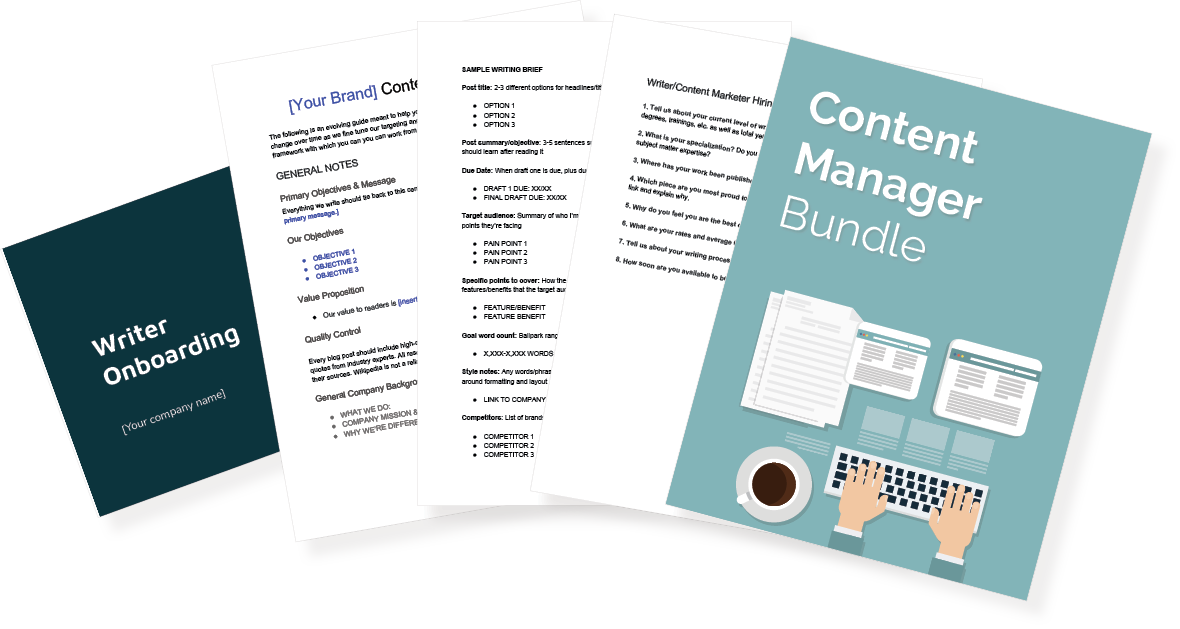
This five-piece template bundle includes all of the assets you need to save time, to look more professional, and to help make your projects more organized.