AI Search Blog
The Post-Holiday Blues
I love the holiday season, but I dread when it’s over.
For someone like me that works alone (and has a lot of quiet time to myself), I look forward to having friends and family home for the holidays. It’s so different from my normal day-to-day. There’s so much life! And noise! And excitement!
But every year, right after the holidays, I find myself in a rut.
I love the holiday season, but I dread when it’s over.
For someone like me that works alone (and has a lot of quiet time to myself), I look forward to having friends and family home for the holidays. It’s so different from my normal day-to-day.
I love the transformation that happens when our house is full of people and there are a million different conversations all happening at once. There’s so much life! And noise! And excitement!
But every year, right after the holidays, I find myself in a rut.
Our house goes back to its quiet state as people go back to their own homes, and all that’s left is another three to four months of gray, bleak winter ahead of us. Not to mention it’s the end of the year, which is naturally a time of reflection. It compounds things a bit.
As a result, I find myself feeling pretty sad, and for the past several years, I’ve really struggled through the first few weeks of January as I try to get myself back on track with “normal” life and work.
After tweeting a similar sentiment last week, I thought it’d be good to talk a bit about this--and if nothing else, it might serve as a reminder to anyone else who’s feeling the same way.
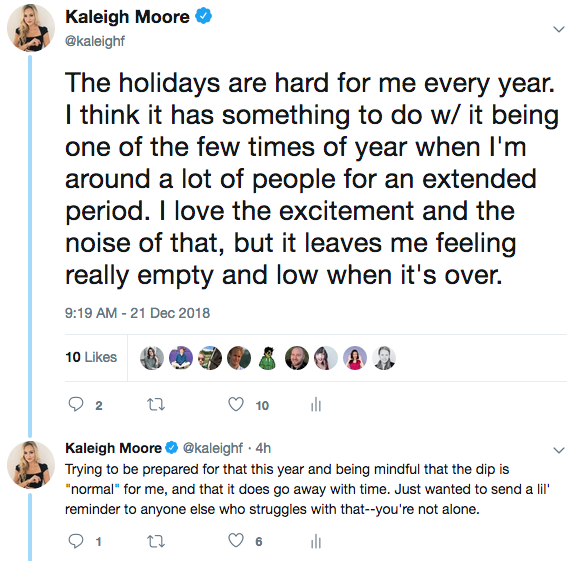
You’re not alone, and I can tell you that at least for me, it goes away with time. It does get better.
I’ve written before about how I often find working from home (or at least independently, without co-workers) isolating at times. I saw a study recently that showed loneliness is the #1 drawback of freelancing. I believe that.
For me, living in an especially rural area, I feel like it’s even harder during cold winter months when:
1. I don’t want to leave the house because it’s so cold
2. There’s not a lot else going on anyway
However, this year I’m at least trying to be mindful of the fact that I know the post-holiday blues are pretty normal for me--and I’m working to anticipate that. I’ve found that keeping busy is a good distraction, so I have plans to:
Work through the list of library books I’ve been wanting to read
Take a few classes on MasterClass and learn some new skills
Find out how I can volunteer at the local pet shelter
Continuing to work on things for the Domina Retreat
In reality, there’s no magic wand I can wave that’s going to make it all better.
It’s a work in progress, and I think just being aware of the fact that it happens is a good start.
If you're dealing with the same: Hang in there.
This article originally appeared in my newsletter, A Cup of Copy. Sign up and get these free tips sent right to your inbox every other Wednesday.
How to Write with Humble Confidence
I love it when I get questions from readers of this newsletter in my inbox. LOVE. IT. Laura Bosco sent me a question last week.
She asked: How can I help one of my clients sound humble and confident when we write for his brand?
On one hand we want to be confident in what we know, but on the other hand, we don't want to come across as arrogant. A lot of advice is situational, there are many gray areas, and plenty of folks are smarter than we are. So how do you strike a good balance between the two?
Such a great question. An important one, too.
I love it when I get questions from readers of this newsletter in my inbox. LOVE. IT.
Laura Bosco sent me a question last week.
She asked: How can I help one of my clients sound humble and confident when we write for his brand?
On one hand we want to be confident in what we know, but on the other hand, we don't want to come across as arrogant. A lot of advice is situational, there are many gray areas, and plenty of folks are smarter than we are. So how do you strike a good balance between the two?
Such a great question. An important one, too.
Let's start with the humble part of this equation (since we all know too much confidence is a bad thing.)
Humble is a characteristic that's near and dear to me—a signature facet of Midwestern charm.
But can you be too humble? I think so.
When we’re too humble, we:
Play down our skills, intelligence, and/or accomplishments to the point where other people also discount our abilities
Discredit the hard work we do, thus making it look like everything is easy/doesn’t require much knowledge or effort
Cut away at our ethos as experts and are overlooked for new opportunities
Just the other day, this happened when I was trying to explain to someone what I do for a living.
I said something like, “Oh yeah, I write for software companies and basically just sit around in my PJs all day.”
NOT GOOD. Too humble.
From that description, it sounds like I just loaf around in sweatpants all day and occassionally do some sort of mystery work for tech companies. (This is basically accurate, but in reality I do have to work hard five days a week and I do occasionally get dressed for video calls!)
But you get my point.
The other end of the spectrum, however, is overconfidence.
Those are the people you meet at a party that go on for 10 minutes about all of the big name clients they work with, the exhauuuuusting work trips they’ve taken, how in demand they are for client work, etc. ad infinitum.
BLECK. Gross. This side of the spectrum is also where we get things like ‘mansplaining’ from. No thank you.
So how do you find that sweet spot between “Okayyy, WE GET IT, stahhhhpppp” and “Oh, you’re too modest”?
Look to Primility
My pal Jerod Morris talks about the idea of Primility—a blend of pride and humility.
There’s a major mindfulness component to this philosophy: Primility is all about being proud of what you know and what you have, but being humble enough to know how and when to share it.
Sounds pretty ideal, right?
The tough part is: It’s a bit of an abstract idea, and can be hard to study out in the wild. There are so many elements that make up this characteristic—and it looks different on different people.
So here are a few things I’m trying to keep in mind while writing and speaking to come across as both humble and confident—that exudes primility.
Show, don’t tell
Anyone can spew statements, but those with humble confidence take the time to illustrate the ‘why’ behind the points they make. It takes longer and requires more work, but going the extra mile to say, “Hey, I know X thing and here’s how” is far better than “THIS IS A FACT. End of story. Mic drop.”
Remember your opinions are just that. Opinions.
Leaving room for other POVs means that you recognize you’re just one person with one opinion. Remember your opinion isn’t the be-all end-all. If you respond to opposition to your opinions by firing back in a negative or angry way, you’ll probably just end up looking like a small-minded a**hole.
Resist the urge to flex.
Our animal brains tell us to flex our muscles and to tell everyone when we’re the smartest person in the room, right? We have to resist that peacock-like urge, though. No one likes the person who hogs the spotlight...and it doesn’t add ethos. It just makes you look like a jerk.
Let other people validate you.
Lean on elements of social proof like testimonials and results produced that can speak volumes for your abilities. You don’t need to toot your own horn too much. Let other people do it for you. It’ll look and feel a lot more authentic anyway.
***
Personally, I’m working on getting better at this all the time. My problem is that sometimes I think I’m too quiet, and could speak up a little more to share what I know. It’s a balance, just like anything else.
I will say that listening to podcasts with interviews has helped. It’s interesting to see how different people tackle questions and what makes certain people sound like know-it-alls versus those that sound self-aware and confidently intelligent.
As I listen, I try to make notes on what turns of phrase come across as humble yet confident, as well as what sounds the alarm on the alternate end of the spectrum. It’s helpful to get some outside perspective.
This article originally appeared in my newsletter, A Cup of Copy. Sign up and get these free tips sent right to your inbox every other Wednesday.

My First Freelance Writing Intern: Lessons Learned & Future Plans
My first ever college intern and I just finished up last week. 😱 Can you believe it?! Time flies, man.
Katelyn, a junior at one of the local universities (English major) signed on in August to work with me over the course of the semester. She’s getting into finals in the next few weeks, so we wrapped things up right around Thanksgiving. Here’s what I learned from the experience.
Remember back in July when I mentioned the intern I was working with on freelance writing work this fall?
She and I just finished up last week. 😱 Can you believe it?! Time flies, man.
Katelyn, a junior at one of the local universities (English major) signed on in August to work with me over the course of the semester. She’s getting into finals in the next few weeks, so we wrapped things up right around Thanksgiving.

Anyway...I promised to share my experience on this front as a first-timer, so let’s get to it, shall we?
The setup: Working with an intern on freelance writing work
Over the course of the internship, she and I met up in person once a week for an hour or two for co-working. She worked on one assignment per week on average, and we emailed throughout the week or used Google Docs to address questions that came up in between our meetings.
The majority of the internship was self-directed so she could work on her own whenever it was convenient for her--she just had to meet deadlines throughout the week. (A good taste of freelance writing life, ya know?)
Onboarding Docs: Essential for Getting my Intern Up to Speed on Freelance Writing
The onboarding materials I put together were a really helpful jumping off point, serving as a crash course in everything from content marketing to creating strong, useful blog content. They included my general expectations around deliverables, too. (PS, if you want to see what this looked like, shoot me an email.)
She said that having all of these guidelines down in writing was helpful in case she ever needed to refer back to it--which she did often, especially in the first few weeks.
Expectations for my Intern Around Freelance Writing Work
I’ll be honest: It’s been about eight years since I was in the the intern role, so it was hard for me to remember what it felt like coming into that situation.
I’d forgotten what it was like to have a full class load and extracurriculars, so one of the most eye-opening things for me was that she had less time available in her week than I expected. It wasn’t an issue--just a mental adjustment on my end of things. We decided to bump down her hours from the initial 8-10 a week to 5-7. (And yes, of course she was paid!)
I also had to put myself in her shoes a bit perspective-wise. She was coming in fresh, basically starting from scratch as far as content marketing and freelance writing goes. There were a few times I had to step back and remind myself of that--slowing down projects or providing more detail.
One of the biggest things I realized fairly quickly was that she sometimes wasn’t sure what questions to ask, so during our weekly meetings, I made sure to ask for feedback and pose questions to her, adding clarity wherever and whenever possible.
This seemed to be helpful. Without a ton of context to work from, she said it was nice to have someone there to jump in and add detail rather than aimlessly Googling to try to figure something out.
Freelance Writing Assignments
I wanted to make sure that the experience was valuable and interesting for her, so one of the first things we did was talk about her interests around freelance writing, editing, and researching.
She indicated that she was most interested in editing, so this is where we focused most of her time and energy over the course of the semester. She worked on a variety of different types of subject matter so she could experiment and see what she found most interesting.
I’m SO glad that I was working on a post for Copyhackers during this period so she got to see a few rounds of Joanna’s expert-level edits. This was an awesome hands-on way for her to witness an A+ editor in action, noting what changes she suggested, the holes she spotted, etc.
We spent a week or two talking through Jo’s edits and working together to make a good post a great post.
Improvements for My Next Freelance Writing Intern
99% of the improvements I thought of came from my end of the equation. The biggest thing was that I think we both could’ve benefited from a bit more structure.
She did like that she was able to self-direct her learning and experiences quite a bit, but I feel like she could’ve learned more if I had a structured plan in place, with tasks and objectives laid out for each week.
That way we could be sure she was getting a well-rounded internship and covering all of the bases, rather than just working on whatever I sent her way/felt was do-able for her expertise level on a week-by-week basis. If I have another intern in the future, this is something I will make sure to create ahead of time.
Final Thoughts
Overall, I think both of us benefited from the experience, learning a lot about collaboration, the supervisor/student dynamic, and training in general. I’m glad to have done it (and I think she was, too!)
This article originally appeared in my newsletter, A Cup of Copy. Sign up and get these free tips sent right to your inbox every other Wednesday.

A Case for Being More Explicit In Your Writing
When you hear the world explicit, your mind might go straight to that parental advisory sticker you see on CDs sometimes.
Today, I’m not talking about being explicit in that context. I’m talking about being explicit in the sense of communicating clearly, as in: “She was explicitly clear about her directions.”
Why? Because so often a major failure of communication (written or otherwise) happens when we aren’t explicit.
When you hear the world explicit, your mind might go straight to that parental advisory sticker you see on CDs sometimes.
(Or if you’re young, you’re like, OMG OLD PERSON ALERT...she just referenced CDs.)
Today, I’m not talking about being explicit in that context.
I’m talking about being explicit in the sense of communicating clearly, as in: “She was explicitly clear about her directions.”
Why?
Because so often a major failure of communication (written or otherwise) happens when we aren’t explicit.
There are times when less just is not more—contrary to the saying.
Gray area leaves room for ambiguity, and in moments when that might lead to negative outcomes, it’s better to say more and to be explicitly clear than to hope the other person(s) just “gets it.”
Here’s some context for why I’m saying all of this.
A couple of weeks ago I overheard a conversation between a man and a woman (not my fault, they were loud talking!) on the topic of depression.
The woman was explaining how she was frustrated—she was trying hard to be positive and do things for her mental health (like meditation, yoga classes, getting outside), but she always kept bumping into days where she just couldn’t get “out of the hole,” metaphorically speaking.
The guy said to her between bites of sandwich: “You just have to change your thoughts.”
She paused for a moment and then said, “What? Did you say I should just change my thoughts? If I could do that so easily, I would. I don’t enjoy feeling this way.” She was mad. I couldn’t even see her face, but I could hear the rage boiling in her voice.
The guy immediately started backpedaling. “No, no--sorry,” he said. “I think I oversimplified that a little too much. What I meant was: You know that once you start feeling that way, the only way to get out of it is to distract yourself with something else. You have to manually switch your line of thinking onto something else so you can break the cycle of endless negative rumination.”
Her voice softened. “Oh, okay. That makes more sense.”
Let’s zoom out and look at this for a minute, shall we?
V1: Just change your thoughts.
V2: You know that once you start feeling that way, the only way to get out of it is to distract yourself with something else. You have to manually switch your line of thinking onto something else so you can break the cycle of endless negative rumination.
Same message, but major difference between versions one and two here, folks.
One comes across as callous and oversimplified, while the other is clear, compassionate, and helpful.
Now think about how this relates to your own life. How many conflicts or sticky situations could you have avoided if you thought about all conversations this way? Probably a lot. I know it’s true for me.
The lesson here is this: So often when we communicate either in writing or speaking, we use the simplest version of what we’re trying to say. It’s the fewest words to text back to someone. It’s the fastest to get out of our mouths.
In general, it saves time to distill things down. And there’s certainly a case to be made for simplicity in writing—being succinct is an important skill to have.
HOWEVER...there are moments when you should be more explicit.
Go into more detail when:
There’s room for interpretation around what you’re saying that could be misunderstood
You’re talking about a sensitive subject
The point you’re making doesn’t fit nicely into a single sentence
If you can keep ‘being explicit’ top-of-mind as you communicate (both in writing and in speaking), I think you’ll find that it does wonders.
For one thing, you’ll have fewer conflicts and less people with hurt feelings in your life.
I’m on board for that, aren’t you?
This article originally appeared in my newsletter, A Cup of Copy. Sign up and get these free tips sent right to your inbox every other Wednesday.
Recap: Five Years of Full-time Freelance Writing
I decided I’m going to reflect on the past five years with you guys. Okay? You don’t even have to buy me lunch.
Five years ago this month, I left my full-time job in PR to try freelance writing full time. I gave myself 18 months to see if I could (in the words of Tim Gunn) MAKE IT WORK.
Long story short: It’s still working. I’m still out here, freelancin’ it up.

I feel like this is a big deal. I’ve officially been freelancing longer than I’ve been doing any other job. It’s also longer than I’ve ever kept a pair of shoes.
But the thing is...when you work alone, from home...largely by yourself...it feels like there’s no one to celebrate these milestones with you. Ya know?
If I worked in an office, we’d at least go out to lunch to celebrate or eat some crappy ice cream cake. (Ice cream cake is gross. Just saying.)
So, I decided I’m going to reflect on the past five years with you guys. Okay? You don’t even have to buy me lunch.
Recap: The Highlights From 5 Years of Full-Time Freelance Writing
2013
Started with 2 contract clients for social media management
Tried a lot of different types of writing work for about 234,135 different industries
Made more than I had been making in the PR job (whew!)
DIDN’T QUIT (first year was so intimidating/challenging)
2014
Spoke at local conferences/associations on social media
Started to realize I didn’t love social media management
Took the Creative Class and decided to niche down, focusing on blog content for SaaS/eCommerce companies
Outsourced taxes/financials to a real life accountant and set up a retirement plan
2015
Spent part of the year traveling, presenting, and teaching social media (only to definitively realize I don’t like doing that)
Introduced the KaleighMoore.com site (shoutout to my husband/biz partner Brandon for building that for me)
Launched THIS NEWSLETTER shortly thereafter
Went to my first conference as a freelancer and met up with my pal Emma for some co-working in Austin
2016
Formed a business LLC
Got real comfy in the SaaS niche
Finally learned to say no to projects that weren’t a good fit
Took some amazing trips
Introduced one-on-one coaching for freelance writers
2017
Started Creative Class revamp with Paul Jarvis
Co-hosted my first podcast (still am!)
More lovely international travel
Officially put myself on a salary
Worked really hard to establish better work-life balance
Launched Yeah Write Club
Took another co-working retreat with Emma
Pros and Cons of Freelance Writing Full-Time
What’s been great vs. what’s been sucky so far:
GREAT THINGS
Freedom and flexibility. Holy crap do I love choosing when I get up in the morning. And wearing whatever I want all day (ahem, pajamas). And being able to take my dog on a walk when I feel like it. That is a major perk that I still pinch myself over every day.
Opportunities galore. I’ve found that if you’re a do-er and are good at the thing you do, freelancing presents so. much. opportunity. You can earn a lot, work with amazing clients around the world, and if you’re efficient, not be chained to a desk for eight hours a day.
The people. I’ve been fortunate to get to know some very smart and interesting freelancers over the past five years (who I wouldn’t have known if I weren’t freelancing.) So thankful for a handful of friends who “get it” and can relate with this type of work, who act as a sounding board, and who occasionally serve as co-workers when I need to vent.
SUCKY THINGS:
It can be lonely. I’ve talked about this a lot before. The bottom line is I never realized how important human interaction was for me until I didn’t have it anymore. I’ve found some ways to circumvent this and am feeling a lot less isolated these days, but it’s something I have to be mindful of so it doesn’t sneak up on me and give me the sads.
No guarantees. I’ve been fortunate to have a freelance career that’s progressively grown over the past five years, which I think is thanks to hard work and a lot of luck. However, there are no guarantees that this will keep up. I never know how much I’m going to make each month, for example. Sometimes I do miss having some certainty, but so far, I’ve been able to leverage the uncertainty as fear...and that fear keeps me working hard and pushing forward.
It’s hard to explain freelancing to other people. Five years in and I still haven’t figured out how to tell other people what I do (in a way they’ll understand.) It’s frustrating when people associate freelancing with scraping by, ‘not real work’, etc. Still working on this one.
The big picture: Freelance Writing as a Career
I think, looking back, there are a few big things I’ve learned over the past five years of freelance writing.
For one thing, I’ve learned a lot about myself. I spend a lot of time in my own head. There are pros and cons to that, just like with anything else, but it’s given me the time and space to figure out what’s important to me, what I do and don’t like, and what ‘works’ for me as a person and as a business owner.
I’ve learned things like:
I have to build group activities into my life. Be it yoga class, Skype chats, whatever...my brain is healthier when I make it a priority to be sociable.
I have a tendency to over-work. Building boundaries into my process (like office hours, restricted phone time, etc.) helps keep me from being “on” all the time.
I don’t enjoy speaking to large groups. Talking to a big room of people makes me SO nervous that I can hardly eat or sleep in the days leading up to the event. Not cool.
Conferences aren’t really my jam, either. I don’t like having to be in a certain place at a certain time. I’d rather just meet up with people afterwards for dinner.
I’m very into collaborative efforts. I do well in a setting where not all of the responsibility for a project is on my shoulders and like a small team environment (largely in the world of things like ‘let’s make a thing!’ or ‘let’s plan an event!’)
I’ve also learned that I am not great at thinking about the future. Give me a to-do list and I’ll knock it out right away...but ask me where I see myself a year from now and I’m all ¯\_(ツ)_/¯
That’s where I’ve been really fortunate to have a partner who is good at future-thinking. I’ve never had a formal business coach before, but Brandon (husband) has filled that role for me. Over the past five years, he’s encouraged me to do important growth-related things, like setting goals for myself (Ex: Try to get three bylines in major publications by X date), learning (he told me about Creative Class), and sticking with long-term efforts...like this newsletter.
I think it’s important to find someone like that who can help you work through those important questions, like:
What kind of work do you actually enjoy doing (and want to do more of in the future?)
What steps do you need to take to get to that point?
What things are you not doing right now that maybe you should be?
Are you challenging yourself?
Are you taking care of yourself outside of work?
In general, having someone who keeps you accountable and forward-thinking means you’re building in sustainability to your business. It’s helped save me from burnout and motivates me to try new things.
Will I still be freelance writing five years from today? I dunno. But I’m happy with how things have gone up to this point.
It’s hard work, but it’s also rewarding.
Speaking of rewards...I think I’ll treat myself to a spa day now. 💆
P.S. S3 of Creative Class podcast is live! YAY!
This article originally appeared in my newsletter, A Cup of Copy. Sign up and get these free tips sent right to your inbox every other Wednesday.
Embracing Your Unique Writing Voice
I want you to picture me wearing a black turtleneck for this newsletter, k? Channeling all the Sinead O’Connor vibes.
Ugh. Sorry. I’m old. That joke probably landed for about 15% of you.
Whatevs, let’s move on!
Today, I wanna talk about the problem with comparing ourselves to other writers. Because it is, indeed, a problem. And there are things you can do about it.
I want you to picture me wearing a black turtleneck for this, k? Channeling all the Sinead O’Connor vibes.
Ugh. Sorry. I’m old. That joke probably landed for about 15% of you.
Whatevs, let’s move on!
Today, I wanna talk about the problem with comparing ourselves to other writers. Because it is, indeed, a problem. And there are things you can do about it.
You’d be surprised at the number of emails I get from people that say:
“Hey there. I’m not a great writer, but I want to write more like X person. Can you help?”
“I want to submit a guest post to X site, but I don’t think my writing is good enough. What do I do?”
“I can write 100 blog posts a month, but the quality of writing sucks on all of them. HALP.”
All valid concerns. All fixable.
Here’s what I’d recommend to any person facing these feelings:
1. Don’t compare yourself to another writer.
You’re you, and that’s all you can be. Sorry ‘bout it. Embrace your you-ness and accept that you can’t magically replicate the writing voice or style of someone else.
Plus: The writers you admire probably have years of experience and practice that have helped them write the way they do. And they’ve worked hard to hone that craft. To get to that level, you have to put in the work.
2. Start doin’ the work.
Good writers practice writing. A LOT. They read a lot. They make notes on what they like in the things they read. They ask for feedback from other writers they respect (and openly accept/act on the edits they’re given.) They never settle on a first draft of anything. They write for the love of writing (even when they’re not getting paid for it.) Just like anything else, diligent focus and a deliberate effort toward improvement are the only ways to get better.
Do you think anyone ever learned to play the piano just by reading sheet music and listening to great piano players? I really doubt it. They had to put fingers to keys and clunk away. The same thing happens when your fingers hit your keyboard and you practice writing. It might be choppy and slow at first, but after a while, your fingers will fly and words will flow more freely, like music.
3. Follow the formula.
Your favorite writers probably have a certain writing cadence or flair that you can recognize anywhere. Reverse engineer that ‘ish. Break down what makes it so signature and what works well about it.
How do they structure their writing? What makes it reader-friendly?
What’s their lexicon like? What words do they use that are outside the norm?
How do they work in personality? Pop culture references? GIFs? Sarcasm?
Really sit down and pick apart the writing that you like best and get to the bottom of what makes it great. Then institute similar practices in your own writing. You can’t BE another writer, but you can certainly emulate the characteristics you admire (without totally ripping another person off.)
Confidence in your writing takes time. It’s not easy. But it’s doable.
Do you still have questions about how to be a better writer (and how to stop comparing yourself to others?) Tweet me @Kaleighf.
This article originally appeared in my newsletter, A Cup of Copy. Sign up and get these free tips sent right to your inbox every other Wednesday.

How to Write in the Voice That's in Your Head
The first draft of anything I write (when I’m writing as me, not a client) is pure stream of consciousness onto the page. And by putting my inner dialogue onto the page (unfiltered), the writing voice is a reflection of my personality, my quirks, and how I sound in my most natural state.
Guess what? You can do that, too.
During an interview, I was recently asked how I’ve been able to make my writing voice sound so unique.
I’d never really paused to think about that before, but the answer came pretty quickly.
“It’s the voice in my head!” I said.
It sounded a little crazy when it came out of my mouth…but it was true.
The first draft of anything I write (when I’m writing as me, not a client) is pure stream of consciousness onto the page.
And by putting my inner dialogue onto the page (unfiltered), the writing voice is a reflection of my personality, my quirks, and how I sound in my most natural state.
And guess what? You can do that, too.
Your voice needs to shine. Maybe it needs to work in "that's what she said" jokes or say things like "YAS QUEEN!"
If that's how you sound in your head, that's how you should sound on the page.
How to write in the voice that’s in your head
Step One: Remove Filter
The first major obstacle to overcome is getting rid of that pesky lil’ thing that gets in between you and the page: Your internal filter.
If you’re editing your inner voice as you write, you’re essentially diluting yourself. You’re taking out your cute quirks, your speaking cadence, and the language you’d really use.
Stop that. Let it flow. Don’t worry about editing until later. Instead, write like you’d speak.
Better yet: Write like you were telling a story to a group of friends. Don’t be afraid to give your writing voice a little performance element.
Step Two: Embellish with Humor
You have a sense of humor, right? Of course you do.
Maybe it’s sarcastic, or punny, or pop-culture based. Whatever it is: It should come through in your writing.
Look back at your first draft and ask yourself: Where would a dash of humor make sense?
Other questions to consider as you sprinkle in the comedy:
Is there a joke naturally prompted here?
Would some humor add to what I’m saying, or be distracting?
Would people get the joke?
Bottom line: Look for places to punch up what you’ve written with your inner comedian.
Step Three: Be Brave (and open to feedback)
Sharing your true inner voice can feel scary and exposing.
Maybe you’re thinking, “If people know the real me, will they still like me?”
I’m sure the answer is yes. In fact, maybe more so for keepin’ it real.
Anyone can churn out another boring article. But if you can write with a voice that sparkles with charming personality, you’re doing something that truly only YOU can do.
Does that mean you should never be open to tweaking said voice? Nah. Feedback is a good thing. If you get some constructive feedback on how to make your writing voice better, run with it. It’s only going to help make you better.
Your inner voice is one people should hear. Let it out (and onto the page.)
This article originally appeared in my newsletter, A Cup of Copy. Sign up and get these free tips sent right to your inbox every other Wednesday.
Why Freelance Writers Should Write Thank You Notes
The art of snail mail is seriously under-utilized these days...but I’m still a big believer.
In fact, for years now, I’ve been sending out handwritten thank you notes to my clients.
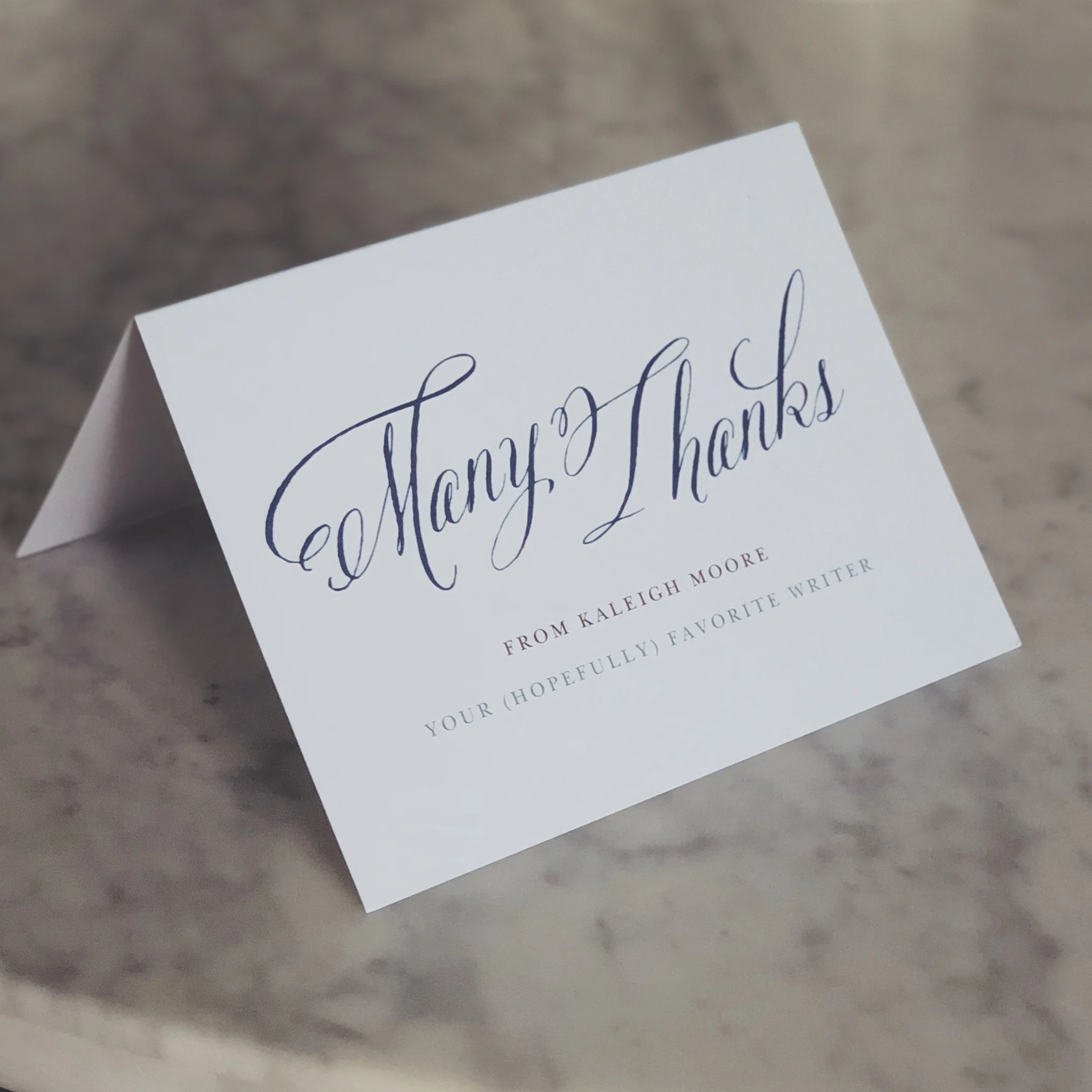
I recently partnered with Basic Invite to up my game with custom thank you cards (and you can, too.)
When’s the last time you got a note in the mail? I mean, something other than a birthday card from your grandma.
It’s probably been a while.
The art of snail mail is seriously under-utilized these days...but I’m still a big believer.
In fact, for years now, I’ve been sending out handwritten thank you notes to my clients.
At the end of a project, I send them a card that essentially says, “Hey, thanks for working with me. I think you’re great. Let’s do this again soon.”
It’s a small gesture that only takes a few minutes and that costs less than a dollar. And guess what? Clients love it.
How Freelance Writers Can Impress Clients & Be More Memorable
Because so few people take the time to send a handwritten note these days, this little extra bit of effort really seems to really wow people. It makes them feel special and appreciated...and it’s memorable, too.
Not only does it do wonders for client relationships, but a cute thank you card is something your client can stick to his or her corkboard at work--so you’re always top-of-mind. If that person looks up and sees your nice note, it’s a visual reminder for them to reach back out to you.
That’s why I was so excited when Basic Invite reached out and wanted to partner with me to create some custom thank you cards. (I’d been using generic blank inside cards, so to have something custom-made just for me was VERY cool. That’s some next-level thank you game.)

I wanted to create something that reflected my personality a bit without being too over-the-top, so I chose one of their existing thank you card templates and tweaked it a bit, adding my name and a line about “your (hopefully) favorite writer.”

Simple, but cute.
For the clients that I’ve already thanked this year, I’m thinking about doing some custom holiday cards as well. Maybe I’ll even put a photo of my furry golden co-worker Brooks on there. Because who doesn’t love mail (and dogs)?
Wanna get some custom thank you/holiday cards of your own?
In just a few minutes, you can create a custom card with almost unlimited colors to choose from (plus matching envelopes!) and design accents like foil (the rose gold is sooooo pretty.)
Whatchya waiting for? Create your custom card right now.
#Ad disclosure: This post is brought to you in paid partnership with Basic Invite.
Want more insights on freelance writing? Sign up and get them sent right to your inbox every other Wednesday.

Why Freelance Writers Should Follow Up More Often
Following up, checking in (whatever you wanna call it) has helped keep my business sustainable (and growing!) over the past five years. And it only takes a few minutes to do.
So how can you do it, too? Even if you have the WORST memory or hate spreadsheets?
There are a few pretty simple options that are free (shoutout to my fellow cheap people!) Let’s look at ‘em.
There’s one thing that I’m always shocked that, in general, freelance writers don’t do very well.
Know what it is?
It’s following up. The classic “check in” or “touch base.”
You know: It’s that little nudge of an email that essentially says, “Hey, remember me? I’m here and open for business if you (or anyone you know) needs me right now. Let’s work together again.”
It’s so simple...and yet so many freelance writers fail at this.
What Happens When Freelance Writers DON’T Follow Up?
When freelance writers forget to do follow up or check in with past clients and things get slow, they think, “CRAP! My business is going to fold. It’s all over. This is the end.”
When in reality, they probably have a list of people they haven’t checked in with in a while who need help. They just forgot/are too busy to reach out on their own.
If you haven’t heard from an old client in a while, that’s not to say they don’t need you, like you, or even miss you.
They probably just have 120,523 things to do and it’s your job to be proactive and say, “Hiiiiii, I’m still here if you need me and also here are some ideas of things I could do for you.”
Following up, checking in (whatever you wanna call it) has helped keep my freelance writing business sustainable (and growing!) over the past five years. And it only takes a few minutes to do.
So how can you do it, too? Even if you have the WORST memory or hate spreadsheets?
How Freelance Writers Can Get Better at Following Up
There are a few pretty simple options that are free (shut-out to my fellow cheap people!) Let’s look at ‘em.
Option 1: Set up reminders within your inbox.
I’m a Zoho user when it comes to email. And what’s nice about that is that they have this built-in tool that allows you to set up a lil’ reminder to email someone back if they haven’t responded to an email within a specified amount of time.
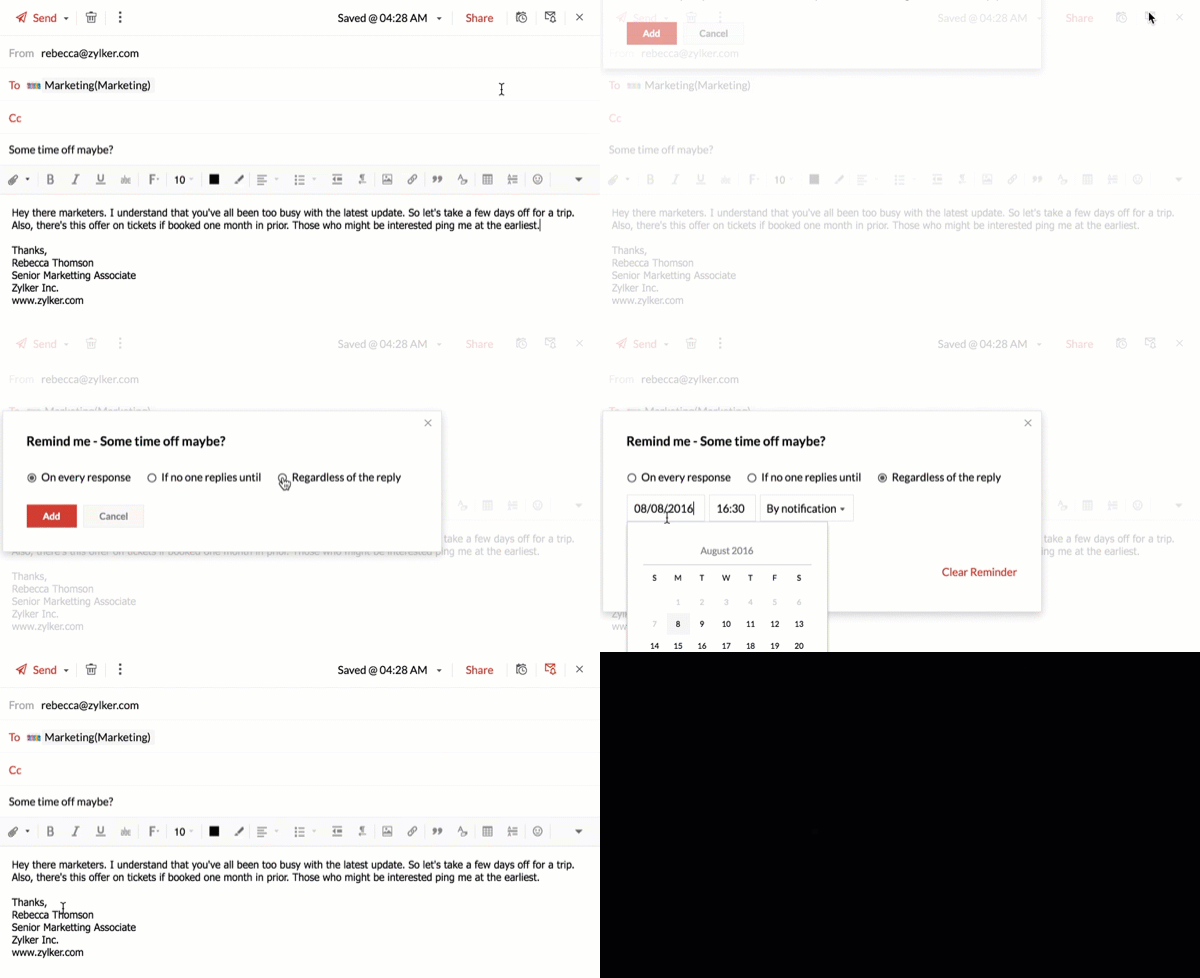
So what I do is this: Whenever I wrap up a project with a client, I go to the last email they sent me (usually a project wrap-up message) and set a reminder on it so that if that person hasn’t responded or emailed me within 5-6 weeks of that particular message, I get a ping that says, “Hey, dummy! Time to follow up with this person.”
It doesn’t really say that because #selflove, but it’s basically the sentiment.
Gmail also has this feature built right in.
It takes about two seconds to set this up and helps me stay on top of my follow-ups without any painful spreadsheet maintenance (because I hate spreadsheets.)
Option 2: Use a smartypants tool.
If you don’t have this feature within your email inbox, you can always use a tool to get the job done. FollowUpThen does basically the exact same thing. You can set up as many as 50 email reminders a month...FOR FREE...which is music to my ears.

Also very low-tech, which means it’s easy and won’t give you a headache when you try to figure out how to use it. Lots of other features available there too, but the bare-bones functionality works well if that’s all you need it for.
Option 3: Spreadsheet.
If you’re a spreadsheet person, keep one with all of your clients and note the date you last worked with them.
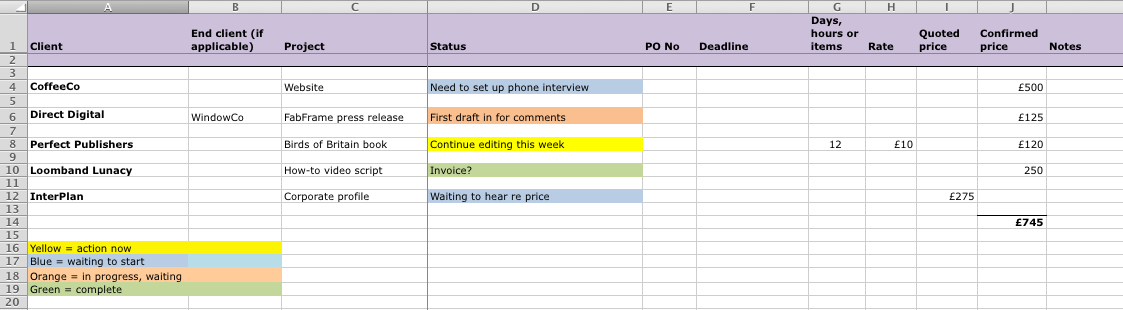
The trouble with this route is that spreadsheets often have to be checked manually, which we don’t always remember to do. So if you have a tip for this or know of some handy AirTable trick, email me and I will add it in when I post this over on my blog (with credit to you, DUH.)
The bottom line: Don’t forget the people you already know and like to work with. If you can be the check-in fairy, you’ll make their lives a teensy bit easier and keep your freelance writing business busy, too.
This article originally appeared in my newsletter, A Cup of Copy. Sign up and get these free tips sent right to your inbox every other Wednesday.

Knowing the WHY That Drives Your Writing & Blogging
In many cases, lots of time and money is being spent on writing/blogging efforts...but no one has taken the time to stop and ask WHY. Namely: WHY are we writing this?
It’s scary that so many people aren’t asking this question. It’s scarier that so many more don’t have a good answer when they do ask it.
Writers wanna write. Companies wanna blog.
Why?
Often times, it’s because they feel like they’re supposed to. Everyone else has a blog--why not?
The equation often feels like this: Write blog posts...???????...Make $!
But here’s the problem.
In many cases, lots of time and money is being spent on writing/blogging efforts...but no one has taken the time to stop and ask WHY.
Namely: WHY are we writing this?
It’s scary that so many people aren’t asking this question.
It’s scarier that so many more don’t have a good answer when they do ask it.
Maybe you’re thinking, “Look, lady. I don’t always need a [air quotes] big picture strategy. Sometimes, you just go and do and figure it out along the way.”
I get it...I really do. But writing without direction and purpose is a great way to waste a lot of resources. Like money. And time. And attention.
Trust me, I’ve done it.
I’ve written my fair share of personal blog posts that were just...pointless. I’ve been hired in the past by companies that are just like, “Meh...we’re winging things for now. Just do what you think is best.”
That’s cool and all (I appreciate the laid back attitude for sure.) But the business person inside me is Michael Scott screaming, “NO! NO! GOD PLEASE NO!”

Here’s why you need to know your WHY for writing
Without a reason/strategy/objective driving your writing, we, as humans, tend to get a little lost. And in a world where attention is already fleeting, it’s like spittin’ in the wind.
If you want your writing to do something (like drive sales, help your SEO/PPC efforts, or work together as part of a larger body of focused educational content) you need to map that out.
And you (or your writers) need to know what exactly it is you're trying to do, as well as how you'll measure success. Goals are really helpful here--even if they're just loose benchmarks.
I recently wrote about this over on Copyblogger (if you’d like some more in-depth reading on the topic), but the summary of what I’m trying to tell you today is this: Winging it, when it comes to writing...it rarely pays off.
If it's been a while since you/your team have thought about the WHY behind the writing, take some time to do that this week. It'll help you create more meaningful and effective content. I promise.
This article originally appeared in my newsletter, A Cup of Copy. Sign up and get these free tips sent right to your inbox every other Wednesday.

How to Build Better Writing Briefs
Ever tried writing something without clear direction before? It’s a freakin’ nightmare.
You don’t know who you’re writing for. Or why. Or really what you’re writing about. I’ve been there, and I’ve learned that it just doesn’t work.
That’s why now, I start every writing assignment with a creative brief (which I plop right into the top of the Google Doc for reference as I write.)
Ever tried writing something without clear direction before?
It’s a freakin’ nightmare.

You don’t know who you’re writing for. Or why. Or really what you’re writing about.
I’ve been there, and I’ve learned that it just doesn’t work...even if you’re just writing an ugly first draft.
That’s why now, I start every writing assignment with a creative brief (which I plop right into the top of the Google Doc for reference as I write.)
It helps keep me on track, cuts WAY down on the time I spend editing, and makes my first drafts look like a final draft.
Whether you’re assigning a writing project to a team member/freelancer or you’re the writer in need of clear direction, you have to know what to ask for (and what to include) in a brief.
But there’s no one-size-fits-all guidance on this. I’ve looked. I eventually realized I’d just have to make up my own template.
A few things I always include in all my writing briefs:
Post summary/objective: 3-5 sentences summarizing the topic of the post and what the reader should learn after reading it
Style notes: Any words/phrases to avoid, important notes on grammar/style, preferences around formatting and layout
Relevant articles to source: Inspiration articles, relevant articles from the company I’m writing for, research to cite, etc.
When I have all of this information, I put it right up top within the Google Doc I’m using and then insert a page break with a line. Everything below the line is the draft itself.
If there are pieces I don’t have (but need) before I can get to work, this helps me put together a shortlist of things to ask my client for and keeps the project moving forward at a good pace.
Get this template with info you can grab and use right away.
I hope it’ll add some clarity and efficiency to your writing, as it has for me.
P.S. I was recently on the Hot Copy podcast with Belinda Weaver (and her extremely charming Aussie accent)

How to Get Hired
Getting hired feels really hard sometimes, doesn’t it? Whether it’s for an amazing in-house gig at a company you admire, or a remote job that would eliminate your life-sucking commute each day, or even a freelance opportunity with a dream client—it’s not an easy process.
Not only do you have to stand out from the pile of applicants, but if you do, perchance, get noticed, then you have to dazzle during the interviewing process. So, erm...how do you do that?
I somehow figured out how to do that not once, but *TWICE* not too long after I graduated college.
🎶 Comma comma down doobie doo down down 🎶
Sorry. Sometimes my brain just goes to random pop culture references like the song that inspired this title. Have a listen so you don’t think I’m a lunatic.
Anyway. Getting hired as a freelance writer feels really hard sometimes, doesn’t it? (Abrupt segue—stay with me here.)
Whether it’s for an amazing in-house gig at a company you admire, or a remote job that would eliminate your life-sucking commute each day, or even a freelance writing opportunity with a dream client—it’s not an easy process.
Not only do you have to stand out from the pile of applicants, but if you do, perchance, get noticed…then you have to dazzle during the interviewing process.
So, erm...how do you do that?
How I Got Hiring Teams to Notice Me
I somehow figured out how to do that not once, but *TWICE* not too long after I graduated college.
One interview was with a news/journalism startup (now defunct, RIP) and one was with a New York Times bestselling author (who is still raking in that $). You can read the full story on that right here if you’re interested.

Getting noticed is the first step. You have to do something unique that makes you stand out from the stack of applicants who also think they’re the perfect candidate. (Again, read that story for some ideas on how to do that.)
But once you get noticed, the next step is having a home-run interview that makes the person doing the hiring realize you’re not only smart, willing to learn, and charming, but you’re also an A+ culture fit that will mesh well with the rest of the team.
That’s the part I’ve learned a lot about since landing those initial interviews.
Getting hired by 80+ clients over the past five years has taught me a lot about what companies are looking for in a new team member (and I've learned a lot about how to show you're all those things.)
This article originally appeared in my newsletter, A Cup of Copy. Sign up and get these free tips sent right to your inbox every other Wednesday.

What I'm Teaching My Freelance Writing Intern
This fall, I’ll have my first *ever* intern through one of the local colleges.
Working alongside me, said intern will get some hands-on experience with writing, running a business, and working in the online/freelance environment (mostly with software and eCommerce companies.)
This fall, I’ll have my first *ever* freelance writing intern through one of the local colleges.
Working alongside me, said intern will get some hands-on experience with writing, running a business, and working in the online/freelance environment (mostly with software and eCommerce companies.)
Now, I realize that getting an intern up to speed is going to be a big undertaking. That’s why I’ve been working hard to create some solid onboarding materials to get that person up to speed as efficiently as possible.
Call me Patti Planner, but ya girl loves to have a process and NEEDS a plan. I've tried to chill on this and am only just now becoming someone kind of fun to vacation with.

ANYWAY. During the development process for the intern onboarding materials, I’ve come to realize: Many of the first few weeks are going to be a lot about learning and reading.
What I’m teaching my freelance writing intern
Below, you’ll find a few sections from the actual onboarding document I've been working on.
My hope in sharing this is that it will help offer a look inside my brain at a few things I’d tell myself to learn if I were starting at day one again. Let's dive in...
Getting Started: Learning the Basics of Good Blog Content
Before you start writing, it’s important to get familiar with how effective blog content looks, sounds, and reads. Unlike a research paper or an article for a newspaper, blog content is aimed at educating a very specific audience to accomplish business goals—which means you have to write in a way that does that.
Read these articles (and take notes!) for a crash course on high-quality content creation:
What do all of these blog posts do well besides teach valuable writing lessons? They have a very “readable” quality. The writing voice is engaging, there’s personality entwined, and it doesn’t feel like a boring, one-sided lecture. This is what we’re going for in our own blog posts.
Best Practices for Writing Blog Content
1. Always thoroughly read and review any creative briefs, style guide documents, and getting started notes before you begin writing. It’s also a good idea to look at past posts from the client to get familiar with the look and sound of their content. Your goal is to make your writing consistent with all other content, rather than to stand out with a unique/signature writing voice.
2. You’ll work from an outline in the beginning, so it’s best to start in the middle section and do the intro and closing last (once you know what all you’ve covered within the post.) More on this here.
3. When formatting a piece of blog content, be sure to mirror the structure and layout of past blog posts to maintain consistency. That means replicating the way past posts use:
Titles: Do they ask for 2-3 potential titles that can be tested to see which performs best, or just one?
Headings: The larger-font headlines that break the post into different sections (think of them as titles for each new section)
Pull quotes: Quotes from sources or clients, often indented and in italics
Link text anchoring: The highlighted text of a hyperlink to an external piece of content
Example: This post on content marketing shows how we define this marketing activity. (Notice that ‘content marketing’ is highlighted rather than ‘this post’)
Images: Do you need to include a link to the image source below the screenshot or image within the post?
Closing Call to Action (CTA): What action should the reader take at the end of the post, and how do they do it?
4. Before submitting a first draft, be sure to copy/paste your draft into Grammarly to check for grammar/spelling errors that were missed and make any necessary changes. Other free tools that may help the writing process:
HemingwayApp: Helps shorten long sentences and improve readability
ClicheFinder: To spot and replace cliches
Airstory: To organize thoughts/research before/during the writing process
5. Stay consistent with our brand writing quirks:
When you need to pause a thought mid-sentence, use an em dash (—).
If you need an aside with the reader, use parenthesis. Punctuation goes outside, unless it ends the thought.
Rhetorical questions (that get you and the reader on the same page) are your friend. See what we did there?
Things to do when writing:
Always answer the questions that pop up as you’re writing. If you have to pause and think, “What is that?” or “Why?” a reader probably will too. Answer those questions within the post.
Use images to illustrate ideas. Screenshots often work well for this when referencing good or bad examples.
Link to high-quality research, stats, and case studies. Wikipedia is not link-worthy. We always want reliable research from the past three years if possible so it’s current. Google Scholar is a great starting place.
Things to avoid when writing:
Referencing/linking to competitors of the brand you’re writing for.
Talking down to the reader. Most of the time, audience members are pretty well-versed in what they’re reading, so we always assume they’re at a novice level rather than beginner.
Staying at the surface level. We want to take a deep dive and answer all of the ‘whys’ around a topic when we write rather than writing a fluffy piece that the reader doesn’t learn anything new from.
As you can imagine, there's a lot more to this document—but what I've included here is what I'd tell myself if I were starting from scratch with content creation.
If you also have an intern/new team member on your freelance content writing team, feel free to borrow/tweak these notes as a starting point.
This article originally appeared in my newsletter, A Cup of Copy. Sign up and get these free tips sent right to your inbox every other Wednesday.

Quick Grammar Refresher for Freelance Writers
Even in the modern world of spell check and tools like Grammarly, it’s always best to know how to get things right on the first go-around.
So let’s do a quick walk-through on some of the more common grammar/usage mistakes that crop up in writing...
We all make mistakes from time to time.

We all have those words that we ~never~ spell right on the first try.
But even in the modern world of spell check and tools like Grammarly, it’s always best to know how to get things right on the first go-around.
Know why? Because then, when we’re speaking--and not writing with the help of a tool--we sound smarter. And, let's be honest: Those handy tools don't always catch everything anyway.
Some of the more common grammar/usage mistakes that crop up in freelance writing
1. The apostrophe situation around ‘its’
Remember that you only use the apostrophe within ‘its’ when you want to say ‘it is’ or ‘it has’. Otherwise, you’re saying something belongs to the ‘it’.
Incorrect: I can’t believe its finally summer.
Correct: I can’t believe it’s (it is) finally summer.
2. More on apostrophes...
People really struggle with where to put these pesky little punctuation marks. Remember:
Use the apostrophe after the s (as in s’) when referring to something that’s owned by a collective/multiple people. Ex: After the storm, the west siders’ homes were destroyed.
Use apostrophe s (as in ‘s) when you want to express an individual's ownership. Ex: Katie’s books got soaked in the rain.
3. Irregardless
Not a word. You mean ‘regardless’.
4. “I could care less”
By writing this, you’re actually telling someone you don’t care much, but you could care a little less than you do in that moment. You mean to write: “I couldn’t care less.”
5. Per say vs. per se
Close, but no cigar. You mean to write ‘per se’, which means ‘in itself’ in Latin.
6. Piece of mind
While you can always give someone a piece of your mind, in this instance, you mean peace of mind to indicate serenity.
7. Segway vs. segue
Segway is the stand up scooter. When you’re talking about transitioning from point A to B, you mean to write segue.
8. Dangling modifier
That’s one of those English class references that probably makes your eyes glaze over. Here’s what it means: When a describing word (an adjective, usually) gets separated from the word it describes, it makes the sentence sound awkward and confusing. Make sure your modifier always references the noun it describes.
Incorrect: While walking on the beach, Kelly found a glittery woman’s dress.
Correct: While walking on the beach, Kelly found a woman’s glittery dress.
(Sidebar: If anyone knows how to make ME a glittery woman, please let me know--very into that idea.)
9. Free reign vs. free rein
Tricky, this one is. Reign is what royalty does (so it kind of makes sense), but you probably mean rein, which is what one does to restrain a horse. When you’re talking about giving someone the ability to roam free, that’s the horse reference--so use rein.
10. Throws vs. throes
If you’re in the throws of passion, you’re probably in a physical fight. But if you’re in the throes of passion, you’re having an all-consuming emotional experience.
BONUS: Quick and easy ways to remember how to spell things right on the first try
Dessert vs. desert: Which one do you want more of? That’s the one with a double ‘s’.
Accommodate: This word can accommodate a double 'c' and a double 'm'
Misspell: Miss Pell never misspells
Need more? This post outlines a few other common writing mistakes to avoid.
Hope this quick list of reminders is just what you needed today.
This article originally appeared in my newsletter, A Cup of Copy. Sign up and get these free tips sent right to your inbox every other Wednesday.

Should Freelancer Writers Take a Vacation?
For some, the focus is fast growth, authority-building, #MAKEthatMONEY--all the time. Don't get me wrong: I, too, like to #MAKEthatMONEY.
But for me, I want to work efficiently, with clients I really like, on projects I enjoy--and really, that's it. I don't want ALL THE JOBS. Because I still want some time for "me" stuff.
Warm weather is my favorite.
In central Illinois, where I live, it’s cold and gray for about 55-60% of the year. Maybe more.
But when it’s warm, I come back to life. I love being outdoors.
Brooks (doggo) and I go for long walks in the morning.
At night, I go for bike rides when it cools off and take in all the nighttime smells.
Brandon and I usually take some trips (this time last year we were in France and Spain!)
Maybe you can relate. Or maybe it’s something you’re wrestling with.
See, when you work for yourself (or from home, for that matter), you have this incredible ability to enjoy a flexible schedule. As long as you’re getting your work done, you can take the time to sit and read in your outdoor hammock, to go for a walk or a swim, or to work in your garden.
This is kind of the "anti-hustle" mentality, which I know is not always popular.
For some, the focus is fast growth, authority-building, #MAKEthatMONEY--all the time.
Don't get me wrong: I, too, like to #MAKEthatMONEY.

But for me, I want to work efficiently, with clients I really like, on projects I enjoy--and really, that's it. I don't want ALL THE JOBS. Because I still want some time for "me" stuff.
The problem is, as I’ve said time and time again: You have to give yourself permission to have time for "me" stuff.
Am I perfect at it? Nope. I still struggle with workaholic tendencies.
However, I’m fortunate to have a partner who nudges me to get outside on the nice days when I’m glued to the computer. If you don’t have someone who does that for you, (or you do, but you need to hear it again) I hope this email is the reminder you need.
My message for you today is: Life is short, and your work will always be there when you get back. Plus, if you can work more efficiently, a shifted workday won’t be a big deal anyway.
Just remember:
The average person only gets 4 hours of core work done per day.
Parkinson’s Law says we fill the time allotted to a task--so don’t give yourself too much time to complete your work. And when you're done with your work, be done! Get up and out of your chair.
I could talk about this for a long time--in fact, I already have.
P.S. Looking for some ideas on how to work more efficiently this summer? Here's the master list of everything I use on a day-to-day basis to work smarter, not harder.
This article originally appeared in my newsletter, A Cup of Copy. Sign up and get these free tips sent right to your inbox every other Wednesday.
Building Confidence as a Freelance Writer (& Beating Imposter Syndrome)
I've never done a “part two” in the 3+ year history of this blog, but there’s a first time for everything, right?
I want to continue the conversation we started last week about confidence.
Last week we talked about writing confidence. But today, I want to talk about a different type of confidence.
Here’s where this is coming from…
I've never done a “part two” in the 3+ year history of this blog, but there’s a first time for everything, right?
I want to continue the conversation we started last week about confidence.
Last week we talked about writing confidence. But today, I want to talk about a different type of confidence.
Here’s where this is coming from…
Earlier this month was the release of Season 2 of the Creative Class podcast, which I co-host with Paul Jarvis. With each release, we share the written transcripts of those episodes. It takes our audio conversations and puts (them word for word) in written format.
When I started reading through these transcripts, I noticed a recurring theme: I kept using words and phrases that cut away my ethos.
My portion of the conversation was littered with interjections that clouded the thoughts I was trying to communicate. Sometimes, it even made me sound less confident.
It made me realize: You can be the most confident and skilled writer in the world, but if that doesn’t 100% translate into the communication around those opportunities--you’re actually working against yourself.
Communicating Confidently as a Freelance Writer
Let me show you what I’m talking about more specifically with an example from one of the transcripts.
This was one of my comments on the topic of using ‘me’ vs. ‘we’ as a freelancer:
“I guess social media management was kind of a headache. Trying to be myself and the brand--and the same was true for like when I wanted to go and write something--I was overthinking everything because I was trying to write as a brand rather than just writing something as myself. So across the board it made things a lot simpler and, I don’t know, that was just my personal preference. For everyone it’s going to be a little different.”
I’ve bolded the words and phrases that I’m referring to. I’ll call these “detractors.”
Detractors are words and phrases such as:
Kind of
I guess
Like
Sort of
I don’t know
Basically
I think (as in, ‘I’m uncertain, but…’)
Why don’t we want “detractors” in communication?
For one thing, they’re wishy-washy. These words and phrases carry an air of uncertainty and doubt with them. They don’t sound confident.
What do you do to fix this? Here’s what I’ve been doing...
1. Always get a transcript for audio/video interviews you do.
By studying transcripts that illuminate the way you naturally speak, you can spot the detractors and set up mental triggers for yourself. If you notice you use the word “like” as a verbal comma, for example, make a mental note and be aware of the habit so you can eventually phase it out.
Bad: “I noticed that they had, like, 4,200 words still unwritten on the project.”
Good: “They still had 4,200 words to go on the project.”
2. Be aware of how you’re communicating in email/phone conversations.
Often times, detractors end up creeping into our communications in less formal settings--like email and phone conversations. It’s important to be on the lookout here as well.
Women especially have a hard time with this (I say this from experience.) We tend to use emotion-based language and take on an apologetic tone in situations when it’s not entirely necessary. Communicating confidently in these settings means using strong, declarative sentences instead.
Bad: “I wish I could take on this opportunity, but I just don’t think I can right now--I’m so sorry.”
Good: “I’m currently booked and can’t take this on right now--but I do appreciate the offer.”
3. Ask people close to you what your conversational “tics” are.
Asking friends and family about the way you speak is a good way to learn about your bad habits (that you may not otherwise pick up on). The people who listen to you most can probably give you a shortlist of your speaking habits right off the top of their heads.
Do you frequently say things like:
“You guys” when referring to a collective of people?
“T-B-H” instead of “to be honest”?
“Um” or “you know” as a conversational pause?
Once you know what to listen/look for, start practicing speaking and writing without them. Screen your emails. Do an audio recording of yourself answering questions for a podcast before the real recording. Do a test run for a video and watch the playback to study how you speak on camera.
4. Rosie Chrome Extension
Val Geisler just shared this amazing tool with me via Twitter this morning. What is it?
Rosie is a Chrome extension that detects undermining language and suggests more confident phrasing to help people represent themselves as the professionals they are.

That's amazing. And simple. Thank you Val!
Working on this stuff won't always be fun (I always cringe a little when watching/listening to myself), but the practice will make a world of difference.
You and I can both start communicating more confidently. That means we sound smarter, share ideas more clearly, and generally become more interesting to listen to. And who doesn't want that?
P.S. Don't be too hard on yourself as you work on this. As a card-holding member of the hyper-critical-of-myself club, I forget this all the time. Progress takes time, and practice makes perfect.
This article originally appeared in my newsletter, A Cup of Copy. Sign up and get these free tips sent right to your inbox every other Wednesday.

How to Become a More Confident Writer
There’s one thing I hear from writers more than anything else.
Know what it is?
It’s that they don’t feel confident in their writing abilities.
There’s one thing I hear from writers more than anything else.
Know what it is?
It’s that they don’t feel confident in their writing abilities.
When they do write something:
They second guess every sentence and spend hours on what should take minutes.
They run it through every writing optimization tool known to man but still aren’t happy with the end result.
They hover over the ‘Publish’ button but don’t end up sharing what they’ve written.
The reason? “It’s just not good enough,” they say.
I get it. I really do.
In fact, here’s a post I wrote and published over on Medium back on January 14, 2014 (six years ago). I cringe a little when I read this today. It feels...glib. Flowery. Naive.
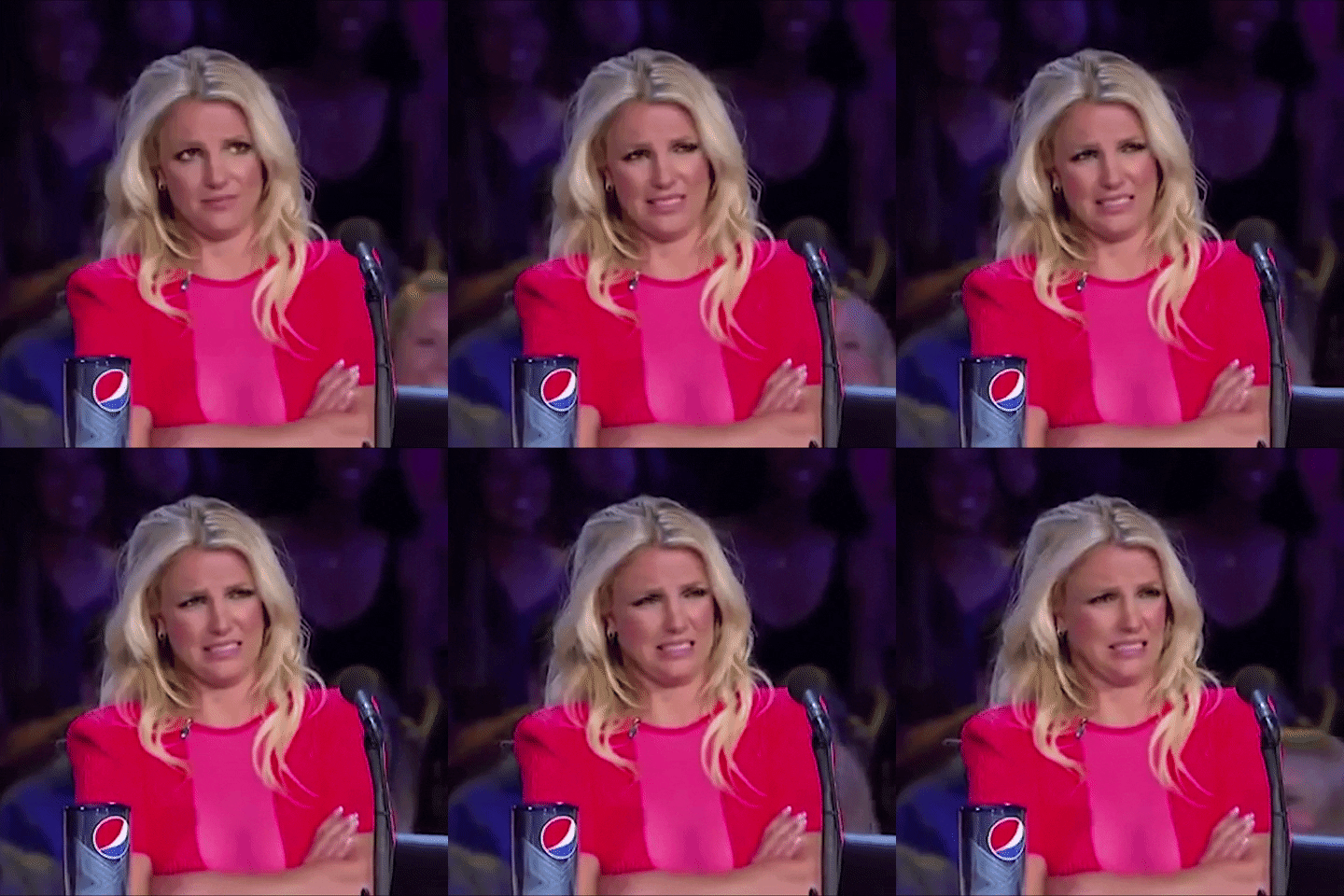
But you know what? I’m glad I shared it.
It allows me to see how my writing has evolved, and it gives me a benchmark to reference around the improvement of my writing skills. It’s also a snapshot of my internal dialogue at that point in my life--and if it weren’t documented, I’d probably have forgotten that I ever even had this thought by now. Even though it’s not on par with the writing I share today, it was good practice.
It’s easy to become a better writer if you put in the work.
No one gets a permanent “bad writer” stamp on the forehead. I know that if you’ve been told you’re not a great writer (or even that your writing could use some work)--it doesn’t always feel that way.
But the good news is: I’ve seen firsthand how a few new habits can make a world of difference in the writing department.
Growing Your Writing Confidence
What can you do to become a more confident writer (and shirk Imposter Syndrome?)
1. Commit to a 30-day challenge.
Practice makes perfect, so challenging yourself to practice writing every day for 30 days (even if it’s just for five minutes!) can be a good way to introduce a new habit that sticks.
This can be journaling, writing a short story every day, recalling a memory, free writing--just get words onto a page. You don’t even have to share the finished product--just put it on your daily to-do list and commit to making it a priority.
2. Read more: Try a book per month minimum.
In this post, you may have seen that one of the pieces of writing advice from Stephen King was to have a solid reading habit. Reading gets you more familiar with words, different syntax ideas for sentence structure, unique metaphors--you name it.
That’s why having a healthy reading habit (of at least a book per month, I’d say) can help you become a better writer. If you have 15-20 spare minutes a day (you know you do), devote that to reading.
3. Keep a swipe file.
Sometimes you see writing that just really “does it” for you. Maybe the writing voice connects with you on a personal level or there’s a turn of phrase that makes you pause and think, “Wow, what a great way to describe that.”
Make notes on what you like about those pieces of writing and keep a running list of reference material (a swipe file, of sorts) that you can refer back to on days when you need writing inspiration. This will help you better understand what makes certain pieces of writing better than others--and can inform your own writing moving forward.
4. Be open to feedback (and ask for it).
It’s easy to be sensitive about your writing--I know I am. It’s so personal, right?
The thing is: Closing yourself off to constructive criticism only holds you back from improving your writing skills.
I’ve turned in what I thought were excellent first drafts to editors, only to have them sent back with lots of notes and suggestions for edits. My first reaction is to take it personally...but when I get into their comments, I often realize they’ve spotted holes I missed, they have suggestions for better reading comprehension, etc.
We both want the same thing: To produce the best possible piece of writing we can. Being open to that feedback helps us accomplish that goal.
Accepting feedback--and asking for it from writers you trust and respect--is an easy way to get external perspective on where/how/what you can improve in your writing.
Writing Confidence Comes With Practice
Are you going to become a better writer overnight? Nope, definitely not.
There’s a lot of work to be done, but if you can dedicate yourself to improving, I think you’ll be surprised at how quickly you can make strides.
This article originally appeared in my newsletter, A Cup of Copy. Sign up and get these free tips sent right to your inbox every other Wednesday.
The 6 BEST Pieces of Writing Advice
I gathered six of the best pieces of writing advice from writers and authors who are ~way~ smarter than me.
My hope is that these bite-sized pieces of writing wisdom will help you with whatever type of writing it is you’re working on this week.
Today, I gathered six of the best pieces of writing advice from writers and authors who are ~way~ smarter than me. So you can get some insight from someone other than me.
My hope is that these bite-sized pieces of writing wisdom will help you with whatever type of writing it is you’re working on this week.
Let's get to it, shall we?
Writing Advice from Professional Writers
1. Get through a draft as quickly as possible. Hard to know the shape of the thing until you have a draft. Have the courage to write badly. – Joshua Wolf Shenk
See? I told you that writing ugly was the secret to great writing. If you can get something down (even if it's bad), you've got something to work with. A blank page, however, stays a blank page.
2. Substitute ‘damn’ every time you’re inclined to write ‘very;’ your editor will delete it and the writing will be just as it should be. -Mark Twain
The same is true for ‘really’. Keep this trick in mind as you do your own self-editing. I'm always tempted to use 'very' and 'pretty' and 'really' and...(really)...they're just fluff.
3. Start telling the stories that only you can tell, because there’ll always be better writers than you and there’ll always be smarter writers than you. There will always be people who are much better at doing this or doing that — but you are the only you. -Neil Gaiman
Tell stories that leverage your personal experiences. I said so; Neil said so! We all say so! You're a human, writing for other humans. Humans love stories--and you probably have some good ones to tell. Share them.
4. If you don’t have time to read, you don’t have the time — or the tools — to write. Simple as that. -Stephen King
Reading and writing go hand in hand. Period. You don't even have to read about how to be a better writer--just the mere practice of reading will get you more comfortable with words, phrasing, voice, and cadence. Reading is your writing apprenticeship.
5. Don’t tell me the moon is shining; show me the glint of light on broken glass. -Anton Chekhov
Visual storytelling makes your writing un-boring. Paint pictures with your words and make your readers imagine what you see in your mind's eye when you're telling a story. Show rather than tell.
6. If it sounds like writing, I rewrite it. -Elmore Leonard
Write like you speak. People have good senses about BS--they see right through it. Write as if you were telling a story out loud to another person and it will be much more authentic.
This article originally appeared in my newsletter, A Cup of Copy. Sign up and get these free tips sent right to your inbox every other Wednesday.

How Freelance Writers Can Stay Creative with Side Projects
You know, sometimes…sometimes I don’t feel all that inspired by my writing work.
Am I good at it? Sure.
Can I deliver on time? Yep.
But that doesn’t mean that I’m always excited to write the same types of articles day in and day out. Plus, my work can be fairly technical and research-heavy, which doesn’t always lend itself to a lot of creativity.
You know, sometimes…sometimes I don’t feel all that inspired by my freelance writing work.
Am I good at it? Sure.
Can I deliver on time? Yep.
But that doesn’t mean that I’m always excited to write the same types of articles day in and day out. Plus, my work can be fairly technical and research-heavy, which doesn’t always lend itself to a lot of creativity.
I get burned out just like anyone else.
The question is: How do you nurture your creative side (so that you don’t lose it)?
Creative Side Projects Can Help
For me, side projects are my go-to in times when I’m feeling less than inspired.
I’ve always been a side projects person, really. In college, I ran an Etsy store that sold vintage jewelry. My freelance writing business even started as a side project while I worked full-time in PR.

Side projects are great because they provide the opportunity to be creative and test the waters with something new (without having to go all-in).
They can be low-investment ventures that you pick up when you have time, or that you slowly build into something bigger. Or 100% just for fun.
The beauty of them is: It’s your call either way. No pressure.
I’m currently in the middle of a creativity rut, and it’s why I’ve been getting back into side projects more lately. I’ve been working on things like:
Yeah Write Club, a fun newsletter for writers and editors
Creative Class and the Creative Class podcast, another partner project on the business of freelancing
All of these side projects allow me to use my creative skills in ways that I don’t normally in day-to-day work. And I need that. Maybe you do, too.
I’ve found that as long as I can find an outlet for my creative ideas, I can keep the juices flowing. But if I go too long without attempting anything new--my creative brain starts to shut down.
Maybe creativity is a muscle. You have to exercise it, or it atrophies.
Everyone’s Doin’ It
I’m not the only one that knows side projects can be the secret to creative sustainability, either.
I’ve seen lots of my internet pals heading up their own side projects--and they inspire me to stick with my own.
Some good examples:
1. Emma Siemasko is flexing her storytelling skills with short-form videos on YouTube.
2. Claire Suellentrop and Gia Laudi have their Forget the Funnel workshops.
3. Jes Kirkwood launched marketHer to spotlight female tech marketers.
And there are so. many. others.
The point is: Side projects are a good thing. They give you the opportunity to stay creative and inspired, even during those phases when your work isn’t doing it for you.
That way, when you do get hired for a more creative project again, you're already in the zone.
General Things to Keep in Mind About Side Projects
If you’re on board with this idea and are thinking, “Yeah, cool, I’m gunna start (or pick back up) a side project now too”, that’s excellent.
Here are a few things to keep in mind as you make your plans.
1. Your side project doesn’t have to be a money-maker.
If you want your side project to be knitting blankets that you donate to the local animal shelter--wonderful (it's very thoughtful of you). Your side project doesn’t have to be about #growthacking or #makingdatmoney. It can be purely just because. You officially have permission for that, in case you needed it.
2. Sometimes side projects are more fun with a friend.
I don’t always follow through on side projects when I try to do them alone. That’s why I look for opportunities to partner with a friend. Two minds can be better than one--especially when your partner has complementary skills. Plus: It’s a good way for you to work more closely with someone you respect and admire.
3. If at first you don’t succeed...
In the words of Aaliyah, “Dust yourself off and try again.” Sometimes side projects flop and you don’t end up accomplishing what you set out to do. And that’s okay--you’re experimenting. A big part of being creative is testing out new ideas and learning from the process. Side projects are a great way to iterate on different ideas you have--and they can evolve over time based on what you learn along the way.
This article originally appeared in my newsletter, A Cup of Copy. Sign up and get these free tips sent right to your inbox every other Wednesday.
How to Be a Better Self-Editor
Is there anything worse than submitting a piece of writing somewhere and getting it sent back with endless edits?
Opening a document filled with notes is like an instant gut-punch.
It says, “You didn’t nail this one.”
Is there anything worse than submitting a piece of writing somewhere and getting it sent back with endless edits?
Opening a document filled with notes is like an instant gut-punch.
It says, “You didn’t nail this one.”
And while not nailing it on the first try is definitely okay--wouldn’t it be great if you could cut down on the edits required by, say, 50 percent? 30 percent, even? I’d sign up for that.
The good news is: It’s pretty easy to achieve this goal.
In working with some truly talented editors over the past several years who manage high traffic blogs and top-ranked publications, I’ve noticed four common themes within their editing processes.
Today, I use these approaches on my own writing before sending over a first draft. As a result, both parties spend significantly less time editing.
Sounds nice, right? Here's what you need to know.
1. Punch up your title and headings
The first time I turned in a post for CopyHackers, I noticed that when the edits came back, my title and all of the headings had been changed...and they were WAY BETTER.
As I was reading, I went, “Ohhhhhhhhhh...I get it now...”
The edited versions were more interesting, funnier, and did a better job of leading the reader further down into the post. Overall, these punched up elements made the whole piece more valuable.
Here’s an example...
My heading: Why emotion in advertising works
CH heading: You know we buy based on emotion and justify with logic. But do you know why?
Clearly, the CopyHackers version is much more interesting--and it’s formulated in a natural way that entices the reader to keep reading.
Today, I take this approach with all of my long-form writing.
In editing headings, I make sure that I’m posing questions, teasing out pain points, or setting up an interesting story that leverages a curiosity gap. You should do it, too.
2. Always ask, “But, why?”
The best editors I’ve worked with are great at spotting holes and asking, “But why?” to every point being made.
In order for your writing to be thorough and logical, it needs to answer any questions that naturally arise. If as you’re reading, you think, “Will my reader already know the backstory here?”--it’s safe to assume the answer is no.
That means: If there’s something left unexplained, take the time to spell it out for the reader.
Often times research and case studies are a good way to do this. Illustrate everything you can, add clarity around complex ideas, and back up every point with details.
It’s kind of like writing a college research paper. You should be adding to your annotated bibliography (man, I hated those…) all the way through the piece.
3. Break down long sentences
I have a tendency to ramble a bit with my sentences. I just like it, okay?
But most of the time, shorter, less complex sentences are much better for general reading comprehension. Plus, the shorter your sentences, the easier it is to break up big chunks of on-screen text. That means easier reading.
Free tools like Hemingway App can help you spot your overly complex sentences, but keep in mind that you don’t need to super-simplify, either. It’s a good rule of thumb to strive for a 10th grade reading level.
4. Reorganize the non-sequiturs
Especially if you’re writing anything long-form, it can be easy to get ahead of yourself and to introduce new ideas or points that don’t flow naturally within the piece. But that’s non-sequitur (and not so good).
Your goal as a writer is to put together points that build upon one another--so when there’s information introduced that falls out of line with what you’re building, it makes the whole structure...kinda shaky.
That’s why you need to make sure you’re building a pyramid shape with your writing, not an asterisk.
Now, if you’re too “inside” the piece to accurately judge the flow, then you should get a second set of eyes to read it for you.
This doesn’t need to be someone who intimately knows the subject matter, either. It can actually be a benefit to have an outsider review what you’ve written, as they can more easily spot areas where greater clarity or explanation is needed.
And remember…
While these are the big four as far as most helpful takeaways I’ve gleaned from working with various editors, you should also keep a few things top-of-mind while you edit:
The better you get at self-editing, the more editors will appreciate working with you (and the more readers will enjoy reading your stuff).
This article originally appeared in my newsletter, A Cup of Copy. Sign up and get these free tips sent right to your inbox every other Wednesday.