AI Search Blog
How to Overcome the Blank Page
When it comes to writing, sometimes getting started is the hardest part.
It can result in hours of procrastination, sweaty palms, and a last-minute scramble as a deadline approaches.
So what’s behind the first draft intimidation — and how can writers overcome it?
When it comes to writing, sometimes getting started is the hardest part.
It can result in hours of procrastination, sweaty palms, and a last-minute scramble as a deadline approaches.
So what’s behind the first draft intimidation — and how can writers overcome it?
The Confidence Issue
If you don't have a lot of confidence in your writing, it's probably not something you look forward to. In fact, you probably put it off as long as possible.
The bright side is: You're not alone in that feeling.
Research shows that only 1 in 4 high school seniors write at a proficient level.
At the college level, fewer than 50% of college seniors feel their writing has improved over the course of their secondary education.
At the professional level, the National Commission on Writing discovered companies spend more than $3.1 billion each year on remedial writing courses.
WHOA. That's a lotta dollars.
But that doesn't mean all hope is lost.
The good news is: People in the "writing sucks!" boat can overcome the self-doubt that keeps them from putting their thoughts into writing. Here's how.
Writing Ugly
Getting an ugly first draft written down creates a starting place for improvement. It doesn’t have to be pretty, make sense, or go into detail yet—it just needs to be on the page.
I’ve seen lots of great posts before that talk about the idea of “writing ugly” at a high level, but not many that really spell out how to go about doing it.
That’s why I wanted to share the strategy I use when writing thousands of words for different clients and publications.
First things first: Create a framework.
1. Framework
Before you try to get too in-depth, create an ugly framework. It should look something like this:
Intro
Background
Specific Points/Ideas/Tips (one per paragraph)
Conclusion
This step will help you get rid of the empty page and allows you to visualize what elements you need to build upon. It’s your roadmap.
2. Middle First
Next, you’ll want to focus on the middle section of your outline. Start here with fresh attention. Nail down the basic examples or points you want to walk through, and leave the rest (including the title, intro, and closing) for later.
Then, start filling out each paragraph one at a time. Dump it all into your draft, but try to keep it organized. Remember: This doesn’t have to be pretty. Just get the basic information down.
3. Background
Once you have the middle section complete, look at it as a whole to determine what kind of background information you need to share at the beginning so that the reader has relevant context before diving into the bulk of what you’ve written.
This could be a fictional scenario, a story, a quote — just something that explains why in the world you’re writing what you’re writing.
4. Intro & Conclusion
These two parts come last. They should be similar, but not identical. Like what they say about eyebrows! "They're sisters, not twins."
Your introduction welcomes the reader with a conversational tone, while the conclusion goes over what you explained and reminds him or her of the one main takeaway.
5. Editing
When your ugly first draft is complete, you can then go back in to polish things up and perfect your work — but not before then. Self-editing while you write is the enemy of completion.
If you need an extra set of eyes to look it over and give suggestions, ask for help. They might catch things you missed or have a different perspective that spots the holes or confusing elements within your piece.
And finally, give yourself enough time to go back after a day or two to check and re-edit with fresh eyes. As the idea rolls around in your mind over the course of a few days, you might have new thoughts on additions for your piece or arguments that could be made against a point you’re making.
The bottom line: By embracing the ugly first draft, you can write more efficiently — and over time, you’ll notice that the process becomes simpler until you never worry about the blank page again.
P.S. Yeah Write Club has officially launched! Sign up and become part of the club.
This article originally appeared in my newsletter, A Cup of Copy. Sign up and get these free tips sent right to your inbox every other Wednesday.

Insights on Productivity & Freelance Writing
This post is a teensy bit longer than usual--and it’s not about writing. If you want writing-related content, perhaps check out this post: The Cure for Crappy Copy. It’s a good one.
Otherwise, settle in and keep reading.
A few weeks ago, I shared a master list of everything that’s helped me freelance and write for the past four years on Twitter.
A few weeks ago, I shared a master list of everything that’s helped me freelance and write for the past four years on Twitter.
From software tools to the convertible standing desk I use--it’s all there.
But then I was video chatting with my friend Val Geisler.
I mentioned to her how much I love virtual conversations like the one we were having, and how I had been wrestling with a need to get out of the house and feel more connected lately.
She said something to the extent of how it was funny that even with my ideal workspace setup at home (with everything I need to be highly productive)--I still had this urge to get out of there.
That was a lightbulb moment for me. She had a point.
I realized that even with the best tools, the comfiest chair, and a WHOLE ROOM dedicated to work, there was still a missing piece that was keeping me from being 100% laser focused on my freelance projects.
And it had to do with me.
Not the tools. Not the desk.
I needed to think beyond the tools and resources and address the internal aspects of freelancing and owning a small business to get to a better place.
After some reflection, here are two big takeaways that came from this line of thinking. Maybe (hopefully) they will help you, too.
Number one: It’s important to test what you know about yourself.
We all feel like we generally know ourselves, right? We know what we like, what we don’t like, and what we’re good at.
I felt this way, too--but I wanted to test my assumptions and double-check.
I started with two different personality assessments: The Strengths Finder and the PDP.
These personality tests confirmed a few things for me (like my love for learning and my poor ability to handle criticism.)
But I also learned that I am highly extroverted--which was kind of surprising to me. I spend most of my time working alone--and as a result--I’d started to think of myself as an introvert. Wrong-o.
These findings were a good reminder that I actually thrive when working and interacting with others. It also reminded me I needed to be better about getting out of my home office and scheduling facetime with other human adults. I had let that slip a bit and was quickly sliding into winter hermit mode.
The good news is I’m already taking steps to act on this and am putting myself “out there” more.
- In February, I’ll be doing a test run with a local co-working space. It’s only a few blocks away from me, has huge windows (yay!), and is shared by just a few other female business owners.

- In recent weeks I’ve been going to a new aerial fitness class. So far the class size has been super small (it’s not an easy class!) but I’m hoping that I’ll get to know some of the people there better in the coming months. If nothing else, it gets me out of the house.
- I also reached out to the local library and am leading some free resume-writing classes (in person). I don’t love public speaking, but I wanted to put my writing skills to good use in a way that could help others. The first one went really well last week and there were lots of good questions from attendees.
But that's not all. There was something else I realized...
Number Two: It’s important to gain some mental control.
When you work alone (or when you’re the boss), you spend a lot of time inside your own head.
There’s a lot of responsibility that falls on you on a day-to-day basis, and it can be easy to let your monkey brain take over--constantly hopping from one thought to the next during every waking moment.
It causes a cycle of anxiety and stress that can eat away at your focus during the day and can generally make you an unpleasant person (speaking from first-hand knowledge.)
For a long time, my “monkey brain” was especially bad when I’d lay down and close my eyes to sleep at night. My brain would kick into high gear, cycling through the day’s problems, tomorrow’s to-do list, my anxieties around forward momentum and long-term plans, etc. etc.
But it wasn’t until I stepped back and thought about this that I realized how much damage the never-ending cycle was doing. It was affecting my personal life and my work.
So, again, I’ve been taking steps to work on this. Here’s how:
1. Setting up a good sleep routine.
Brandon, my husband, has to live with me and has seen the effects that poor/no sleep have on me, so he suggested we set up a nightly routine to help me prepare my brain for sleepy time each night.
And guess what? It works.
Here’s what it looks like:
Put down the phone (and don’t look at it!) after 9:30 p.m.
Prepare the bedroom for sleep. I turn on my white noise machine, close the blinds and curtains, and turn down the sheets so I can basically sleepwalk into bed.
Turn off all the lights and put on a “boring” show in the living room. (I’m a big fan of Rick Steves, BBC docs, or ASMR videos for this. I don’t think they’re boring but they’re not character-driven stories you can get wrapped up in, ya know?)
Then, when I’m nice and sleepy, I just walk a few steps into the bedroom and basically fall onto the bed.
Wake up at the same time each day. My FitBit alarm goes off at 7:30, and I’m out of bed by 8:00 at the very latest.
Following this routine has made major improvements in my sleep quality--and it’s almost completely eliminated my nighttime ruminations. Plus: Better focus during the work day and far fewer problems with chronic migraines.
2. Experimenting with meditation.
I’ve been doing yoga for years, but I’ve never been particularly good at the meditation part.
I mentioned in the last newsletter that I’ve been reading a book on the topic, so now that I understand what meditation is really about, I’ve been giving it a second shot with the help of Headspace. There are lots of apps/tools you can use for guided meditation, and I think having some guidance goes a long way.
I have to say, even as little as 3-5 minutes a day has been helping me get better at observing my thoughts rather than being engulfed by them. I have a lot of work to do, but practice makes perfect, right?
The lesson: Even the best setup won’t fix everything
To summarize: It’s easy to buy the stuff that helps us be more productive and fulfilled during our working hours.
You can set up the ~most baller~ workspace possible, but to be truly focused and productive, there’s still a lot of internal work to do, too.
It’s not easy. It’s not always fun.
There are still days when I have ZERO desire to meditate for even three minutes. There are DEFINITELY days when I don’t want to get out of my pajamas and go meet someone for coffee. At all.
But (for me at least) doing these things is just as important as getting a new computer or finding the perfect workflow for writing. Maybe more so, in fact.
My challenge for you: If you’re not doing any (or at least some) of these things already, make some time this week for it.
This article originally appeared in my newsletter, A Cup of Copy. Sign up and get these free tips sent right to your inbox every other Wednesday.
How to Write for Fidgety Skeptics
The title of today’s writing lesson is inspired by the book 10% Happier, which I’ve been listening to lately on audiobook.
Dan Harris (the author) talks about being a fidgety skeptic in regard to meditation...and that got me thinking:
That’s how I feel about a lot of sales-oriented writing.
Fidgety. Skeptical. It just doesn't work for me.
The title of today’s writing lesson is inspired by the book 10% Happier, which I’ve been listening to lately on audiobook.
Dan Harris (the author) talks about being a fidgety skeptic in regard to meditation...and that got me thinking:
That’s how I feel about a lot of sales-oriented writing. Fidgety. Skeptical. It just doesn't work for me.

I know, I know: Sales writing is traditionally long-form because it has a lot of work to do.
But can I be honest with you?
Especially online, if you’re selling to me--you’d better do it fast.
I want to understand your core idea as quickly as possible and then move on to the next thing. I don’t want to invest 15 minutes into a never-ending scroll of words.
I can’t be the only person that feels this way, either. Some of your customers/readers/subscribers are in that very same boat.
So how do you write for the fidgety skeptics? How do you convert that tricky demographic without words on words? Here are a few tips.
Use videos
For me, one of the biggest assets isn’t even a writing tactic, per se. It’s a visual resource: An explainer video.
These videos (1-3 minutes max) are one of the fastest ways to communicate your complex value proposition in a simple, visually appealing format.
In fact, some data shows that videos combining audio, visuals, and text can be understood as much as 60,000 times faster than standalone text. Plus, it’s a chance for you to show your product or service in action.
They’re pretty versatile pieces of content, too: Aside from the landing page enivronment, you can also include them in emails, use them in presentations, and share them on social media. You can get lots of mileage out of them.
Spotify has an excellent example that shows you what I’m talking about.
Leverage bullet points
Bullet points are your friends. The reason: Speed readers aren’t big fans of long sentences for big blocks of text.
Think of them as literal obstacles on the path to conversion. You’re scanning along and then you crash into a big chunk of words. Full stop. Game over.
Bulleted lists help break up these word walls. They can turn important words and data points into easily consumable pieces of information. You may notice that I use them regularly in this very newsletter (for that purpose).
They’re also good for:
Highlighting individual deliverables
Spotlighting statistics
Showcasing results
Accenting accolades
See this in the wild: Appcues does a nice job of incorporating bullet point lists into their landing pages.
Tie in the *right* words
I’ve written in detail about how you can do some reverse engineering to find the exact language your customers need to hear in the sales environment, but here’s a quick recap:
Go to the spaces where your target audience spends time and study the language they use
Drop the jargon and acronyms that can alienate would-be buyers
Add authenticity via storytelling and experience-sharing
There are a unique set of words and phrases that your niche audience uses to talk about the problem and pain points your offering can solve. The trick is figuring out what they are (and then mirroring them back).
When I see sales copy that triggers the internal dialogue I’ve had around a problem, it instantly becomes more interesting and relevant to me. It grabs my attention and makes me feel like the brand "gets" me.
Based on my own experience, I know that these tips can help you break through with your more dubious audience members.
Dubious. That's a fun word.
Showcase praise from key people
Last, but not least: Tie in praise from respected figures in your niche (when you can).
I always look for testimonials from respected people when someone's trying to sell me something. If I see that someone I know and trust is behind a product or service, it's almost like instant validation.
Think about the go-to people your audience looks to for validation, advice, recommendations, etc.
Example from my very own website:

Can you bring them in? Getting that person(s) stamp of approval can go a long way at convincing the skeptics.
The bottom line: Attention spans are shorter than ever. You need to write accordingly.
This article originally appeared in my newsletter, A Cup of Copy. Sign up and get these free tips sent right to your inbox every other Wednesday.

2017: A Year of Freelance Writing In Review
My fourth year of freelancing just wrapped up, and it’s time to look back on everything that happened in 2017.
I do these reflection posts each year, so you can read recaps from 2015 or 2016 if you’re interested.
Here’s what this year was like.
My fourth year of freelancing just wrapped up, and it’s time to look back on everything that happened in 2017.
I do these reflection posts each year, so you can read recaps from 2015 or 2016 if you’re interested.
Here’s what this year was like.
New Things, Big Projects
This year, one of my biggest projects was working with Paul Jarvis to re-vamp the Creative Class, a course on the business side of freelancing.
I took the course myself back in 2014, so when he sent out an email this spring asking for feedback on how he could improve the course in V2, I responded with a few ideas I had. He ended up bringing me on as a co-teacher/editor/partner, and over the summer, we re-built it from the ground up.
We also created and co-hosted a brand new podcast and are getting ready to host our first live, interactive productivity workshop in January.
I worked with a few fantastic writers this year who participated in my one-on-one coaching program—I’m so proud of the progress they’ve made and am constantly blown away with the work they’re doing.
Aside from this, I continued to write a boatload of blog content for a pretty regular group of clients in the SaaS and eCommerce worlds—brands like Campaign Monitor, GetFeedback, and SnapApp (to name a few). My annual revenue was down about $16,000 total from last year, but I’m happy with the decision I made to take on less work and enjoy a bit more freedom and flexibility this past year (more on that later).
When I wasn’t writing, teaching, or coaching, I popped up in a few new places:
Unemployable with Brian Clark (podcast)
Copyhackers: Tutorial Tuesday (live tutorial)
GetUplift webinar (live training)
And in September, I had the opportunity to write a bit about my experience as a female working in the freelancer/tech space over on the Jennifer blog. Paul and I also discussed this topic in depth on the podcast, and I hope to continue these conversations into 2018.

I’ve stuck to sending out my newsletter 2x per month (as promised!) and plan on continuing that into the year ahead as well. I can’t believe this is year three of it already. 😮
Hobbies
Spanish/Guitar Lessons: Early in 2017, I was regularly taking both Spanish and guitar lessons—something to keep me from having idle hands during winter months. I didn’t end up sticking with either, though—and it pains me a bit to admit that. As soon as it started to get warmer, I fell off with both. I guess a little practice is better than none…
Reading: I read a ton of great books this year. Some of my favorites were:
Goat Yoga: I took a goat yoga class a few months ago where little goats and sheep hang out around you while you do stretches as a group. The animals were very cute and I think I enjoyed feeding/petting them more than the actual class itself.
Culture: In Paris, we went to the Louve (which was very crowded and overwhelming, but still lovely). In Cadaques, Spain, we visited Dali’s house and museum—which was incredible. Highly recommend visiting it if you’re ever in the area of Barcelona. The Nelson-Atkins Museum of Art in Kansas City also took me by surprise—it was excellent and is in my top five for favorite museums I’ve visited.
Work Travel, Life Travel
I traveled to two conferences this year: An IRCE pre-conference gathering hosted by BigCommerce in Chicago, and Content Jam (also in Chicago.) I’ve mentioned before that conferences are not really my jam, but the city is only a few hours away by train—so I went and checked these two out.
Brandon and I also did some recreational traveling throughout the year, with our biggest trip taking us to Paris and Barcelona in May—more on that trip here.



Other trips included:
San Diego, CA
Los Angeles, CA
Louisville, KY
St. Louis, MO
Kansas City, MO
Denver/Silverthorne/Colorado Springs, CO
In February, Brandon and I went out to California for a work conference he had in San Diego. We extended that trip a bit with a long weekend in LA where we met up with his brother, Josh.
Our time there was FUN: We made it to both Largo and UCB comedy clubs, ate incredible Korean food, visited a dog beach (!!!), had tasty lobster rolls, stayed at the Ace Hotel, visited The Getty—and those are just a few of the highlights.
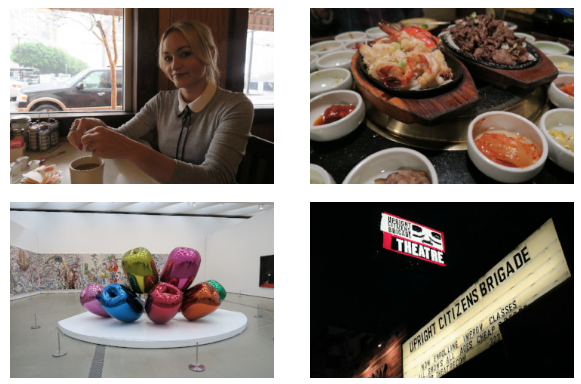
Later in 2017, my brother, Brandon, and I drove out to Colorado. I had never been there before and was blown away with how beautiful it was.
A memorable moment was in Silverthorne when we drove up into the mountains where there was a stream running alongside the road. We stopped and parked by the pine trees for a while, enjoying the fresh air and the sound of the water. It. Was. Bliss.

Goals for the Year Ahead
I always struggle with this part. What do I want to accomplish in 2018? To be completely honest, I’m not quite sure yet.
I do know I want:
More Skype chats.
I made this a priority every month in 2017, and I got one-on-one time with lots of fellow writers that I now talk to on a regular basis. Plus, it helps keep me from getting too lonely and it’s nice to have a network of people I can refer work to as well.
More in-person meet-ups.
I have a bad habit of staying in my hermit hole, but I always like it when I get out and meet up with people. This year I had coffee with my semi-local writer friend Courtney a few times, and a friend and I are meeting up in St. Louis in a few weeks for a mini-workcation.
More work-life balance.
This year I finally got to enjoy some of the perks of freelancing and gave myself permission to take a day off for things like hiking in the summer and the occasional mid-afternoon movie. I said no to a lot of opportunities, but in exchange, I wasn’t constantly worried about my to-do list. It was pretty great.
The rest is still kind of ??? for me. And I’m okay with that. This openness leaves room for new ideas and opportunities that pop up along the way.
Thanks for reading—I hope 2018 is your best year yet!
Want more insights like this? Sign up and get them sent right to your inbox every other Wednesday.
10 Things That Help Me Write
Today’s not so much a writing how-to in the traditional sense; it’s more of a how-I-do.
Cue the Montell Jordan!
Ahem, sorry about that.
Anyway: I wanted to share a few of my favorite things that help me write in hopes that maybe they’ll help you, too. Even if you’re not a writer, some of these items could make a nice addition to your workspace.
Today’s not so much a writing how-to in the traditional sense; it’s more of a how-I-do.
Cue the Montell Jordan!

Ahem, sorry about that.
Anyway: I wanted to share a few of my favorite things that help me write in hopes that maybe they’ll help you, too. Even if you’re not a writer, some of these items could make a nice addition to your workspace.
If you’re not interested in the commentary and just want the shortlist, I’ve linked everything for you right here:
These sweatpants and socks
Coffee + snacks (see below for full list of my favorites)
If you are interested in a bit more background detail on each, I’ve broken this part down into three sections: Equipment, environment, and creature comforts.
Part One: Equipment & Supplies
Okay, first up is equipment and supplies. This is the office-related stuff in my workspace that’s helped me get to a highly productive place and minimized my griping and groaning about what is largely sedentary work.
1. A really nice chair
About eight months into freelancing, my back started hurting...a lot. It kept me up at night, and no matter how devoted I was to yoga or getting up and walking around throughout the day, it remained a major problem. I was spending six to eight hours a day sitting in front of my computer (I can’t stand and write--it’s a focus thing, I guess) in a cheap chair without arms that cost about $30. No bueno.
After a while, I finally decided to invest in a nice chair: The Herman Miller Aeron. At the time, it was painful to spend that much money on *a chair*, but it has been hands down one of the most important purchases I’ve ever made for this business. I love it!
2. A large desktop monitor
Thrifty ol’ me tried working on a laptop when I started freelance writing, but the screen was too small to do the split-screen work I needed while researching and writing, and I was always hunched over at my desk (See also: back pain.)
I upgraded to the 27 inch iMac in 2014, and it’s been a major improvement workflow-wise for me. I wasn’t even an *Apple person* before that moment: I’d never owned a Mac of any kind. But now, I have a hard time getting deep work done pretty much anywhere else. If I’m working on a long-form piece of writing, 99% of the time, it happens on the big screen. (I use this wireless mouse and keyboard with it, btw.)
3. Convertible desk stand
You probably read this and thought, “OMG, your back hurt...we get it already!” But seriously. It’s a real problem for a lot of people who sit all day and stare at a computer. I use this convertible desk stand now to get on my feet in the afternoon when I’m finishing up my day with lightweight tasks like email, checking the socialz, scheduling content, etc.
4. Steno pads
I have to write down notes and ideas when I’m writing--on paper. It’s just part of the process. I prefer Steno pads because they’re small and easy to flip through when I need to find something a few pages back. Plus, they don’t take up too much room on my desk.
Writing pads/notebooks are an interesting point of discussion for writers: Ask around and you’ll find that most swear by a very specific type. For example, my friend and fellow writer Emma swears by legal pads.
...okay, okay enough about writing pads...moving on.
5. A big desk
A few years ago, Brandon and I went to IKEA and bought this large desk. It’s about 3x4, so there’s a lot of workspace, which is nice. The only downside is that this desk takes up a fair amount of room within the office. Eventually, I may size down a bit.
5. Whiteboard
My steno pad is for writing notes, but the whiteboard is for project to-do items (like finish draft 2 of X project) and business to-do items (like who to invoice for the month). I am fairly forgetful, so a daily/monthly list of action items here keeps me sane and on track.
Psst...I just opened a new purple marker and am very excited about ittttt!
Part Two: Environment
Next up: Environment. These are a few things that help create the right ~ambiance~ within my writing workspace so I can really settle in, get comfortable, and knock out my to-do list.
6. Mini space heater
In Illinois, it gets really cold between November-April. I hate being cold. It’s hard for me to concentrate when I’m shivering and resentful. We bought this mini space heater a few years ago, and it’s been a lifesaver for my always-cold feet. Plus, Brooks (my doggie coworker) loves laying in front of it. Win-win.
7. Desk lamp
Guess what: It also gets pretty gray and gloomy during those cold months. Isn’t the Midwest a dream!? Jkjk, it’s not that bad. But seeing as I don’t want my home office to feel like a cave, a good lamp has been helpful--especially when it starts getting dark around 4:00 in the afternoon. I like this one because it can change color tone and intensity based on the activity you're doing and the time of day.
8. Candles/Diffused oils
I was late to the party learning about hygge...but now I am all about it. Good smells and cozy feels help get me in the zone with writing, and it generally makes the office a more enjoyable place to spend time. I’ve been loving this candle lately and occasionally diffusing this essential oil (but not at the same time--that'd be gross.)
Part Three: Creature Comforts
Creature comforts, to me, are all about maximum comfort within my routine. When I can wear the same outfit/eat the same snacks/drink the same drinks throughout the day, it’s one less decision I have to make--and that gives me more mental space for writing and thinking.
9. My freelance “uniform”
Most days when I don’t have calls or meetings, I wear pretty much the same thing: A tri-blend t-shirt, sweatpants, wool socks, and maybe a sweatshirt. It the comfiest thing--and it helps me focus on the work I need to do (rather than “Oh, nice, my high-waisted jeans are literally trying to cut me in half.”)
Some people are all, “Wear shoes, it helps you think!” or, “Get dressed for the day when you get up: It’ll make you more productive.”
Nah, guys. For me, it’s all pajamas, all the time.
10. Brain fuel
When it comes to writing brain fuel, like most writers, I drink a lot of coffee each day--but I try to balance that out with a lot of water, too. I got this espresso maker recently and <3 making my own lattes at home.
A few of my most favorite snacks to munch on while I write:
Schar crackers and cheese
And that's about it! Or, this is all I could think of right now.
It's the good stuff, though, I promise.
This article originally appeared in my newsletter, A Cup of Copy. Sign up and get these free tips sent right to your inbox every other Wednesday.

How to Get More Ideal Work as a Freelance Writer
If there’s one question I get asked more than any other, it’s this: How do I reach my target audience and get them to hire me?
So that’s what we’re covering today.
The approach I’m outlining below is applicable to almost any niche and for any type of freelance work. If you want the long-form version, you can read it here. Otherwise, I’m doing the shortened version below.
Let’s get to it.
If there’s one question I get asked more than any other, it’s this: How do I reach my target audience and get them to hire me?
So that’s what we’re covering today.
The approach I’m outlining below is applicable to almost any niche and for any type of freelance work. If you want the long-form version, you can read it here. Otherwise, I’m doing the shortened version below.
Let’s get to it.
1. Guest posting: Get in front of your target audience
In order for people to hire you, they first need to know A) you exist and B) that you know your stuff.
So how do you do that?
Step 1: Find out where your audience goes for information.
Step 2: Get published there.
Sites seen as authority-builders (both niche-specific blogs and large publications) are often looking for guest contributors. But they only accept the best pitches from people who have something new and interesting to say.
That’s why you need to come up with an interesting angle for your article, and then pitch it in a way that addresses the needs/goals of the publication. Your pitch should include a 1-3 sentence summary and a few bullet points on why the audience would care about reading it.
But where do you send your clever pitch?
Two main options here (most of the time).
Option 1: Go through the site’s guest contributor process if it’s outlined on the site.
Option 2: Build relationships with the editors/content managers you want to work with via Twitter. In my experience, a personal connection always seems to be more effective.
Note: Befriending on Twitter doesn’t mean following them and then immediately DMing them your pitch. It means getting to know them, interacting with them, and making steps toward a real, human connection. Try to approach it in a non-slimy way.
2. Make friends with people in your niche.
Here’s the gist of things: Having freelancer friends who do similar work means creating more opportunities for collaboration.
As a single person, you can only handle so much work. When you get too busy, it’s good to have someone you trust and that does similar work to hand that off to. On the flip side, these friends can be the people you reach out to when things get slow on your end of things to see if they need extra help (or know someone who does.)
PLUS: Data shows that 81% of freelancers refer work to each other. It makes sense: Are you more likely to hand a project off to a complete stranger, or to someone you know and talk to regularly? The latter, every time. It’s a win-win.
More on this topic here.
3. Get face time with your ideal clients at in-person events.
Even if you’re introverted, it’s important to get occasional in-person events on your schedule. There’s just no perfect substitute for the opportunities that come from being in the same place (IRL) as a bunch of people working in your niche.
Relevant conferences, meetups, and special events are worth checking out—but make sure you leave time while you’re there for introducing yourself to people you want to meet. It’s scary to go up to a stranger and say, “Hi, I’m ____ and I do _____, nice to meet you”, but in my experience, it’s always worth doing.
What to look for at in-person events:
You’ve seen people you want to meet talking about going
It’s a niche-specific event, not a generalized, mass-gathering
It’s within your budget
If you’re really brave, you might even consider applying to speak at some of these events. Again, with your pitch, bring something unique to the table and be sure to tie in why it’s relevant to the audience and what they can expect to walk away with from your session. This is a great way for you to get in front of a large audience and to start building your authority on the topic you know best.
4. REFERRALS
Most freelancers (and small business owners, too) will tell you that the bulk of their business comes via referrals.
Why, tho? Because it puts you in the fast lane to conversion. If a friend tells you something is good, you believe it (unless your friend is a psycho, right?)
So to get referrals, you need to:
Ask for them from past/current clients and your freelancer friends
Be specific about what type of work you want referred
Ask for a testimonial, while they’re at it (if they were happy with your project)
So many people forget/don’t want to ask for referrals. But you need to. Consistently.
Do the Work
Especially when you’re getting started with a new business, the whole “finding the right clients and then getting them to hire you” thing is scary—and hard. But following these steps should point you in the right direction. It worked for me, and it’s worked for others, too.
Put in the work, and you can make it happen.
Questions about pitching? Finding your niche? Email me and I’ll help you however I can.
This article originally appeared in my newsletter, A Cup of Copy. Sign up and get these free tips sent right to your inbox every other Wednesday.
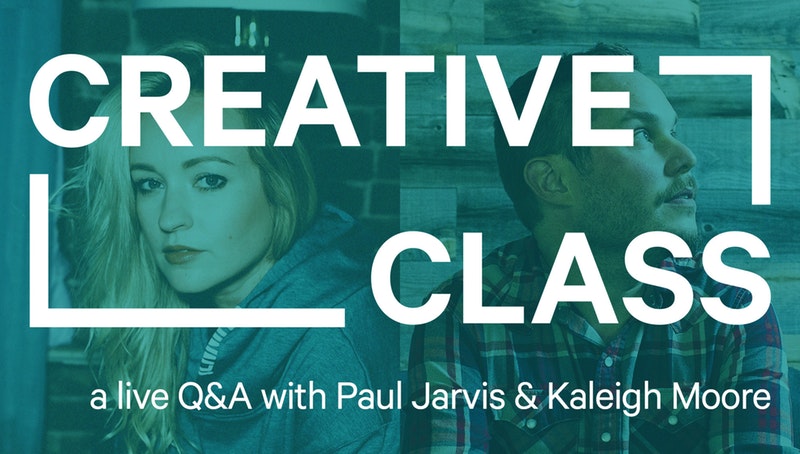
I Helped Create an Online Course for Freelancers!
The story of how I helped Paul Jarvis revamp The Creative Class, a course about the business side of freelancing. Currently open until 10/17.
Over the summer, I helped re-vamp The Creative Class, Paul Jarvis’s course on the business side of freelancing.
It covers: Clients. Pricing. Landing projects. Getting paid. Managing revisions (endless revisions). Finding clients and connecting with them in a way that feels right.
So far we’ve helped over 2,500 freelancers learn how to run their freelance businesses better (and we’d love to have the chance to help you as well.)
We also kicked off a podcast we recorded for it, withdifferent freelancing-related topics covered in each season.
I took The Creative Class back in 2014 (when I was a year into freelancing) and it helped me do a lot of important things.
Things like: Finding a niche. Getting processes in place for more efficient client onboarding. Implementing a strategy for raising my rates.
In short, it changed my business. Since taking the course, I’ve increased my income by an average of 50% year-over-year.
When Paul sent out an email asking for feedback on the course before he took a dive into re-working it for version 2.0, I responded. I asked for things like ready-to-use templates and email scripts. And I offered to help create those (with my writerly skills, and all).
Paul emailed me back and said, “Yeah. Let’s do it. And actually, I want to bring you in to add your insight to this course as well.”
So we got to work. Over the summer, we re-wrote every lesson from scratch, created new templates and email scripts, and built a freelancing course that’s stronger and better than before (which I honestly didn’t think was possible).
Learn more about what all is included in the course right here.
How punctuation influences your writing
When we talk about writing, we often think only about words.
But the more I write, the more I realize that punctuation…it’s huge.
It determines how your words are read, understood, and interpreted.
I’m not talking about proper grammar, either. I don’t care so much about that.
This is a conversation about how punctuation influences the style and voice of your writing. Let me illustrate with an example:
When we talk about writing, we often think only about words.
But the more I write, the more I realize that punctuation…it’s huge.
It determines how your words are read, understood, and interpreted.
I’m not talking about proper grammar, either. I don’t care so much about that. This is a conversation about how punctuation influences the style and voice of your writing.
How punctuation influences your writing
Let me illustrate with an example:
Our beanbag chair is the comfiest chair you will ever sit in, hands down. You’ll never want to sit in anything else ever again. We guarantee you’ll be satisfied or you’ll get your money back, guaranteed. That’s our promise to you.
Boring, right? Let’s try that again with some different punctuation and finesse.
Looking for the comfiest chair EVER?
Of course you are. Who isn’t?
We’ve found it for you. And—spoiler alert—it’s actually a beanbag. Crazy, right?
If you don’t believe us, the good news is: You can try one first.
Then, if you’re not 100% happy—just return it and we’ll give you back every cent you paid.
The voice is completely different in versions one and two. And it not only sounds different—the punctuation variation makes them feel different, too.
This is what punctuation does to our writing. It has a major impact on style, perception, and voice—and it has nothing to do with words.
Here are a few quick lessons on punctuation that you can keep in mind the next time you sit down to write.
Quick Lesson on Punctuation
Question marks make your writing more relatable. By posing questions (rhetorical and otherwise) you can empathize with your audience.
Commas slow things down. If you need readers to pause, um, use a comma (or two.)
Exclamation points are phony. Use sparingly. They often (totally!) make you sound fake.
Periods break things up. If you want to communicate quick, simple thoughts, break down sentences and add more periods.
Em dashes pause an existing thought. If you need to add something extra or stop the reader for a moment—throw in an em dash. (Shoutout to Lianna Patch for pointing out this em dash shortcut in Google Docs.)
Parentheses add an afterthought. Think of them as your aside with the audience.
In summary: Punctuation matters. Don’t forget to think about how it influences your writing voice.

This article originally appeared in my newsletter, A Cup of Copy. Sign up and get these free tips sent right to your inbox every other Wednesday.
P.S. Two features I'm excited about this week: This one I wrote for the JENNIFER blog on working in the tech industry, and this interview with Canva on my website/teaching what I know.

End-of-Summer Freelancing Reflection
Summer’s over.
Usually this makes me sad.
I think, “Where did the time go? I didn’t do all the things I wanted to do!”
But this summer, I feel like I finally got it right. I allowed myself to enjoy the flexibility of freelancing.
Summer’s over.
Usually this makes me sad.
I think, “Where did the time go? I didn’t do all the things I wanted to do!”
But this summer, I feel like I finally got it right. I allowed myself to enjoy the flexibility of freelance writing.
I took a few afternoons off to go swimming.
I hiked. I kayaked. I took long walks with my dog.
I traveled to Paris and Barcelona.
I sat by a stream in the Rocky Mountains.
I went to a movie by myself on a Friday afternoon and ate popcorn.
I read lots of books in my hammock.
And guess what?
I didn't earn less money. I didn’t lose any clients over it, and not a single deadline was missed. I still worked hard. I just worked fewer hours.
What I learned from better work-life balance
Because I was on a schedule with shifted priorities, the hours I did spend working were more focused, productive, and overall—more enjoyable.
I finally felt in control of my work.
It put me in the right place to jump into new opportunities:
I worked with Paul Jarvis on his freelancing course (more on that soon.)
I made my first YouTube video.
I did a live writing tutorial with Joanna Wiebe over on Copyhackers.
And this was a really different feeling for me.
Over the past three years of freelancing, I kind of resented summer because I never let myself enjoy it.
I just kept working. And working. And working. And then, POOF! Summer was over. Buh-bye.
Now, summer is over again. But I'm not sad about it. Fall is here (I've got the window up in my office today and a sweatshirt on.)
If this is your favorite season (like it is mine) and you have the ability to set your own hours, my message to you is this:
Give yourself permission to enjoy it.

This article originally appeared in my newsletter, A Cup of Copy. Sign up and get these free tips sent right to your inbox every other Wednesday.


Write when you have something to share
I’ve been thinking a lot lately about quality vs. quantity when it comes to writing.
The reason: I did some math recently.
If I’ve been averaging 3,600 words per week for almost four years now, that means I’ve written more than 691,000 words.
Um…that’s a lot of words. It’s kind of hard to wrap my mind around.
I’ve been thinking a lot lately about quality vs. quantity when it comes to writing.
The reason: I did some math recently.
If I’ve been averaging 3,600 words per week for almost four years now, that means I’ve written more than 691,000 words.

Um…that’s a lot of words. It’s kind of hard to wrap my mind around.
What I found a bit discouraging about this, though, was that only a portion of those words were ones I feel like truly made a difference. That I can look back on and point to as something I created that I’m proud of.
See, I’ve written hundreds of helpful blog posts and endless how-to's for my clients—which serve their purposes well, and it’s what they hire me to do—but not all of those posts have aged well.
(The good news for you: The topics I write about for here fall into the category “WRITING I’M PROUD OF.” You’re getting the good stuff, guys. In fact, some of my favorites are here, here, and here.)
But back to the topic.
This line of thinking brings up important questions for anyone who writes:
Is what you’re writing going to make a positive impact in some way?
Will you be proud of what you wrote six months from now?
Does your writing help other people?
Thinking about writing: Good vs. Great
Pretty much anyone can write and share their words online. Millions of blog posts are published every day—but that doesn’t mean all posts are created equal.
It wasn’t until I was hired to write a post for a new client this month that I realized how different some of my writing looks and feels when it has different purposes. (That published piece is right here, by the way.)
This new client’s blog is positioned to take an entirely different approach than most other brands I’ve worked with: What they produce has…more of a soul to it.
It’s 100% story-based. They don’t churn out oodles of blog posts each month. Each topic is thoughtful and speaks to a topic that their target audience can relate with on a very personal level. No quick hacks, no 10X growth strategies.
So when I sat down to write for them, I was excited. The words flowed right out of me onto the screen. I was able to tell a personal story of my own, and it felt good to be writing about something I learned first-hand that I knew could truly help the reader.
It was different. Good different.
Should you ditch your current writing strategy?
Am I saying there’s no value in those very action-oriented, marketing-focused posts?
No, not at all. There’s still a place for those, for sure. Those types of posts are great for SEO, they educate readers—they accomplish a lot of different important business goals.
But it does mean that a different type of writing needs to be worked into the mix.
I saw this tweet from Basecamp founder Jason Fried, and it put the thought I’ve been mulling over into words:
“We’re asked: What’s your content strategy? Answer: Not calling it content. Not thinking of it as content. We write when we have something to share.”
Now, think about that. Who looks forward to reading “content”?
NO ONE.
Content is a marketing term. It’s aimed at driving business objectives, not resonating with readers.
And this is the #1 lesson we all need to remember right now.
Writing isn’t just a marketing tactic.
Most interesting writing has soul. It has a person behind it. It connects with the reader on a deeper level.
At least some of your writing should be about:
Telling a personal story.
Being candid about both the good and bad we all deal with in our daily work.
Sharing experiences and offering up lessons learned in an authentic, genuine way.
Need an example? Josh Pigford, Founder of Baremetrics, did a nice job of this in his post “Everybody’s winging it.”
It's honest. It's human. It made me pay attention.
So what's the takeaway here?
Write things you can look back at in the future and be proud of. Be more open to sharing both the good and the bad. Tell more real-life stories.
Your audience wants that.
This article originally appeared in my newsletter, A Cup of Copy. Sign up and get these free tips sent right to your inbox every other Wednesday.
My Daily Routine as a Freelance Writer
Several readers have asked about my daily writing routine, so today, I wanted to share it with you.
Now, keep in mind that just because this routine works for me, it doesn’t mean it’s going to for you.
Sometimes I see these types of posts and it gives off the impression you have to mirror another person’s routine to achieve the same results. Not so.
Several readers have asked about my daily writing routine, so today, I wanted to share it with you.
Now, keep in mind that just because this routine works for me, it doesn’t mean it’s going to for you.
Sometimes I see these types of posts and it gives off the impression you have to mirror another person’s routine to achieve the same results. Not so.
Feel free to steal some of my tactics and approaches, but by NO MEANS do you have to do what I do to be a productive writer.
Whew, glad we cleared that up. Now, let’s get to it.
7:30-8:15 am: News and coffee
After my Fitbit alarm goes off around 7:30 and I make it out of bed, I usually start the day by taking care of the pets and then stumbling around the kitchen still half-asleep to fix some coffee and a small breakfast (usually biscotti or a piece of toast.)
Then I turn on CBS News and get caught up on what’s happening in the world for 10-15 minutes while I eat, wake up, and check email on my phone.
8:15-8:45 am: To-do list and email
Now that I’m awake, I go into the office and check out my whiteboard and wall calendar to see what all I need to do today. I make a fresh list at the end of every day so I don’t forget anything important. From there, I make another list in my steno notebook (on my desk) that’s prioritized based on what I need to accomplish and in what order. I LOVE LISTS.
(More on some of my office tools here.)
Then I plop down at my desk and start responding to emails first. There’s usually not a ton of catching up to do because most of my client work is laid out in advance on a content calendar (most use CoSchedule). For my coaching/mentoring work, I only work with 1-2 people at a time, so the workload is very manageable and focused.
After that’s done, I focus in for my first writing sprint of the day. Most of the time I’m writing blog content for a client.
If I’m writing a new post, I always start with an outline. Most of the companies I work with are into long-form content right now (1,000+ words), so most weeks my average word count is high. Here’s how I structure long-form content.
As I write, I use my own version of the Pomodoro Technique, which means I write in uninterrupted sprints of 15-20 minutes at a time with a 3-5 minute break between each sprint. During breaks, I usually check in on Twitter as it’s basically my virtual office water cooler.
I’m totally distracted by music/TV, so the house is completely silent for most of the workday--which is both eerie and somber but very much work-conducive for me.
When I’m writing, I sit (I use a Herman Miller Aeron chair) and a large Mac monitor with split screens so I can see the doc I’m working on (in Google Docs) as well as whatever research I’m referencing on the other side.

10:00: Walk
Around 10:00 each day I take Brooks (dog) for a mile to two-mile walk, unless it’s too hot out or raining. I live in the Midwest, so it’s right around the 90-degree mark right now and verrrry humid.
BUT, it’s good exercise for both of us and keeps me from getting too stiff from sitting for extended periods. Sometimes I take a podcast to listen to, or sometimes I use this time to think over a piece I’m writing about.
10:30 am- 12:00 pm: Writing time
After our walk, my mind is clear and I can really focus on diving back into writing or researching. For about 90 minutes (this time with far fewer breaks), I’ll work on fleshing out an in-depth blog post, sourcing images, finding examples to reference, and looking at data I can leverage to make the post a worthwhile read.
I write pretty efficiently during this period, and can typically knock out about 40-50% of a post in a single sitting (pending no disruptions.)
12:00-12:30 pm: Lunch
I don’t take a long lunch break because by this time I’m in the zone with work and want to get back to it. Today I had a gluten free bagel sandwich, grapes, and green tea. (Loving matcha right now.)
During the summer I like to eat out on our front porch in the shade and get some fresh air. It’s a good way to let my brain rest and recharge before jumping back in. If I'm not outside, I usually turn on an episode of The Office or Gilmore Girls that I’ve already seen 1,352 times.

12:30-2:30 pm: More writing
More sprints, more writing. I’m super productive during this stretch, fueled by a full stomach and caffeine. If I hit a writing rut, I either take steps to fix it or decide to move on to something else.
2:30 pm: Walk #2 or outdoor playtime
By this time Brooks is bored, so I either take him for another walk or out back to chase tennis balls in the yard. He could do this all day. I cannot.
3:00-4:15 pm: Work + wrap up
After we come back in, I find a good stopping place and wrap up whatever I was last working on. Then I start wrapping up the day by answering emails, occasionally setting up podcast guest interviews (for myself, I don’t have a podcast), and hopping into some forums to chat.
About this time I switch from sitting to standing (thanks convertible desk) since I don’t need intense focus for this type of work.
I usually check out r/freelancewriters on Reddit, Inbound.org, and the Copywriter Club group on Facebook. These are great places to learn, talk to fellow writers, and to keep tabs on what’s happening within my niche. Also more Twitter.
I think to myself: IT’S SO QUIET IN HERE. Have I said a word out loud today? No. No I haven’t.
I’ll finally turn on some music to break the silence. Today it’s the new HAIM album on Spotify. Now I’m working and dancing.
4:15 pm: Yoga
Around 4:15 I roll out the yoga mat and do about 15-20 minutes of stretches. For a while I was following videos, but now I just do my own thing to music. Last winter I got pretty sedentary and was SO STIFF all the time. My back hurt, I was miserable, it sucked. Hence making this a priority.
4:35: Last check
I do one final sweep of my email, make my to-do list for tomorrow, and end the day.
That’s it!
Now I wanna hear what your writing routine is like. If you have a post like this one, send it my way. I love reading these.
This article originally appeared in my newsletter, A Cup of Copy. Sign up and get these free tips sent right to your inbox every other Wednesday.
Messaging Strategy Document: What It Is and Why You Need One
Writing anything is difficult when you don’t have clear direction.
If you don’t know whom you’re writing for (or how the writing voice should sound, what your goals are, etc.) you’re kind of just winging it every time.
But successful writing doesn't ever "wing it." It's strategic, clear, and powerful.
That’s where a messaging strategy document comes in handy. I recently put one of these together, which is why it’s fresh in my mind.
Writing anything is difficult when you don’t have clear direction.
If you don’t know whom you’re writing for (or how the writing voice should sound, what your goals are, etc.) you’re kind of just winging it every time.
But successful writing doesn't ever "wing it." It's strategic, clear, and powerful.
That’s where a messaging strategy document comes in handy. I recently put one of these together, which is why it’s fresh in my mind.
Messaging Strategy: Client Project
A few weeks ago, the founder of a new software company reached out to me looking for some assistance.
He wanted to know if I could help him get direction on the messaging for the new resource he’s preparing to launch. He needed help strengthening the value proposition, setting basic guidelines for the writing style and tone—and some outside copywriter perspective to tighten up the overall messaging.
I was happy to help—this type of work is one of my favorite things to do.
But it also got me thinking. How many brands out there need a document like this and don’t even know it’s a “thing”?
It’s a thing, guys. So let’s look at how you can make one, too.
What Your Messaging Strategy Document Should Include
First things first: What you should include in your messaging strategy document?
Your messaging strategy document should outline:
1. A 1-3 sentence definition of what your company does. If you need to, start with 10 sentences and whittle them down to the simplest, most concise form.
2. A strong value proposition. Think about your target audience and what exactly your offering has of value for them. This should answer a potential customer’s “What’s in it for me?” question.
3. An outline of how your offering is different from competitors. If what you’re selling is similar to other offerings on the market, outline specifically how you’re different and why your product is unique.
4. A step-by-step process of how your offering/service works. If you can’t explain this simply in 1-4 steps, you’ll be better able to see how to re-work an overly complex process.
5. A brief style guide, including:
- Target customers and their pain points
- Your broad and specific goals for content and content formats
- Notes on language, tone, and style
- A list of competitors not to reference
- Key stats to leverage
Once you’ve got all of these pieces, put them together in one central document that is shared with anyone who touches content—internal and external.
Keep in mind that you don’t have to be at the beginning of your company history to build a document like this. Putting one together is helpful no matter what stage you’re at in the organization’s timeline.
Why This Document Matters
Having a document like this one helps everyone who writes for the company quickly and efficiently get up to speed on all of the key information they need to know when writing. Plus, it helps give all written content a more cohesive feeling overall.
This is a core asset to a company new or old because it distillsthe most important information into a single place where it can be quickly accessed and understood. It makes onboarding more efficient, and it can help keep all team members focused on the brand’s objectives, customers, and positioning when writing.
If you don’t have a document like this, put creating one on your to-do list.
It’s a simple way to boost clarity in any type of writing—and if you’re a new organization, it’ll help guide team members working on important marketing materials like your website, landing pages, etc.
This article originally appeared in my newsletter, A Cup of Copy. Sign up and get these free tips sent right to your inbox every other Wednesday.
Where to Work When You’re Tired of Working from Home
So, I’ve been working from a home office for about four years now.
I love our little house, but sometimes…I don’t.
Working in the same place day in and day out where I also spend my non-working hours can get a bit monotonous.
So, I’ve been working from a home office for about four years now.
I love our little house, but sometimes…I don’t.
Working in the same place day in and day out where I also spend my non-working hours can get a bit monotonous.

That’s why I try to get out of the house and take my laptop somewhere else sometimes.
It seems like a pretty common sense thing to do, but it’s harder than you’d think.
See, I am quite comfortable with my little office setup. I’ve got my giant monitor where I can split screens and see everything I need at once. It’s really quiet there because I can control the volume of all the things.
Plus—no interruptions. It’s work-conducive by design.
External locations, however, can’t always be controlled.
There might be little kids having a tantrum over chocolate milk at the coffee shop. Maybe there’s someone reading aloud to himself at the library and it’s DRIVING YOU NUTS. Or there’s not enough plugins at your favorite restaurant—or they aren’t open during your ideal working hours.
There are lots of reasons NOT to ever leave your house to do work, but I’ve been doing it more lately, and I’ve gotta say—it’s a good thing.
Here are some ideas you for where to go when you’re tired of working from home. These are some of my faves:
Another freelancer’s house
If you’re lucky enough to have a freelancer friend live nearby, see if you can invite yourself over. You can both sit in silence and work on your laptops and enjoy the company—even if you’re not always chatting. My pal Emma and I live far away from each other, so we rented an Airbnb in Austin, TX last year for a few days of co-working. It was lovely.
Outdoors
If you have a front porch, a back deck, or even just a chair with an umbrella and a small table, you can make an outdoor workspace for yourself. I’ve been spending a few afternoons working from our front porch on my laptop (when the mosquitos aren’t too bad) and added a box fan to the mix so I don’t get too hot. No travel required, and you still get a new set of scenery (plus nature sounds!)
The local library
Our local library is one of those late 1800s Carnegie stone structures. It’s cool and quiet and has lots of tables. The only drawback here is sometimes there’s a loud talker or the comfy chairs are taken. Otherwise, you can really knock out some work in this space. If you haven’t visited your library in a while, it’s worth checking out as a potential work environment. You don’t even have to be a cardholder!
A coffee joint
This is the one I do most often. There’s a super cozy coffee shop in a nearby town that has excellent coffee and lots of gluten-free things I can eat, and so some mornings I take my laptop there and hop on the free Wi-Fi to eat breakfast and work. I always leave when it gets busy or noisy, but it’s usually pretty low-key.
Pro-tip: Choose a coffee shop with good Wi-Fi. Sometimes if the place is too busy their connection is reeeeeeally slow.
Local B&B’s (Ask for a day rate!)
This is my go-to winter “I’ve gotta get out of the house!” solution. I look for B&B’s within a 60-mile radius (so I don’t have to travel very far) and reach out to see if they offer a discounted day rate. As in, I’m not staying overnight—I just want to come work from your cool place. Every time I’ve asked, the owner has said yes—and the rate has been crazy cheap (usually one third of the overnight rate). You get to work from a new place, and you can go back home when the workday ends and sleep in your own bed. Win-win!
A Workcation Spot
Maybe you need to take a little workcation and to actually travel somewhere new. I just wrote a piece for Inc. Magazine with six awesome spots you can workcation this summer if you need some ideas on where to go.
If you live in a bigger city than I do, you probably have lots of other cool options to consider, too—co-working spaces, parks, etc. These are just a few of my favorites that are fairly universal.
This article originally appeared in my newsletter, A Cup of Copy. Sign up and get these free tips sent right to your inbox every other Wednesday.
How to Improve Boring Writing
Ever feel like what you’re writing is just kind of...bland?
Writing ruts happen to the best of us.
- Maybe it’s because you’ve been writing about the same topic for so long.
- Maybe you’ve become immersed in your niche, and you’ve lost external perspective.
- Maybe you’re just real tired and need a lil’ nappy.
Ever feel like what you’re writing is just kind of...bland?
Writing ruts happen to the best of us.
Maybe it’s because you’ve been writing about the same topic for so long.
Maybe you’ve become immersed in your niche, and you’ve lost external perspective.
Maybe you’re just real tired and need a lil’ nappy.
Whatever the reason, I get it. Been there.
This used to happen to me quite a bit in the PR job I had working for a hunger-relief organization.
Because it was my full-time gig, I was writing a lot of the same messaging over and over, and as time passed, I found it increasingly difficult to write something fresh and interesting with a clear, energetic voice.
It kept coming out as...blah. Uninspired. Boring. The same.
But guess what? There are some easy fixes for this situation.
Here’s what I’d recommend trying when you feel like your writing is making people tune out or fall asleep.
Be more specific
Many times, bland writing is a product of simply being too general, high-level, or unspecific. You might need to get rid of any abstract platitudes and make your words more concrete and relatable.
For example, instead of writing:
“We’re working hard to make a difference and improve the lives of families in Illinois.”
You could write:
“Every day, we’re sending out trucks loaded with fresh fruit and vegetables all over the state to feed hungry children, adults, and seniors living in rural parts of Illinois.”
See how being more specific creates a much stronger mental image?
When you can add specificity to your writing, it makes the words more visual, emotional, and powerful. It makes your readers pay attention and connect with what you’re telling them.
Harness someone else’s voice
Your audience is probably pretty familiar with your voice, so it may also be a good idea to let someone else do the talking in your writing to mix things up a bit.
You can harness someone else’s voice by incorporating stories (sometimes in the form of quotes) from other relevant parties. When another voice gets some of the spotlight, your writing becomes less MEMEME and more inclusive and interesting for the reader.
Let’s use the original example again. Instead of sharing stats and facts from the internal organization on the hunger-relief work being done, you could tie in some stories and quotes from people benefitting from that work.
For example, you might use a quote from a food recipient on how the organization’s work is impacting his or her life. Adding in the extra voice adds meaningful context to the work being done, and it builds a much more compelling narrative than mere numbers and reporting.
Grab an outsider
If you’re still struggling (or the previous two suggestions didn’t really apply), my last tip is to grab someone who knows nothing about what you’re writing about and have them read what you’ve written so far.
A reader with fresh eyes and a blank slate on the topic can spot things you’d never even notice. They can suggest ways to make the writing more clear and understandable--and they can likely point out what’s missing from the big picture story.
Having someone with external perspective make suggestions can help you transform a snooze-worthy article into a share-worthy story. Ask for honest feedback, and then put it to good use.
Boring writing isn’t effective, plain and simple. When you feel yourself slipping into the rut, remember these tips and pull yourself back out.
This article originally appeared in my newsletter, A Cup of Copy. Sign up and get these free tips sent right to your inbox every other Wednesday.

I Went to Europe (And Fell Behind on Freelance Work)
I got a little behind on posting this, and I haven't done that for more than a year. Writing here is important to me, so I always try to work ahead and schedule things out...even if I'm going to be away.
I got a little behind on posting this, and I haven't done that for more than a year. Writing here is important to me, so I always try to work ahead and schedule things out...even if I'm going to be away.
But this time, I didn't.
Earlier this month, Brandon (my husband) and I flew overseas to visit Paris and Barcelona. We had about 10 days between the two places, and spent time visiting places like The Louvre, Salvador Dali's house and museum, and the Sagrada Familia.





It was wonderful, and we both learned a lot while we were there, both on tours and just by walking around and observing things.
One of the big things we both took away from the trip was the difference in priorities--or at least the appearance of shifted priorities--especially in regard to work.
Now, yes, I'm sure a lot of the people we encountered were also vacationers whose M.O. was to have a good time.
But I have to say: You look around, and most people seem...more...relaxed? More attuned to enjoying life?
They're certainly not as harried. People aren't shouting into their smartphones as they walk down the street. They chat and linger over dinner, watching people pass by instead of retreating into the solitude of their devices. There are breaks built into business hours, and Spain fully takes advantage of siesta hours. Most restaurants don't even re-open for dinner until 7:30 p.m.
Before we left for this trip, I was feeling a little bit uninspired. I didn't know what to write about in this newsletter, and so...I just...didn't. Rather than just sending you another copy how-to or advice on freelancing, I decided to wait.
I left hoping I'd discover something that would re-motivate me to write something worth reading for you--and I think that I did.
This trip was a reminder that in America, we pride ourselves (sometimes to a fault, self included) on being WORKWORKWORK oriented. We grow used to deadlines and stress and "the grind."
But it doesn't have to be that way. And that's not how the whole world works.
If nothing else, I wanted to share this perspective with you. That time off is GOOD. It's important. It helps you re-charge, grow, and get inspired for future work.
I've written before about how I've personally struggled with self-competition and workaholic tendencies as a freelancer, but this trip was a non-working one for me.
So even if you don't have a big trip planned this summer, I'm urging you to make time to enjoy yourself. Schedule it in if you have to. Go outside. Work less. Allow yourself to relax a bit.
Life's too short to worry about posting a blog week late, don't you think?
This article originally appeared in my newsletter, A Cup of Copy. Sign up and get these free tips sent right to your inbox every other Wednesday.
8 Must-Read Books That Will Improve Your Writing Skills
This week, I wanna talk about books on writing.
The business world needs better writers, as indicated by studies that show writing training is a billion-dollar industry and research that shows writing is a skill desired by 73% of hiring managers.
This week, I want to talk about books on writing.
The business world needs better writers, as indicated by studies that show writing training is a billion-dollar industry and research that shows writing is a skill desired by 73% of hiring managers.
And sometimes, rather than taking a course, it's reading a book that can truly improve your skills.
Let's look at eight of my favorite books on writing that will expand your horizons and teach you to become a better writer.
Each of the eight titles below have lessons and actionable tips for anyone who needs help in the business writing department.
1. Writing That Works: How to Communicate Effectively in Business by Kenneth Roman
Amazon summary: "Writing That Works will help you say what you want to say, with less difficulty and more confidence. Now in its third edition, this completely updated classic has been expanded to included all new advice on e-mail and the e-writing world, plus a fresh point of view on political correctness."
This is a great introductory read for anyone who wants a broad overview on business writing, as well as a refresher course on effective communications.
2. Words that Sell by Richard Bayan
Amazon summary: "Looking for a better way to say "authentic?" Words That Sell gives you 57 alternatives. How about "appealing?" Take your pick from 76 synonyms. You'll even find more than 100 variations on "exciting." Fully updated and expanded, this edition of the copywriting classic is packed with inspiration-on-demand for busy professionals who need to win customers--by mail, online, or in person."
If you do writing aimed at driving sales, this book is essential. It's a wealth of information on persuasion and sales-oriented business writing.
3. HBR Guide to Better Business Writing by Bryan A. Garner
Amazon summary: "When you're fumbling for words and pressed for time, you might be tempted to dismiss good business writing as a luxury. But it's a skill you must cultivate to succeed: You'll lose time, money, and influence if your e-mails, proposals, and other important documents fail to win people over. Read this guide to improve your skills."
Consider this your business writing Bible. Use this book as a go-to resource for effective writing at work.
4. Business Writing for Dummies by Natalie Canavor
Amazon summary: "Whether you're crafting a short and sweet email or bidding for a crucial project, Business Writing For Dummies is the only guide you need. Inside you'll find: The basic principles of how to write well How to avoid the common pitfalls that immediately turn a reader off."
Feel like your writing skills are less than desirable? Start here. You'll learn how to take a new approach to business writing from the ground up.
5. Business Writing: What Works, What Won't by Wilma Davidson
Amazon summary: "A thorough, accessible, and results-oriented guidebook intended for today's business environment, Business Writing: What Works, What Won't offers the first and last word on writing memos, business letters, reports, and all other kinds of business documents."
This is a fantastic tool to call on any time you're working on written communications at work. I particularly like the results-driven approach here.
6. Business Writing Today: A Practical Guide by Natalie Canavor
Amazon summary: " In this accessible and reader-friendly book, Natalie Canavor shares a step-by-step framework to help you write strategically, win opportunities, and perform better on the job. You'll know what to say and how to say it in any medium from email to blog, cover letter, proposal, resume, report, website, tweet, news release, and more."
Knowing how to position your business writing is a key element in successful communication. This read will walk you through how to take the right angle with your writing.
7. The Elements of Style by William Strunk and E.B. White
Amazon summary: "This is The Elements of Style, the classic style manual, now in a fourth edition. A new Foreword by Roger Angell reminds readers that the advice of Strunk & White is as valuable today as when it was first offered. This book's unique tone, wit and charm have conveyed the principles of English style to millions of readers. Use the fourth edition of "the little book" to make a big impact with writing."
A classic. No matter what type of writing you do--this book will help you do it better.
8. How to Say It: Choice Words, Phrases, Sentences, and Paragraphs for Every Situation by Rosalie Maggio
Amazon summary: "How to Say It provides clear and practical guidance for what to say and what not to say in any situation. Covering everything from business correspondence to personal letters, this is the perfect desk reference for anyone who often finds themselves struggling to find those perfect words."
For the writer who struggles to find the right words, this book can help. Read it to find new ways to phrase and communicate your ideas.

Making Friends & Being Kind is Good for Your Freelance Career
The other day, I tweeted something that got more engagement than anything I’ve ever tweeted before.
It said: “Freelancer math: Connections + conversations + being nice = $”
I think it was popular because it distills a fairly complex concept into a simple idea, which is:
The other day, I tweeted something that got more engagement than anything I’ve ever tweeted before.

It said: “Freelancer math: Connections + conversations + being nice = $”
I think it was popular because it distills a fairly complex concept into a simple idea, which is:
If you make friends, regularly talk to other people who do similar work or who understand your work, and are kind to them—it often translates into positive outcomes (and sometimes, that means work.)
It probably still seems like a fairly vague idea though. Maybe you’re thinking, “Okay, so I just make friends online and then somehow it magically translates to money?”
Not exactly. I’ve talked about the importance of community before, but this time I want to give you some actionable ideas on how you can make this “math” work for your business right away.
Be Deliberate
When you work alone, it’s easy to stay in your own little bubble and only chat with your friends, family, and current clients. Personally, I’ve been there and done that. It’s fine, but it’s lonely sometimes.
Over the past year, however, I’ve found that being deliberate about making friends and talking/meeting with people outside my bubble usually results in amazing thing: Aside from talking with some incredible people I admire and appreciate, it's also lead to new opportunities for my business.
And that kind of makes sense when you think about it.
People tend to recommend people they know rather than total strangers in most situations. If you had to recommend someone for an opportunity, would you suggest a random acquaintance that you’re not all that familiar with, or would you recommend someone you personally know that is good at the work they do?
The latter, every time.
Now, I have to say: Getting referrals and introductions isn’t my main goal in talking to other people. I don’t do it because I ultimately want them to give me work or open doors for me. I do it because I genuinely like talking to them—and the extra stuff is just gravy. But guess what? The positive impact it makes on my business is a lovely side effect.
Here are some of the things you can start doing to be more deliberate about making friends and starting conversations online:
Scheduling Skype dates with fellow writers/internet friends
Meeting up with a fellow freelancer for coffee or co-working or conferences
Participating in conversations on Slack channels or Facebook groups on a regular basis
These are all things I do on a regular basis—but again, I’m not doing it because I’m hungry for business. I do it because it’s good for me to take my nose out of my daily work and talk to some other humans—plus, I enjoy it. I want to hear what other people are working on, what their workdays look like, what projects they're excited about...you know, things you'd talk about with a co-worker.
Quality Over Quantity
You don’t have to have oodles of friends and exhaust yourself catching up with everyone all the time—instead, focus on quality over quantity. Make time for the people online you actually like, stay in touch with them, and work on being a good friend to them.
Devote a few minutes of the time you spend on social media each day to talking to people—not just lurking and liking. Participate.
Follow some people you like on social media and go back and forth with them. Shoot them an email and ask how their projects are going. Be genuine in your interest.
As you talk to people on a more regular basis, you’ll form closer relationships (and hopefully friendships) with a core group of people you care about. This group of connections will eventually come to know you for who you are and what you do—and you’ll be more top-of-mind when they need to recommend someone who does what you do.
I wrote more extensively about this here (look specifically at the section on referrals.)
Again, it’s gravy—it’s not the reason you do it. People have pretty good BS detectors and they’ll see right through you if you try to forge a relationship for the wrong reasons.
Make an Effort to Make Friends
The bottom line: Human connections are valuable as a freelancer—even if there’s no immediate financial payout. The more friends you make, the more connections you establish—the larger your social web becomes.
Sometimes, that translates into opportunity. Other times, it’s just nice to have when you’re in need of someone who “gets” you and your work. Either way, it’s important.
One of the best things you can do for yourself and for your business is to make friends, to start conversations, and to be a kind person. It’ll pay in more than one way.
This article originally appeared in my newsletter, A Cup of Copy. Sign up and get these free tips sent right to your inbox every other Wednesday.

Brainstorming Blog Topics That People Actually Want to Read
Anyone can crank out blog content.
TBH, there’s lots of garbage produced every day.
The reason: Not everyone can dream up relevant topics that people are actually interested in reading.
Anyone can crank out blog content.
TBH, there’s lots of garbage produced every day.
The reason: Not everyone can dream up relevant topics that people are actually interested in reading.
Lots of people just write based on internal marketing objectives, they mimic their competitors, or they guess at what their target audience wants to read about.
But that’s not going to make writing blog content a super worthwhile endeavor.
Here’s a more strategic approach for brainstorming blog topics your audience (and clients’ audiences) actually want to read.
1. Poll your audience
The best way to get started is by going right to the source. Ask your audience (or people within your niche) what burning questions they have, what the most valuable post they’ve read recently was, and which topics they read about most often. Use email, social media, relevant forums--places where your peeps spend time.
By giving your target audience a voice, you’ll often discover some great ideas for content that you never even considered. In fact, this is the same reason I conduct a survey of my email subscribers a few times per year. This topic was a subscriber suggestion.
2. Look at related searches
You know how Google kicks out a few related search queries at the bottom of the page when you search something? Pay attention to these. By looking at the related queries, you can find other high volume search topics that act as ideas for blog topics.

For example: Say you’re writing for a company that offers closet organization services. You type in “How to organize a closet” and see that related search queries are about organizing small spaces, drawer organization, and DIY ideas. There are three potential topics. BOOM.
Added bonus: They’re more specific than your original high-level query so you can take a deep dive rather than skimming the surface of a broad topic.
3. Use BuzzSumo
BuzzSumo lets you find at the top 10 most shared pieces of content via keyword search, which can be filtered by date, content type, country, and more. If you want to see what’s working for other writers and getting lots of social traction, this tool can help you kick off your research. The free version is limited, but the paid version has much more in-depth results.
4. Look at the news
When working to brainstorm topics that are on the cutting edge of your niche, you’ll need to study the news and make notes of common trends and themes you’re seeing. Looking at this data, you can start to think of unique things you can bring to the conversation. Ask yourself:
Is there data you can synthesize to illustrate a point no one is making yet?
Are shifts within your niche opening the door to new challenges, nuances, and points of struggle? If so, what do people need to know about overcoming those obstacles?
Do you have original research you can publish that brings new insight to an ongoing conversation?
Be Original
Once you’ve gone through these steps and have a solid list of ideas you can start hashing out, remember that you need to contribute something fresh and original to the online conversation.
Don’t simply restate what’s already been said a million times--give it a new angle and draw original (and research-backed) conclusions. Also, remember to model your formatting at the folks who do this well. If you can do this, you can boost the relevancy, value, and often ROI of your content right away.
Have other questions you want me to answer in the future? Email me and let me know what topic you want me to cover next. I'll do my best to give a solid answer over the coming weeks.
This article originally appeared in my newsletter, A Cup of Copy. Sign up and get these free tips sent right to your inbox every other Wednesday.
How to Combat Scope Creep in Freelance Writing Jobs
Ever had a writing client who keeps adding more to your plate?
They want you do to just a few more things—no big deal.
At least that’s how they phrase it.
Ever had a writing client who keeps adding more to your plate?
They want you do to just a few more things—no big deal.
At least that’s how they phrase it.
Can’t you just help them out a little bit? It won’t take long. And they’re paying you good money already.
You start to think…oh, okay, I can do it—I want them to hire me again and I don’t want to make them mad. It probably really won’t take much time. They’re right.
GUYS! No. That’s not okay.
You’re a business owner just like they are—and your time is important and valuable, too.
Scope creep happens all the time in freelance working relationships—and it’s a problem. Let’s talk about how you can establish better boundaries with clients as well as how to handle instances when scope begins to get stretched beyond your original agreement.
Better Boundaries
Each time you work with a client on a new project, you need to put together a few documents that will get both you and the client on the same page about project scope, expectations, and deadlines.
1. A contract
You need a basic legal contract with each client you work with to protect you and your business. Within the contract, you’ll outline your fees for work that goes beyond the project’s scope, as well as when payment is expected for that. You and the client need to sign off on the contract before any work begins.
2. A project outline
When you get down into the project details, you’ll want to put together a document that’s focused on the particular assignment—not so high level.
This doesn’t have to be a fancy-schmancy document, it just needs to outline a few key details for you and your client, such as:
What tasks you’ll be completing as part of the project
What information/assets you need from the client and by when
When different deliverables are due
Provide as much detail as you can here and don’t be afraid to ask questions that add clarity before writing this document. It’ll help you and your client better communicate and understand what’s expected—and it’s a good way to reinforce the value you’re providing.
3. A process document
It’s also a good idea to send each new client you work with a document that basically outlines your process and how you work. This is part of a solid onboarding process for your business.
In my process document, I include:
Average turnaround time for first drafts and revisions
What tool I’ll use for writing content(always Google Docs)
My office hours, AKA when I’m available and when I’m not
FAQs that help address some of the common questions I get from new clients
Essentially, this piece is a really nice way to show that you’ve got it together. It proactively addresses client questions and makes you look polished and professional.
How to Handle Scope Creep
Now, even with these documents and your efforts to eliminate gray areas around project scope, you’re still going to encounter the occasional client who tries to sneak in a lil’ extra work from you.
Or sometimes they’re not so subtle.
I once had a client call and text me repeatedly on a Friday evening telling me to send him an additional document right away. As you can imagine, we parted ways—and he didn’t get that document.
Here are some things you can say when a client begins to ask for things outside your agreement:
I’d be happy to help you with that. Keep in mind this is outside what we outlined going into the project, so I’ll need to charge the additional rate of $XXX that was noted in our contract for that. I can get started on X date if you want to move ahead.
I noticed this goes a bit beyond what we originally outlined for this project, so I’ll need to charge $XXX for the additional X I’m providing. Let me know if this is an issue and we can discuss if needed.
If the client gets angry at your request for additional billing for the added work, remind them that you outlined these fees in your original contract—and if they need to cut back in another area of the project to keep the budget as is, you can be flexible.
Just remember that both parties need to be willing to compromise.
So often freelancers feel that they owe their clients the world and that they’re just lucky to have been hired in the first place.
Yes, it’s an amazing gig—but it’s still a business—and you need to be business-minded.
Don’t undervalue your work. Your clients will respect you more when you keep more rigid business boundaries rather than allowing people to take advantage of you.
Ever had a problem handling scope creep yourself? Tweet me @kaleighf. Let's chat.
This article originally appeared in my newsletter, A Cup of Copy. Sign up and get these free tips sent right to your inbox every other Wednesday.

5 Ways to Improve Your Copy on Landing Pages
Landing page, sales page, donation page…these all have a common goal: Get the reader to take some sort of action.
The question is: How do ya get them to do that?
Let’s look at a few proven ways you can fine-tune your copy on these pages to make them more effective (for yourself, or for clients.)
Landing page, sales page, donation page…these all have a common goal: Get the reader to take some sort of action.
The question is: How do ya get them to do that?
Let’s look at a few proven ways you can fine-tune your copy on these pages to make them more effective (for yourself, or for clients.)
1. Open boldly
Right at the top of the page, you need a header that grabs the reader. You can do this by addressing a pain point, speaking to an obtainable end goal, or just by posing a question the reader wants answered.
Don’t waste this precious real estate with a boring title or company logo. The very first thing a reader encounters at the top of a landing page should be part of the path toward conversion.
2. Minimize distraction
As the reader moves down the page, there shouldn’t be multiple paths for conversion that ask the reader to do several different things. Each landing page needs to have a singular goal with no distractions that can confuse a reader and keep them from moving toward taking action.
Eliminate all of the distractions that can get in the way your one goal, and then make sure your copy is all working toward encouraging the reader to follow through.
Once you’ve done this, test different copywriting formulas and see which produces the highest conversion rate.
3. Talk about benefits, not features
NOBODY CARES ABOUT FEATURES. They just don’t.
I didn’t buy a new vacuum because it had a washable HEPA filter--I bought it because it was top-rated for sucking up dog hair, which is a major pain point in my life. (The dog hair, I mean. There’s so much of it. But look at that face!)

The point is: Instead of wasting your reader’s time with feature-speak, tell them the benefits of your offering’s features. Tell them what pain points you can solve. Tell them how you can make life simpler, easier, and less stressful. Period.
4. Leverage microcopy
Your call to action button probably works pretty well on its own, but putting microcopy around it can make it even more effective.
What’s microcopy? It’s the little text around buttons that tells a reader a bit more information about what happens when the button is clicked. You can help readers overcome obstacles to conversion with an arrow and microcopy that says “Click here to get started” or “30-day money-back guarantee.”
Help break down the walls to conversion by using this little extra bit of copy to answer questions, to overcome objections, and to nudge readers toward taking action.
5. Include social proof
Last, be sure you have other people backing up your claims of awesomeness. Include testimonials, customer reviews, stats on customer satisfaction--you name it. The more the merrier in this department. All of these elements of social proof boost the credibility of your copy.
Just keep in mind that these often belong below the fold on your landing page--they’re secondary information. Use them to reinforce your copy (without overpowering your main message.)
Improve Your Copy on Landing Pages
Keep these tips in mind the next time you’re writing or revising a conversion-oriented page on your website, and in no time at all, you’ll be getting more click-throughs and converted visitors.
Want more writing tips? Check out:
Have other questions about writing? Let me know. Tweet me @kaleighf.
This article originally appeared in my newsletter, A Cup of Copy. Sign up and get these free tips sent right to your inbox every other Wednesday.
P.S. I was a guest on the GetCredo and CoSchedule podcasts recently--if you're interested in hearing my voice (?) and the story of how I got started freelancing, give these a listen.