I recently talked to Sarah Adam at Wix about something I've been curious about for a while: What does a creator campaign look like when the goal isn't just getting people to see the content, but getting AI search engines to cite it? Wix has already built a separate creator brief specifically for this (and I think more B2B brands are going to start doing the same thing in 2027.)
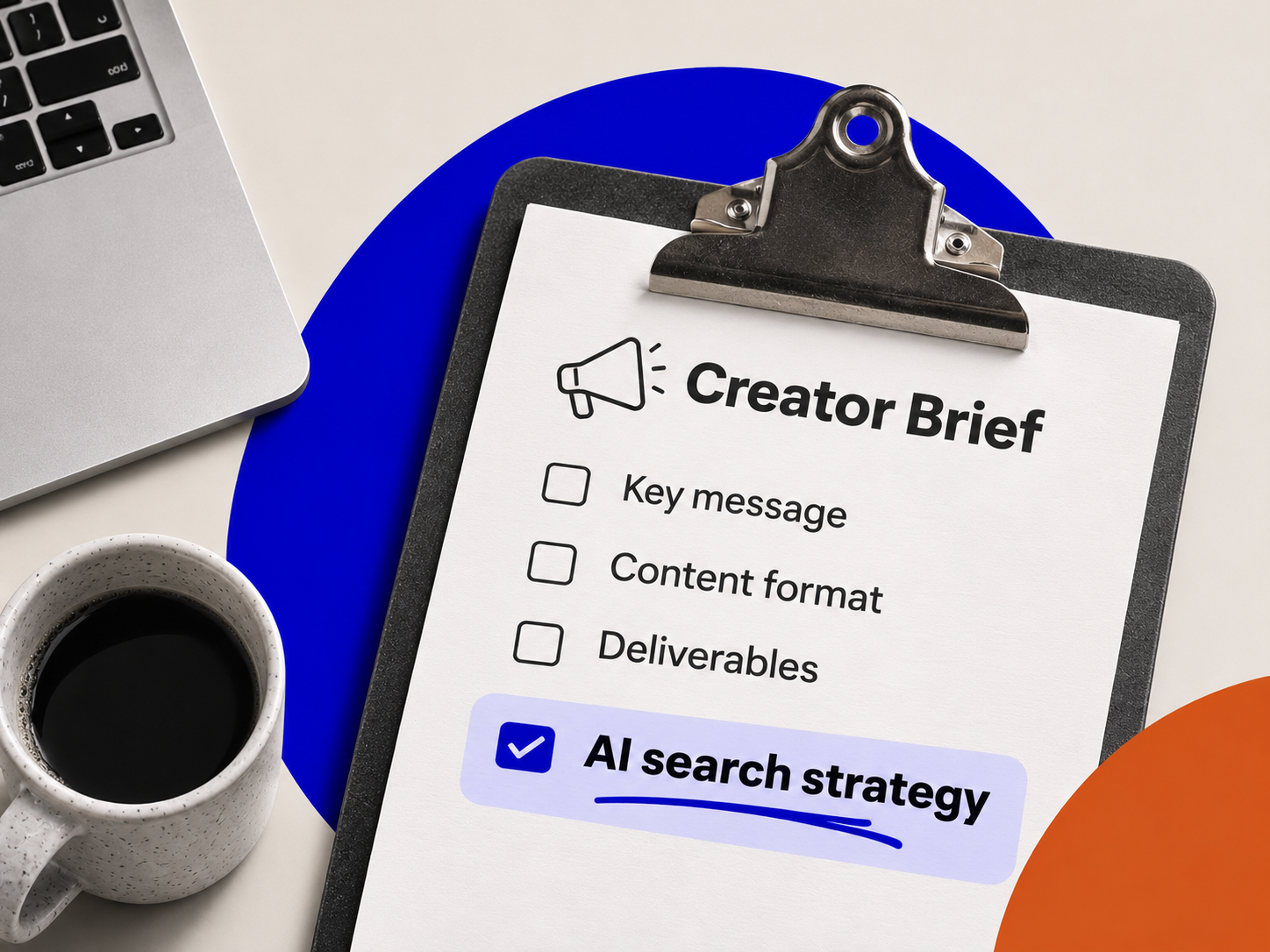
Here’s what a typical creator/influencer campaign brief looks like when one of these folks is hired to create social media content. They get high-level instructions like:
Create two LinkedIn posts and a YouTube video.
Talk about these three product benefits.
Include the campaign hashtag and tag the brand.
Share impressions, engagement, and clicks after publishing.
There’s nothing wrong with this approach; it's a perfectly reasonable brief if your goal is reaching the creator's existing audience. But what if you also want your brand to show up when someone asks ChatGPT for the best software in your category? That's a different objective, and I don't think the traditional creator brief does much to address it.
Creator marketing and AI search are coming together
TopRank Marketing and Ascend2 recently published their 2027 B2B Influencer & Creator Marketing Report, based on a survey of B2B marketers.
A few findings stood out to me:
86% say improving visibility in generative AI tools will matter to their influencer marketing programs this year.
Only 21% have made AI visibility a primary goal.
48% of marketers who integrate influencer marketing with AEO/GEO report their brand being cited in AI answers, compared with 26% of marketers who don't.
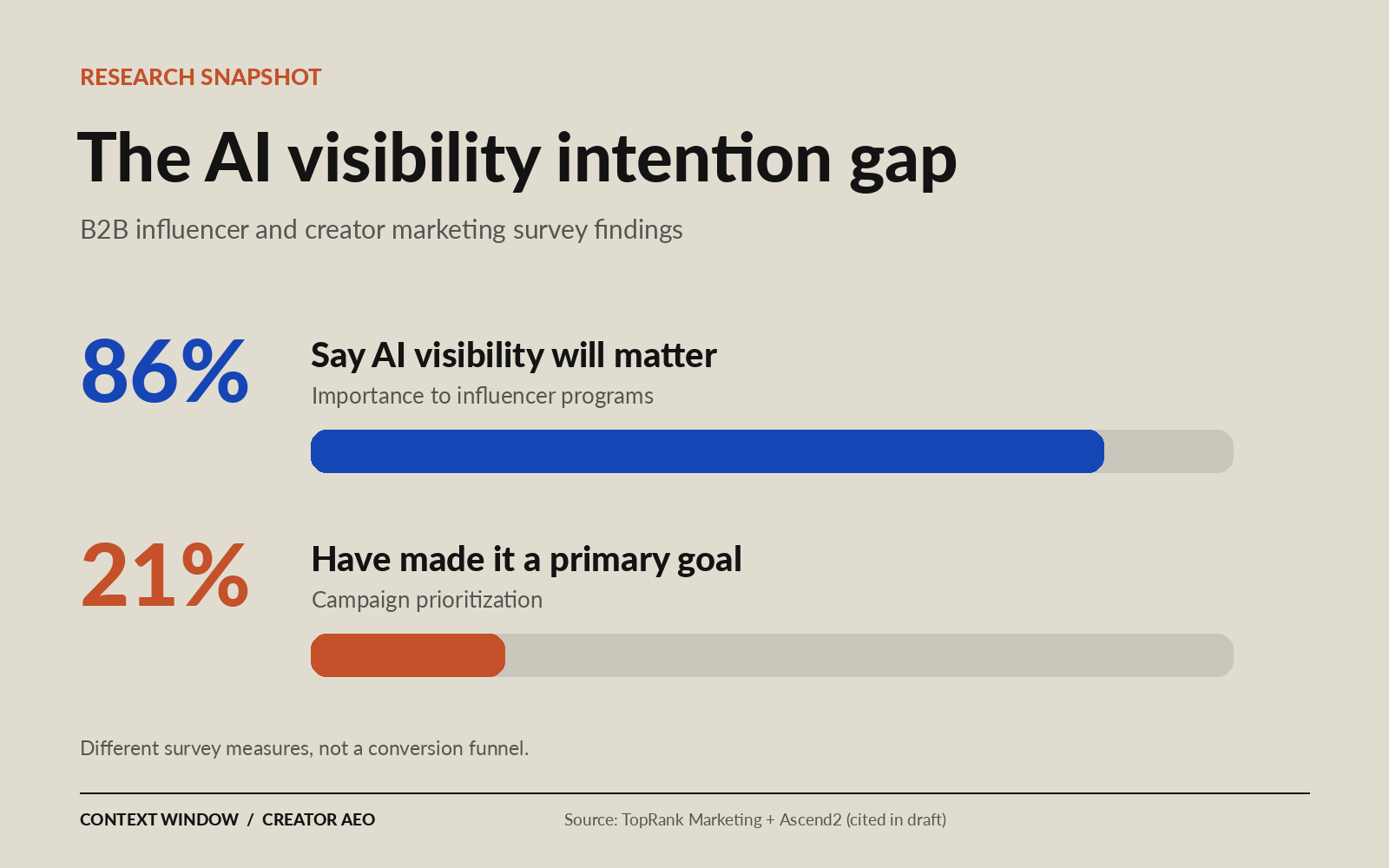
That last number is especially interesting: The group integrating influencer marketing with AI search is nearly twice as likely to report citations. Brands recognize that creators can contribute to AI visibility, but relatively few have made that an explicit campaign objective…and if you're not building that objective into the campaign from the beginning, it's pretty difficult to measure whether you're making progress toward it.
How to brief creators for AEO-focused content
Here’s how I’d tackle the briefing piece of the puzzle if I were tasked with getting creators and influencers to create content aimed at helping my brand show up in AI answers.
1. Start with the question you want AI to answer
First, identify the questions you care about. What are the top 10 questions your buyers are asking an AI tool when looking for your type of product/service? From there, find creators who can produce content addressing those questions. Look for people who are already talking about your niche, doing tutorials/educational content around it, and who have a relevant audience of your target customers.
Now, an LLM visibility brief (AKA a creator brief aimed at helping a brand show up in AI answers) specifies the target question, along with guidance for the video's title, structure, chapters, and description. That's quite different from starting with a product feature or campaign announcement.
Let's say you work for a project management software company. Your traditional creator brief might say: “Create a video explaining how our product helps teams stay organized and work more efficiently.”
Okay, sure. But that's a broad promotional message. It doesn't tell the creator much about what customers are trying to figure out. Now consider a different starting point: “What's the best project management software for a 20-person creative agency?”
That question opens the door to content that gets into how agencies handle client projects, what features matter when multiple people are working on the same account, how different tools compare, and which software makes sense for different team sizes. The product can still be part of the conversation, but now it's being discussed in the context of a real buying decision.
2. Look for creators with expertise, not just followers
The next question is who should create this content. Traditionally, creator selection has focused on audience size, engagement, demographics, and reach. Those things still matter, especially if your campaign has an awareness or acquisition objective.
But for Creator AEO, I'd add a few more considerations.
Does this person have actual experience with the subject?
Do they regularly publish content about the category?
Are they known for explaining complicated topics, reviewing tools, or sharing firsthand experience?
Are they already showing up in AI answers?
I wouldn't make that last one a requirement, but I'd absolutely look into it. Smaller, niche-specific creators can often be more successful with detailed LLM briefs than larger creators. Part of the reason is practical: Those briefs require a lot of specificity, and established creators tend to want more creative freedom.
For a B2B SaaS company, for example, a consultant with 5,000 LinkedIn followers who publishes detailed software comparisons might be a better fit for an AI visibility campaign than a general business influencer with 200,000 followers.
My suggestion is always to start with your customers. Look for customers who are already creating educational content, reviewing products, or sharing their workflows publicly. They're often the people best equipped to answer buyer questions because they've actually used the product to solve a problem (and you're not asking them to manufacture expertise they don't have.)
3. Change what you're asking creators to make
If the only deliverable for a creator brief is a short video saying how great a product is, there's not necessarily much information for an AI search engine to retrieve and use. For AI visibility, I'd experiment with formats that provide more detail, context, and firsthand experience.
A few examples:
Product comparisons: Have a creator explain how two or three products differ, including features, tradeoffs, and who each option is best suited for.
Hands-on tutorials: Ask someone to demonstrate how they solve a specific problem using the product. Not just a tour of the interface, but an actual workflow with an outcome.
First-person reviews: Give customers space to talk about what they like, what they don't, and how their experience compares with their expectations.
Educational explainers: Work with subject-matter experts to answer common questions in your category, with your product introduced where it makes sense.
Original case studies: Have customers walk through a real problem, the approach they took, and what happened as a result.
Notice that not all of these are direct endorsements. That's intentional! I don't think brands should be trying to turn every creator partnership into another glowing product review. There's already enough low-value promotional content on the internet. The opportunity is to help credible people publish information that would be useful even if AI search didn't exist. For example, instead of briefing a creator to say: “Show how our time-tracking software helps agencies save time.”
I'd try something like: “Walk through how a 15-person agency can identify its most profitable clients using time-tracking data. Demonstrate the process, explain what information you need, and share what an agency should consider before choosing a tool.”
That gives the creator a real topic to explore and gives the audience something useful to learn. It also creates more specific information that an AI system could potentially use when answering a related question. Of course, none of this guarantees a citation. I'm also not suggesting that adding a few target phrases to a YouTube description will magically make ChatGPT recommend your brand.
The point is to make the content that’s genuinely useful and easier to understand, for both humans and machines.
4. Think about where the content will live
Another thing I'd add to the brief is a distribution plan. For traditional influencer marketing, distribution is often pretty straightforward: Publish to the creator's audience on the agreed-upon platform, and maybe amplify it through paid media. For Creator AEO, I think brands need to be more thoughtful about where useful content remains publicly accessible.
That might include:
A detailed YouTube tutorial with a descriptive title, chapters, and transcript
A LinkedIn article answering a specific industry question
A creator's blog post reviewing or comparing products
An expert interview published on a relevant industry website
A podcast episode with detailed, publicly available show notes
That doesn't mean every creator campaign needs a LinkedIn article, but it does suggest substantive professional content on LinkedIn is worth considering, particularly for B2B companies. And remember: Just because content is publicly available or indexed doesn't mean an AI system will retrieve it.
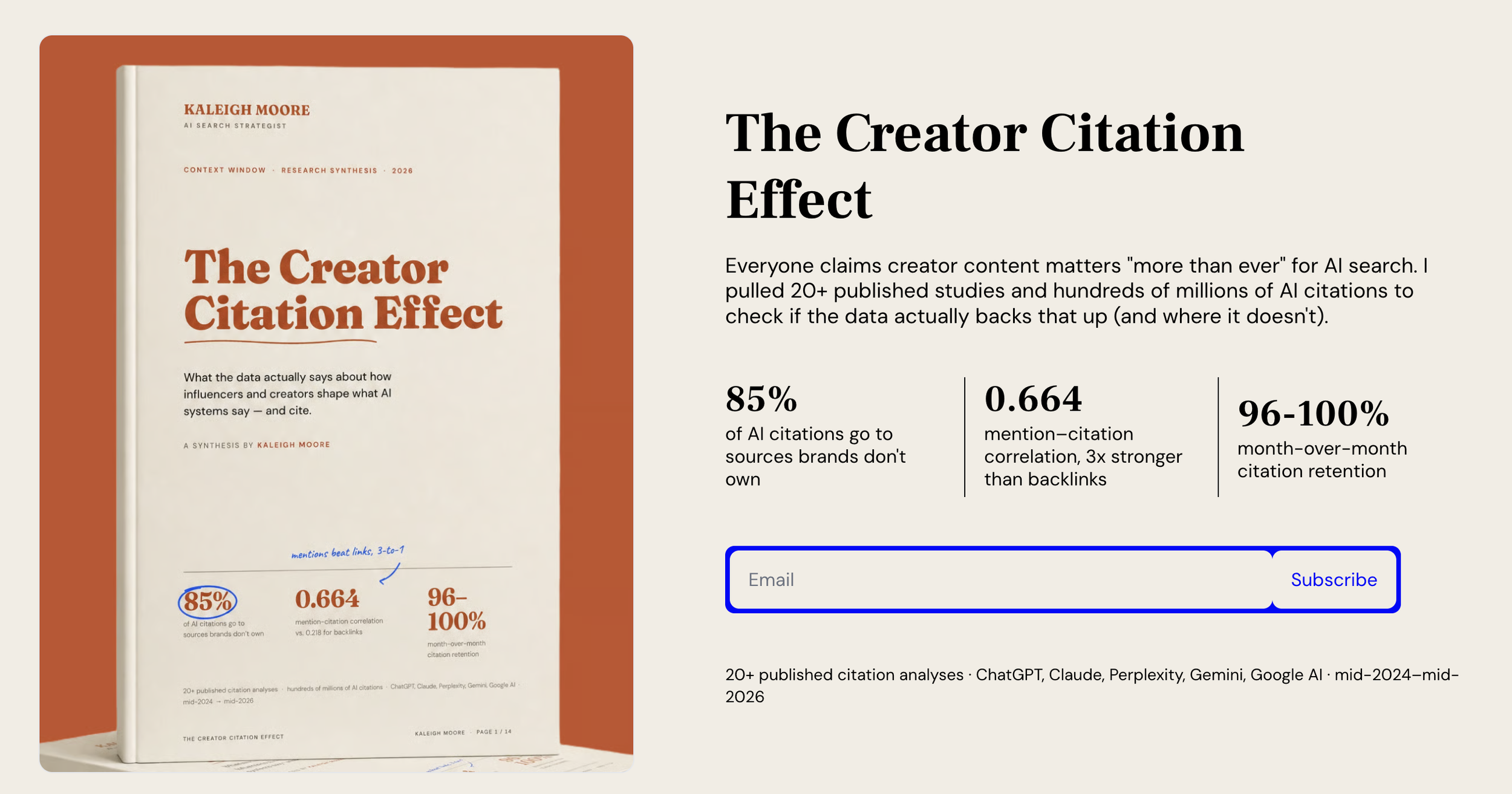
Creators (of all kinds!) are impacting AI citations. Here's the data I put together that tells me this is the future.
5. Add AI visibility to your measurement plan
Most creator marketing reports still revolve around things like:
Impressions and reach
Engagement rate
Clicks and referral traffic
Conversions
Cost per engagement or acquisition
Keep measuring those. But if AI visibility is one of your campaign goals, you need another set of metrics. I'd start with four:
1. Citation frequency: How often does the creator's content appear as a cited source when you test your priority prompts?
2. Brand appearance frequency: How often does your brand appear in responses to those questions, whether or not there's a citation?
3. Recommendation quality: Is AI simply mentioning your brand, or is it actively recommending the product as a relevant option?
4. Brand description accuracy: When your brand appears, is the information accurate? Is AI describing the product correctly and associating it with the right use cases?
These metrics tell you different things. A creator's video might get cited without your brand being mentioned. Your brand might appear in an answer without being recommended. And a recommendation isn't necessarily a good result if the AI is describing your product incorrectly.
This is why I don't think citation tracking alone is enough.
Here's a simple measurement process I'd use:
Select 10–20 priority prompts before the campaign launches.
Record your baseline appearance frequency, mentions, recommendations, and citations.
Publish the creator content and allow time for discovery.
Track those same prompts on a consistent schedule over the following weeks and months.
Note whether the creator's URLs appear, whether your brand appears more often, and whether the quality of those mentions changes.
AI answers are variable, so one response isn't enough to establish a trend. Where possible, use repeated tests and comparison prompts to help distinguish campaign effects from broader changes. (You can also track progress over time with an AI visibility tracking tool.)
An AI-ready creator brief you can actually use
If I were putting together a Creator AEO campaign brief for a B2B SaaS brand tomorrow, here's what I'd include in it.
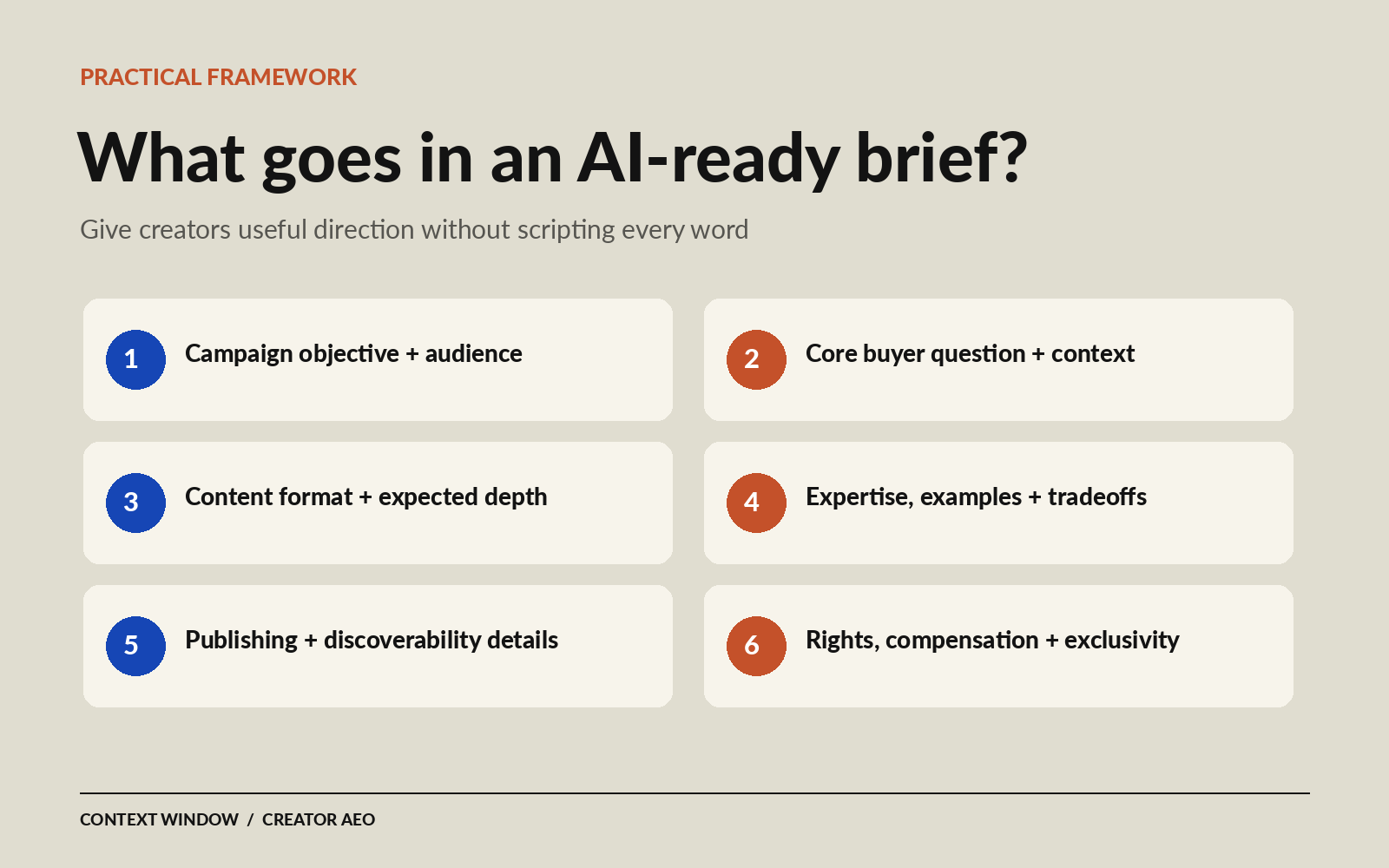
Campaign objective: What are we trying to accomplish? For example: Increase our brand's visibility in AI-generated recommendations for project management tools used by creative agencies.
Target audience: Who is asking these questions? An agency owner? A marketing manager? An operations director? What do they already know?
Prompt guidance: The one core buyer question you want the content to answer in-depth.
Prompt context: Include the target audience’s level of familiarity with the category and what they're trying to decide.
Content deliverables: Specify the format, topic, and expected depth. For example: One 10-minute YouTube walkthrough comparing project management workflows for agencies, with clear sections addressing setup, collaboration, reporting, and tradeoffs.
Content guidance: Provide the answer to the question from the brand’s POV, useful product documentation, and factual information the creator may need. Allow them to share their own experience, honest opinions, and limitations they've encountered--you want their unique voice and creativity clearly woven into the final product.
Publishing requirements: Agree on the title, description, chapters, links, and any accompanying written content. Include any required sponsorship disclosures and a CTA.
Rights and compensation: Specify content usage rights, licensing, the length of the partnership, and payment terms. Make sure you nail down ad usage rights as well.
Exclusivity: If you're asking a creator not to work with competitor brands for a set amount of time, make sure that you compensate them for this exclusivity and document clearly what that entails.
I'd encourage teams to treat this as a shared document between AEO, influencer marketing, and content teams rather than assigning the whole thing to one department.
The AEO team knows which questions matter and how visibility is being measured, while the influencer team understands which creators are credible, how to build productive partnerships, and what makes good creator content. You need both.
Your creator AEO brief needs flexibility
There's a fine line between briefing creators to produce useful, discoverable content and trying to control every word they say.
If every creator video has to repeat an exact keyword 12 times, follow an overly rigid script, and avoid discussing anything remotely negative about the product, we've essentially recreated the worst version of SEO content marketing. Except now we're paying creators to do it.
I'd rather see brands give creators the questions, the research, and the information they need, then let them bring their actual expertise to the work.
The future of creators and AI visibility campaigns
I don't think every creator campaign needs an AI visibility component. Sometimes the goal is awareness. Sometimes it's conversions. Sometimes you just want to introduce a product to a new audience. Those are all perfectly valid reasons to work with creators.
But if your brand is investing in using creators for AEO, you can't treat AI visibility as something you'll check on after the campaign is over. You need to think about it when you're choosing creators, deciding what content to commission, and figuring out where that content should live.
Start with a few key buyer questions. Find a creator who knows the subject. Make something genuinely useful. Measure what happens.
FAQs: How to brief creators for AI search visibility
What is a Creator AEO brief?
A Creator AEO brief is a set of instructions for creators producing content designed to help a brand earn visibility, citations, and recommendations in AI-generated answers. Unlike traditional influencer briefs, which typically prioritize audience reach and engagement, a Creator AEO brief starts with the questions buyers are asking AI tools like ChatGPT, Perplexity, and Google AI Overviews. It then guides creators toward producing useful, experience-driven content that answers those questions.
How is a Creator AEO brief different from a traditional influencer marketing brief?
Traditional influencer briefs usually focus on product messaging, deliverables, campaign hashtags, and engagement metrics. Creator AEO briefs add another layer: target buyer questions, content depth, publishing formats, and AI visibility measurement. The goal isn't just to reach the creator's existing audience. It's also to make their expertise and content potentially useful as sources for AI-generated answers.
What types of creator content are best for AI search visibility?
I'd start with content that provides specific, firsthand information: product comparisons, detailed tutorials, customer reviews, educational explainers, and original case studies. These formats give creators room to discuss real use cases, tradeoffs, and outcomes. A short promotional video might be great for awareness, but a detailed walkthrough answering a specific buyer question may offer more useful information for an AI system to retrieve.
Do creators need a large following to influence AI search results?
Not necessarily. For Creator AEO, subject-matter expertise and relevant content can be more valuable than follower count alone. A niche consultant publishing detailed software comparisons might be a stronger partner than a general business influencer with a much larger audience. I'd prioritize creators with genuine experience in your category, especially customers who are already sharing their workflows publicly.
Where should creators publish content to improve AI visibility?
Consider formats that make detailed content publicly accessible, including YouTube tutorials with transcripts, LinkedIn articles, blog posts, industry interviews, and podcasts with substantive show notes. The best distribution strategy depends on where your buyers look for information and which sources AI tools actually reference in your category. Publishing content doesn't guarantee it will be retrieved or cited.
How do you measure the impact of creator campaigns on AI visibility?
Start by tracking a consistent set of 10–20 buyer prompts before and after your campaign. Measure how often the creator's content gets cited, how frequently your brand appears, whether AI recommends your product, and how accurately it describes your brand. Monitor these metrics over time rather than relying on a handful of individual AI responses. Remember that a citation isn't necessarily a brand mention, and a mention isn't necessarily a recommendation.
Can a creator campaign guarantee citations in ChatGPT or other AI search engines?
No. Brands can't guarantee that AI tools will retrieve, cite, or recommend a particular piece of creator content. What they can do is give credible creators the information and freedom to publish genuinely useful material that addresses relevant buyer questions. Think of Creator AEO as an ongoing visibility strategy rather than a guaranteed outcome from a single campaign.
Who should be responsible for creating an AEO-focused creator brief?
Ideally, it's a collaboration between the AEO and influencer marketing teams, with support from content marketing. The AEO team identifies priority prompts, researches existing AI answers, and establishes measurement benchmarks. The influencer team finds credible creators, manages partnerships, and protects the creator's unique perspective. Both teams have an important role in making sure the content is useful to buyers, not just optimized for AI search.