For years, brands have evaluated creator partnerships using a familiar set of metrics: views, impressions, engagement, clicks, discount code redemptions, and conversions.
But there's a new dimension to consider: What happens when AI search engines use sponsored creator content to answer someone's question?
New research from Scrunch provides some insight on how that works in the context of YouTube.
Scrunch analyzed millions of AI citation events between May and July 2026, covering thousands of sponsored YouTube videos and hundreds of brands. The goal was to answer a relatively simple question: When an AI system cites a sponsored YouTube video, is it more likely to mention the brand sponsoring that video?
Sponsored YouTube videos can create a lift in AI brand mentions
Scrunch wanted to understand whether YouTube sponsorships could influence which brands appear in AI-generated answers, so researchers looked at what happened when AI systems answered the same questions with and without citing a YouTube video that featured a sponsoring brand.
They found that when AI cited a sponsored YouTube video, it mentioned the sponsoring brand 40% of the time. When it didn't cite that video, the brand appeared in 32.3% of answers.
In other words, when AI used a sponsored YouTube video as a source, the sponsoring brand was more likely to make it into the AI-generated answer, even though the person asking the question hadn't necessarily watched the video.
This suggests that YouTube sponsorships may create an additional layer of brand visibility beyond traditional views and engagement, and that creator sponsorships produce AI search visibility in addition to the audience exposure brands originally paid for.
And that's a type of value most influencer marketing teams aren't measuring today (and it’s what I’ve been talking about re: Creator AEO.)
Sponsored Videos Boosted AI visibility 1.35x
Scrunch found that for unbranded category prompts, sponsored video citations were associated with a 1.35x lift in sponsor mentions.
Why does this matter? Because there's a huge difference between appearing in an AI answer when someone already knows your brand and being introduced when they don't.
Consider these two prompts: "Is Asana a good project management tool?" and, "What's the best project management software for a small creative agency?"
In the first example, Asana is already part of the question. The AI system is almost guaranteed to mention it. In the second example, the system has to decide which products deserve consideration.
That second type of question is where AEO gets particularly valuable. The user is exploring a category, comparing options, and potentially discovering brands for the first time.
Scrunch found that for prompts that explicitly named the sponsor, the brand appeared in almost 100% of answers, regardless of whether the sponsored video was cited. There was essentially no room for improvement. But when the prompt didn't mention the sponsor, citations were associated with a much more meaningful difference.
My suggestion: Brands should pay closer attention to the unbranded questions their buyers ask AI, particularly when evaluating potential creator partnerships.
Instead of simply asking which creators can introduce your product to the largest audience, ask which creators are producing content around the questions your buyers use to discover solutions.
Think product comparison content, buying guides, tutorials, industry-specific recommendations, and detailed use cases. Those are the kinds of topics I'd dig into first when building a Creator AEO strategy, as they're directly aligned with the discovery-stage questions where Scrunch observed the stronger lift.
YouTube's AI search influence is heavily concentrated in Google
Not every AI platform retrieves YouTube content at the same rate. In fact, the differences are enormous. Scrunch measured the following approximate YouTube citation rates during the study period.
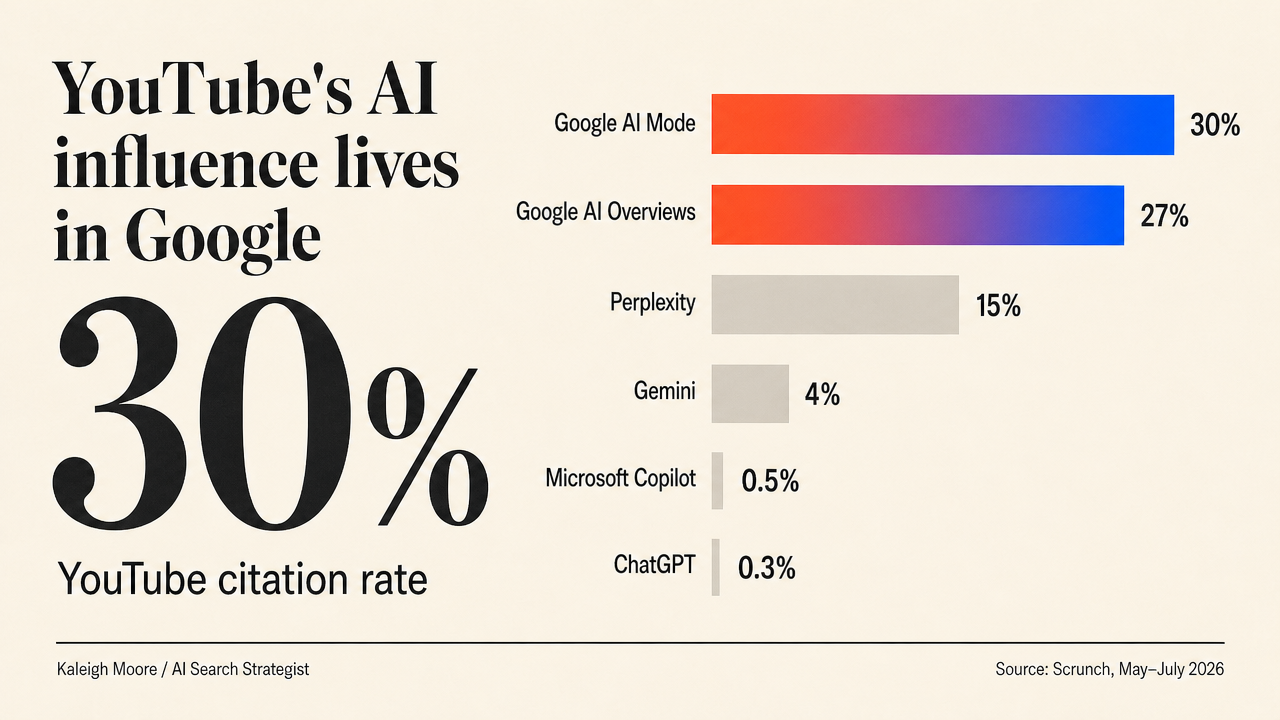
Google AI Mode and AI Overviews were the clear leaders, and when they examined the sponsor mention lift within individual platforms, Google again stood out. Sponsored video citations were associated with a 1.28x lift in brand mentions in Google AI Mode and a 1.22x lift in AI Overviews. This matters because marketers often talk about AI search as though it's one channel. (It isn't.)
A YouTube strategy that contributes to visibility in Google AI Mode may have little measurable impact on ChatGPT, at least through direct YouTube citations. And these patterns aren't static.
My suggestion: Before investing in YouTube sponsorships specifically for AEO, look at the prompts that matter to your business and determine whether YouTube is actually appearing as a source.
If the AI tools your buyers use aren't retrieving YouTube videos for those questions, sponsorships may still be valuable for traditional marketing, but you shouldn't assume they'll deliver the same AI visibility benefits. This is another reason why platform-specific AEO measurement matters.
YouTube descriptions are more important for AI visibility
One of the most useful details in Scrunch's methodology is what the researchers actually analyzed. They didn't study spoken sponsorship reads, and they didn't evaluate pre-roll or mid-roll ads. They specifically examined sponsorship language appearing in YouTube video descriptions.
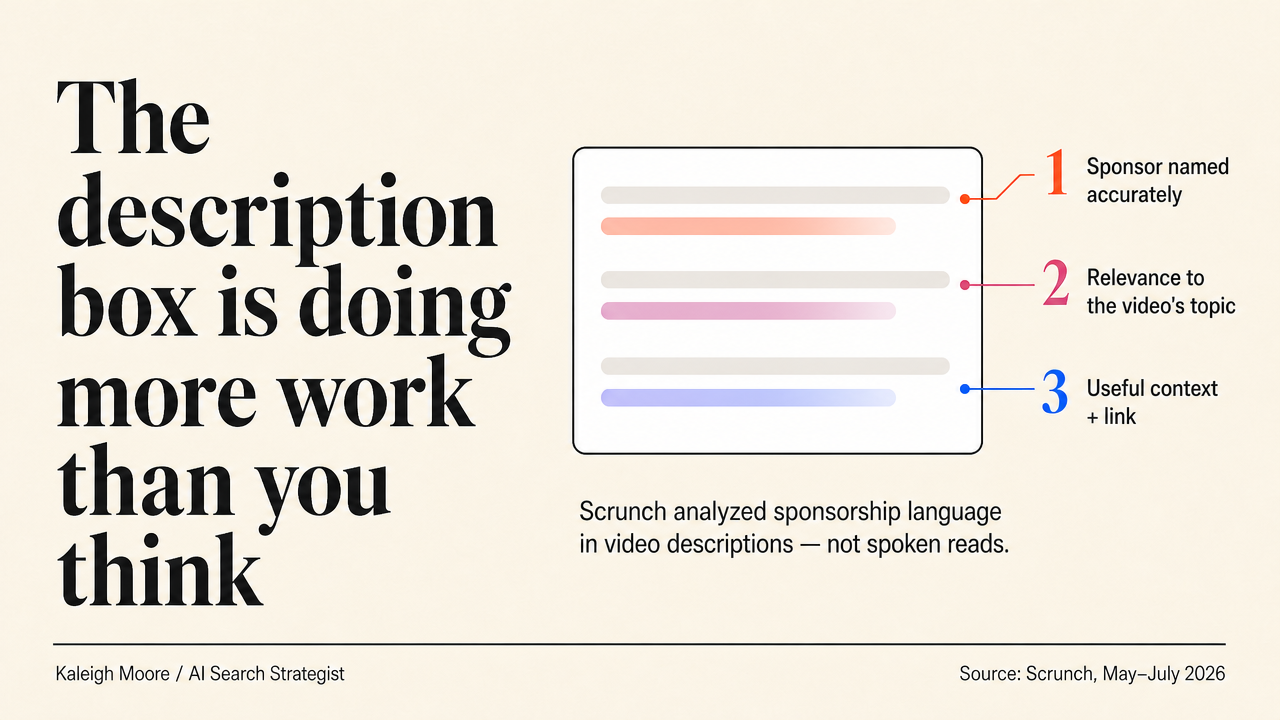
When brands sponsor YouTube creators, most of the attention goes toward what happens in the video itself: The product demonstration, talking points. The offer. The call to action.
The description box often gets treated as an administrative detail: Add the link, include the discount code, disclose the sponsorship, and move on. But this research suggests that written sponsorship information may have additional value when AI systems retrieve creator content.
For example, imagine a creator publishes a video reviewing software for freelancers. The description includes a clear sponsor mention, a brief explanation of the product, and a link to learn more. When an AI system cites that video in response to a relevant question, the sponsor may have a better chance of appearing in the generated answer.
This connects to a broader principle of Creator AEO: It's not enough for a creator to publish content about your brand. That information also needs to be accessible and understandable to the AI systems your buyers are using.
I'd start treating YouTube descriptions as a meaningful component of creator briefs.
That means making sure the product is accurately named, its relevance to the video's topic is clear, and the description provides useful context. It's a relatively simple area to test, especially for brands already investing in YouTube partnerships.
AI citations fade quickly, but the sponsor mention effect is more durable
Another particularly interesting finding has to do with how long sponsored videos continue appearing in AI answers. Scrunch followed videos after their first observed AI citation and measured how citation activity changed over the following month.
The results showed a substantial decline as time passed: YouTube citation frequency fell from 18.4% to 10.5%, a decrease of approximately 43%. (This makes sense, as AI tools are constantly looking for the best, freshest piece of content to pull from in an answer.)
But here's the important nuance: The likelihood of the sponsor being mentioned when the video was cited didn't decline nearly as much.
That rate fell from 57.3% to 50.3%, a 12% relative decrease.
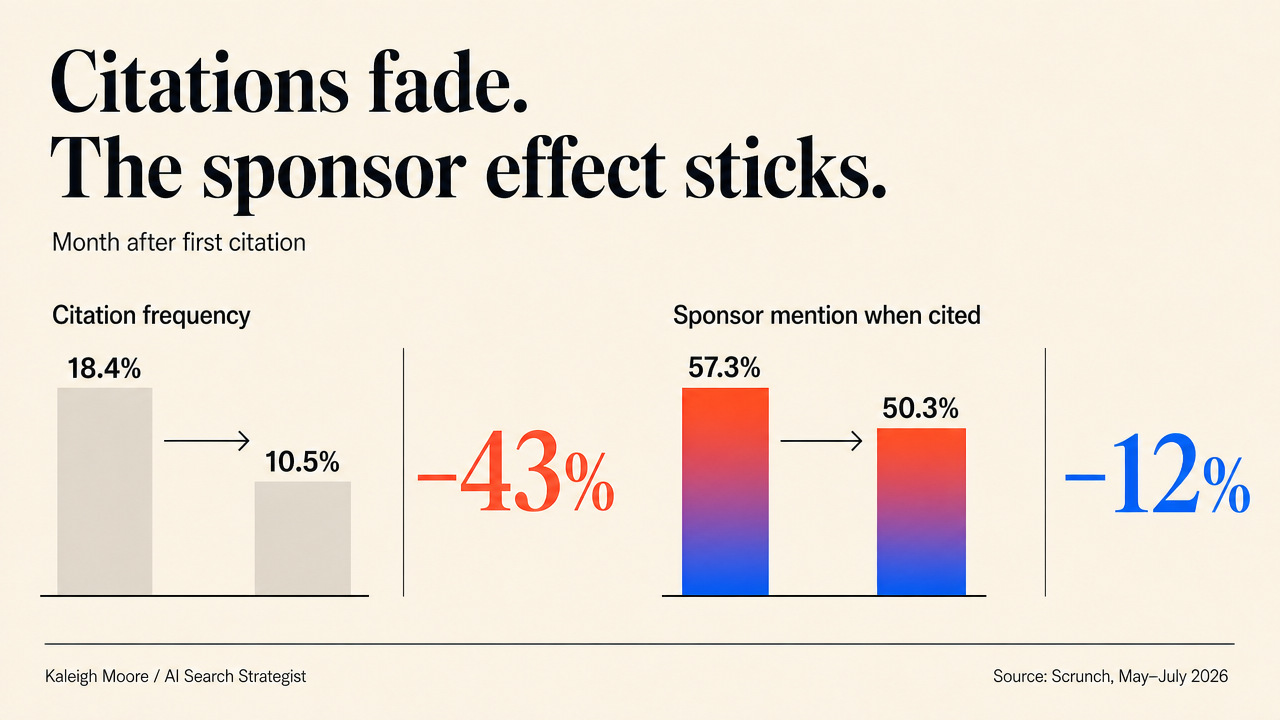
In other words, the sponsored content became less likely to get cited over time, but when it was cited, the sponsor still had a relatively strong chance of appearing in the answer. This suggests the main challenge may not be the sponsor's ability to benefit from a citation, but rather the frequency of those citations in the first place.
So why did citation frequency decline? Possible factors include newer videos displacing older sources, changes to AI retrieval systems, and shifts in the questions being asked. Also, the timeline starts when a video first appeared as a citation in the dataset, not when it was originally published or sponsored.
This reinforces something I've been emphasizing in my AEO work: AI visibility isn't something you can optimize once and assume will remain stable.
The sources appearing in AI-generated answers can change significantly from week to week. For creator marketing teams, that raises an interesting question about campaign measurement.
What happens if a sponsored video continues generating AI mentions weeks after the original campaign ends? This is very possible.
What marketers should take from this data
I don't think the conclusion here is that every brand needs to start sponsoring more YouTubers. Instead, I’d suggest a few practical changes worth testing:
1. Identify the unbranded prompts where you want to appear
Start with the questions your potential buyers ask when they're researching products, evaluating alternatives, or trying to solve a problem. Then examine the sources AI systems retrieve for those questions.
If YouTube is consistently appearing, that's a useful signal that creator partnerships may be worth exploring.
2. Evaluate creators based on relevance, not just reach
Follower count, engagement, and audience demographics still matter, but I'd add a new question to the evaluation process:
Does this creator publish content that AI systems already retrieve for questions relevant to our category?
A smaller creator producing detailed, credible content might be more strategically useful for certain prompts than a larger creator with a less relevant audience.
3. Make descriptions part of the sponsorship deliverables
Don't leave the YouTube descriptions out of the brief. Work with creators to ensure sponsor information is accurate, relevant, and clearly presented.
Preserve the creator's voice and independence, but treat the supporting text as part of the content you're investing in.
4. Measure AI visibility after publication
For sponsored videos, I'd want to understand:
Whether the video gets cited for relevant prompts
Whether the sponsor appears in the resulting answers
Which AI platforms are generating those citations
Whether that visibility persists, grows, or declines over time
I'd track those signals alongside views, engagement, clicks, and conversions, not instead of them.
Creator sponsorships are more valuable in the AEO context
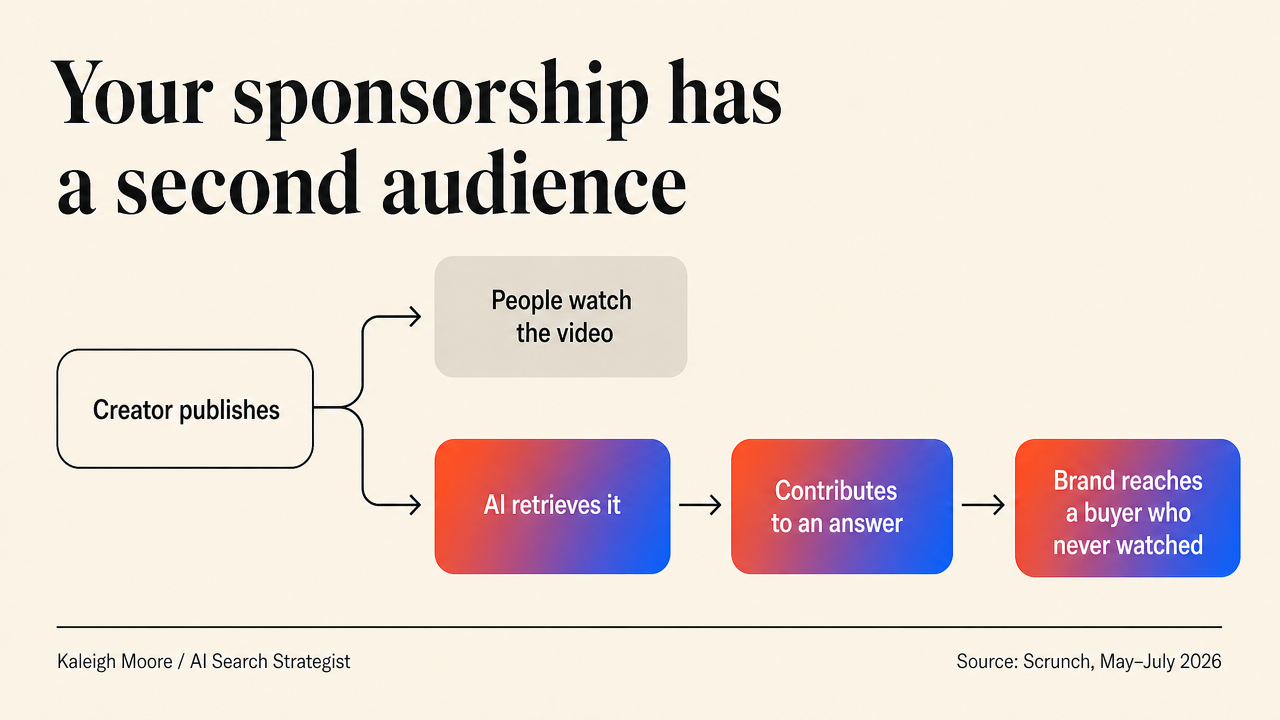
Traditionally, the value exchange has been straightforward when it comes to creator partnerships: A brand pays a creator for access to their audience, the creator publishes content, the audience sees it, and the brand measures what happens next.
But AI search introduces another distribution path.
The creator publishes content, an AI system retrieves it, the content contributes to an answer, and from there, the brand may get introduced to someone who never watched the original video.
“While YouTube is by far and away the most impactful source for Google AI overviews, it would be a mistake to think about a YouTube strategy as just an AI visibility solution. That same upfront effort builds a library of inbound and outbound sales assets that compound over time, giving you more mileage across the business and a greater overall return on your initial investment." - Dane Frederiksen, Founder at Digital Accomplice
It also, unfortunately, creates a measurement challenge. Brands have spent years developing sophisticated ways to evaluate influencer marketing performance, but most of those systems weren't designed to capture AI-generated exposure.
And if Scrunch's findings are representative of a broader pattern, some creator partnerships may already be producing visibility that goes unrecognized.
My takeaway is that brands should start thinking about creator partnerships as having two potential audiences: the people who consume the content directly and the AI systems that may retrieve it later.
And for marketers already investing in YouTube sponsorships, the opportunity may not require an entirely new strategy. It might start with asking better questions about the partnerships you're already paying for.
Are your creators publishing content around the questions your buyers ask?
Is your brand information clearly represented?
Are those videos showing up in AI answers?
And if they are, are you measuring that visibility?
Because the next time you sponsor a YouTube creator, the audience that sees your brand might be larger, and very different, from the one you originally paid to reach. Want more? Read the full report from Scrunch here.
FAQ: Creator AEO and sponsored YouTube videos
Do AI assistants actually cite YouTube videos?
Some do, a lot. In Scrunch’s May–July 2026 data, YouTube showed up in about 30% of Google AI Mode citations, 27% of AI Overviews, 15% of Perplexity, and 4% of Gemini. ChatGPT (0.3%) and Copilot (0.5%) almost never cite it. For creators, that means Google’s AI surfaces are where your videos are most likely to be read by AI.
Why should a creator care about AI citations?
Because your video now has a second audience. When an AI answer cites a sponsored video, the sponsor gets named about 40% of the time, versus 32.3% when it doesn’t — a 1.24x lift. That’s exposure your sponsor gets that never shows up in your view count.
Can I use this in sponsorship pitches?
Yes, carefully. The study suggests sponsorships can create value beyond human views through AI-answer exposure, and recommends creators fold AI citations into the value story they offer brands. The honest pitch is “my videos get cited, and cited sponsors get named more,” not a guaranteed result.
What part of my video does AI actually read for this?
The description box. The study only measured sponsor language in the text under the video, not the audio. That’s the one lever with evidence behind it. Write the sponsor’s name clearly and early in the description, not just in the voiceover.
Does it matter how I write the sponsor mention?
Probably. The study couldn’t separate paying from placement: a brand named high in the description, repeated, and next to a discount code might get a similar bump. So formatting likely matters as much as the deal itself. A clear line like “Thanks to Brand X for sponsoring this video” near the top is the safe default.
What kinds of videos benefit most?
Ones that answer the questions people ask without a brand in mind. On unbranded prompts the lift grows to 1.35x. “Best wireless speakers under $300” style videos are where a cited sponsor can tip the answer. Videos that only matter for searches naming the brand add little, since the brand appears almost every time anyway.
Which platforms should I optimize for?
Google first. AI Mode showed a 1.28x lift and AI Overviews 1.22x; Gemini (1.08x) and Perplexity (1.07x) were smaller. And Perplexity stopped citing YouTube almost entirely around August 12, 2026, while Google’s AI surfaces leaned on it more.
How long will a video keep getting cited?
Not long, typically. Citation rates fell about 43% within a month of a video’s first citation. But when the video is still cited, the sponsor gets named nearly as often (57.3% down to 50.3%). Plan for a short citation window and a sponsor payoff that mostly holds while it lasts.
Does this mean evergreen videos don’t work for AEO?
Not necessarily, but expect rotation. The likely causes of the fade are newer videos displacing older ones, AI indexes updating, and prompts drifting over time. Publishing fresh coverage on topics you own probably matters more than relying on one old hit.
How do I prove AI value to a sponsor?
Track whether your sponsored videos are getting cited in AI answers for the prompts the brand cares about, and report it alongside views. The study notes brands and agencies can add AI-citation tracking to campaign reporting, so being the creator who already provides it is a differentiator.
What can’t I claim?
That sponsoring you will drive clicks or sales — the study didn’t measure either. It’s also correlational, a May–July 2026 snapshot, and only fewer than 1% of cited videos had explicit sponsor text in the description, so voiceover-only sponsorships weren’t measured at all.