Creator AEO: How Creators Are Showing Up in AI Answers in 2026
Here's a number that I think will be showing up creator marketing pitch decks this fall: 56% of people who shop with AI say they prefer recommendations that pull from creator or influencer reviews. That's from IAB's brand-new report, The Creator Signal: How AI Systems Interpret Influence in Commerce. IAB surveyed 2,200 people across five countries who had recently used AI for shopping research.
72% of survey participants said they use general-purpose AI assistants for shopping decisions, and eight in ten say they're comfortable relying on AI to recommend products.
On the surface, this looks like a clean win for anyone building a creator AEO program. But I read the full report, and the more interesting story is in the details.
1. Creators build trust during the decision-making process.
This new data set indicates creator reviews increase purchase likelihood for about 29% of Gen Z and Millennials, and only 12% of Boomers, but 65% of respondents said credible creator reviews do make them more confident in an AI recommendation.
Translation: creators deliver the most value during a buyer’s research and consideration phase. They help people get oriented and build a shortlist.
Creators still aren't the top input people want AI to rely on when making a purchase; that’s left to consumer ratings and reviews, retailer or marketplace information, and subject-matter expertise. But creator content is a layer of human validation that helps buyers decide what to buy.
(This is exactly what I dug into in a past edition: Your AI citations got you shortlisted with buyers. Now what? Creators help get you in the room, but it won’t close the deal.)
2. Different generations, different AI preferences
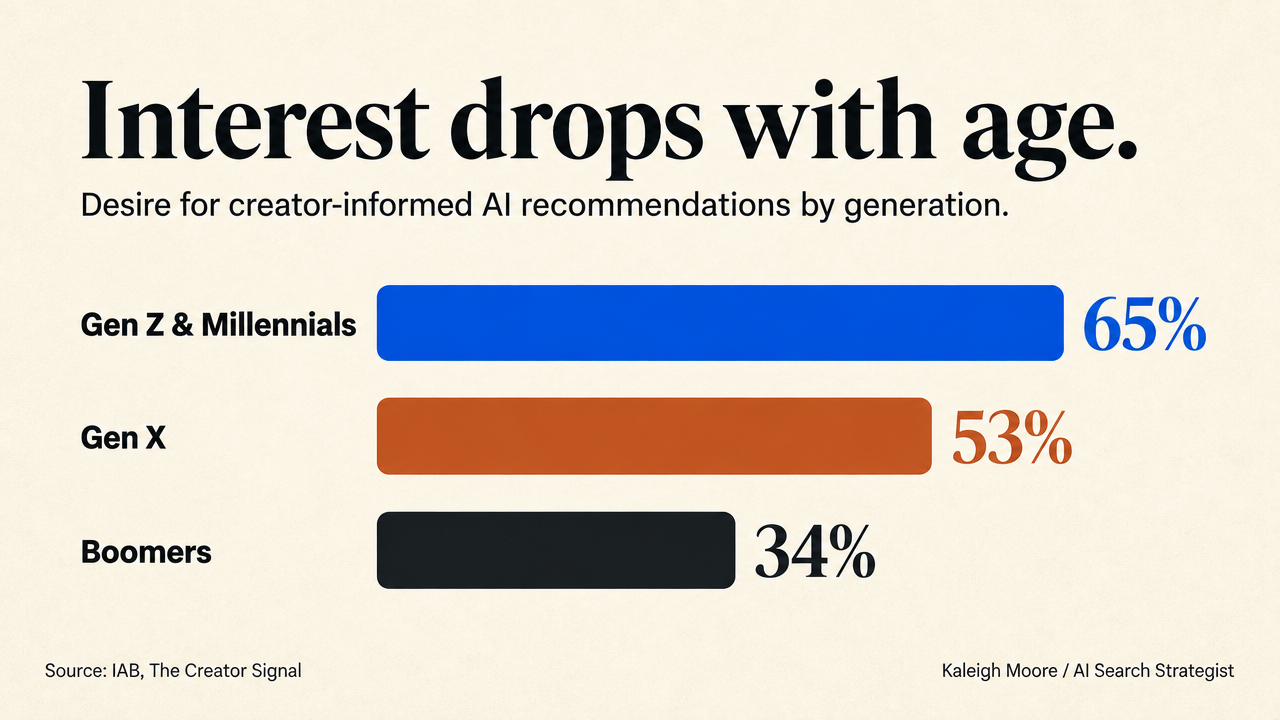
IAB’s data shows desire for creator-informed AI recommendations drops steadily with age: Gen Z and Millennials at 65%, Gen X at 53%, and Boomers at 34%.
That's nearly half as much interest from the oldest group as from the youngest. When asked what AI should rely on for shopping recommendations, 27% of Gen Z picked creator reviews, compared to 29% for brand or advertiser information.
Here's why this matters for B2B: a buying committee probably spans several of those generations.The practitioner evaluating your tool for day-to-day use might be a Millennial who trusts a creator's walkthrough. But the executive signing the contract might be a Boomer who'd rather see an analyst report or a case study from a company like theirs.
If your creator program assumes one type of creator works for everyone on that committee, you're likely missing someone.
What I'd do with this finding: match your creator types to your stakeholders.
For practitioners: customer creators and community creators who show real, hands-on use of the product in their own voice.
For senior decision-makers: employee subject-matter experts and expert-level voices with a track record in your category.
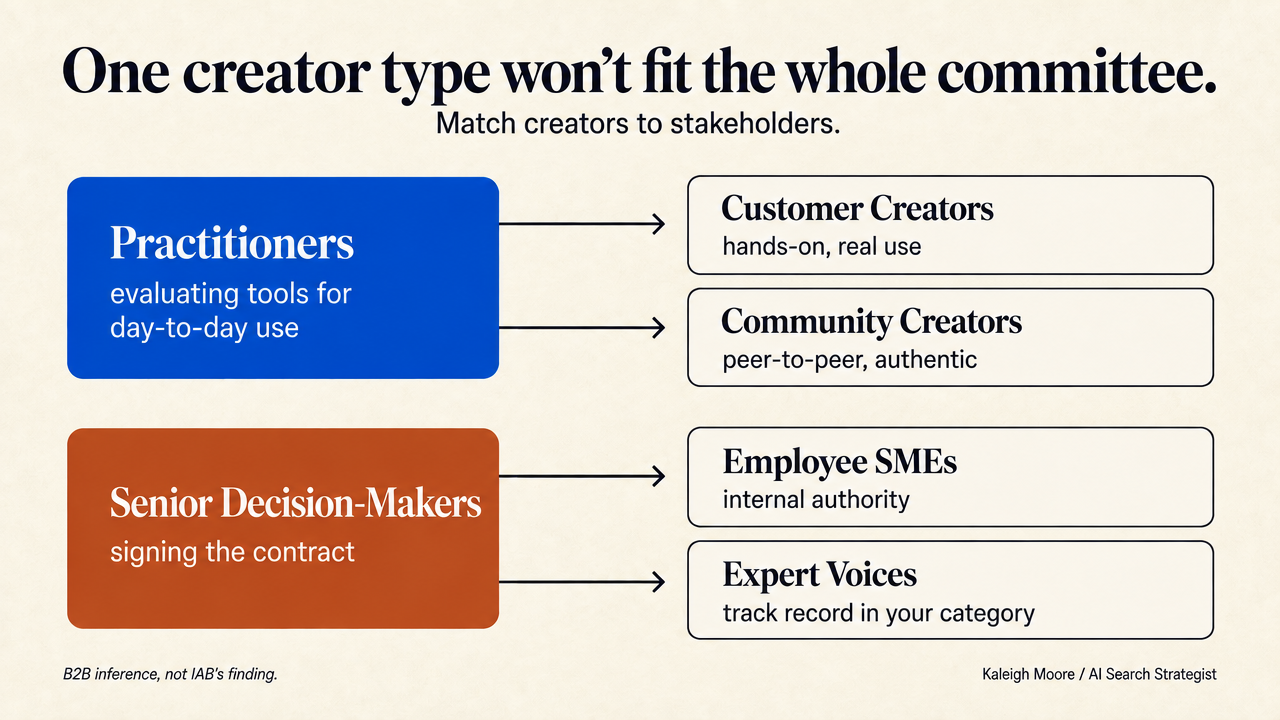
One important caveat: this is consumer shopping data, not a survey of B2B buyers. The generational split is real in this sample, but applying it to software buying committees is my inference, not IAB's finding. (If anyone has B2B data on this, please send it my way!)
3. Real customers are your best creators.
IAB asked which kinds of creators AI should prioritize. The winner, by a wide margin: everyday customers sharing real experiences, at 52%. Professional product reviewers and subject-matter expert creators came next. Creators people personally follow and lifestyle influencers were less widely preferred, and celebrities and public figures ranked last, at only 13%.
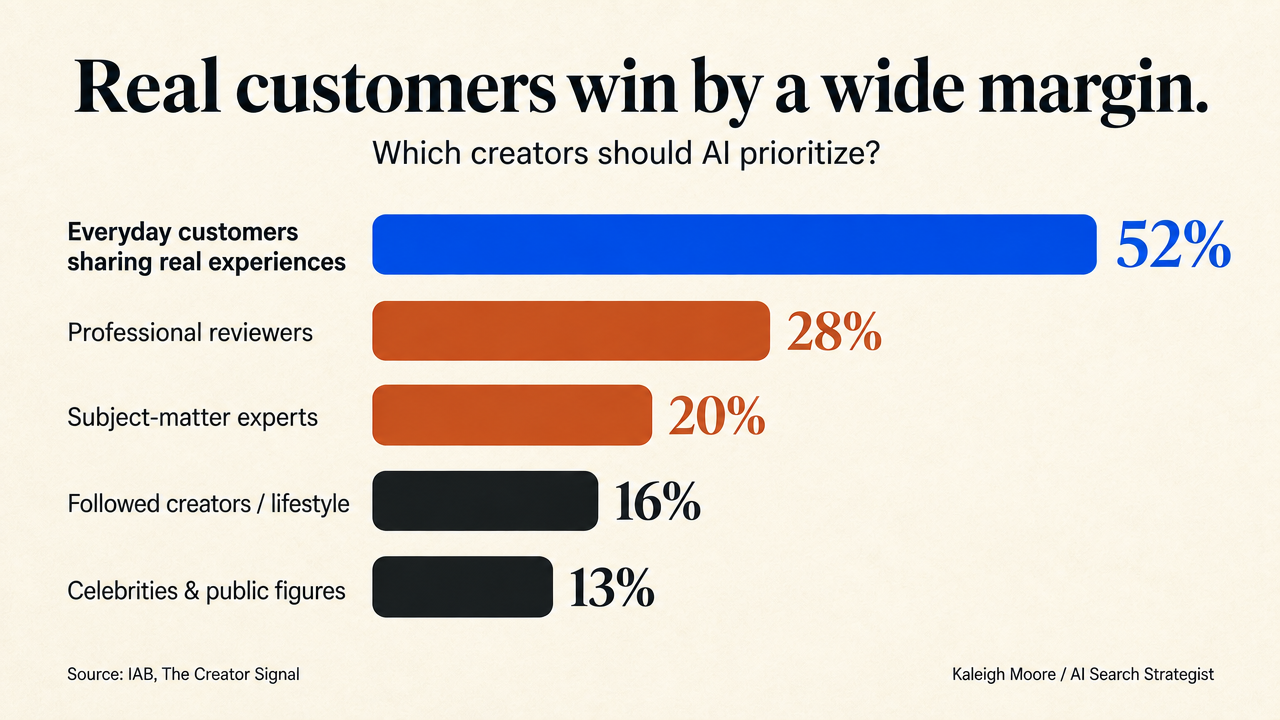
If you've read my piece on the 4 creator types that get cited by AI, this probably sounds familiar. Here's how IAB's categories map onto those archetypes.
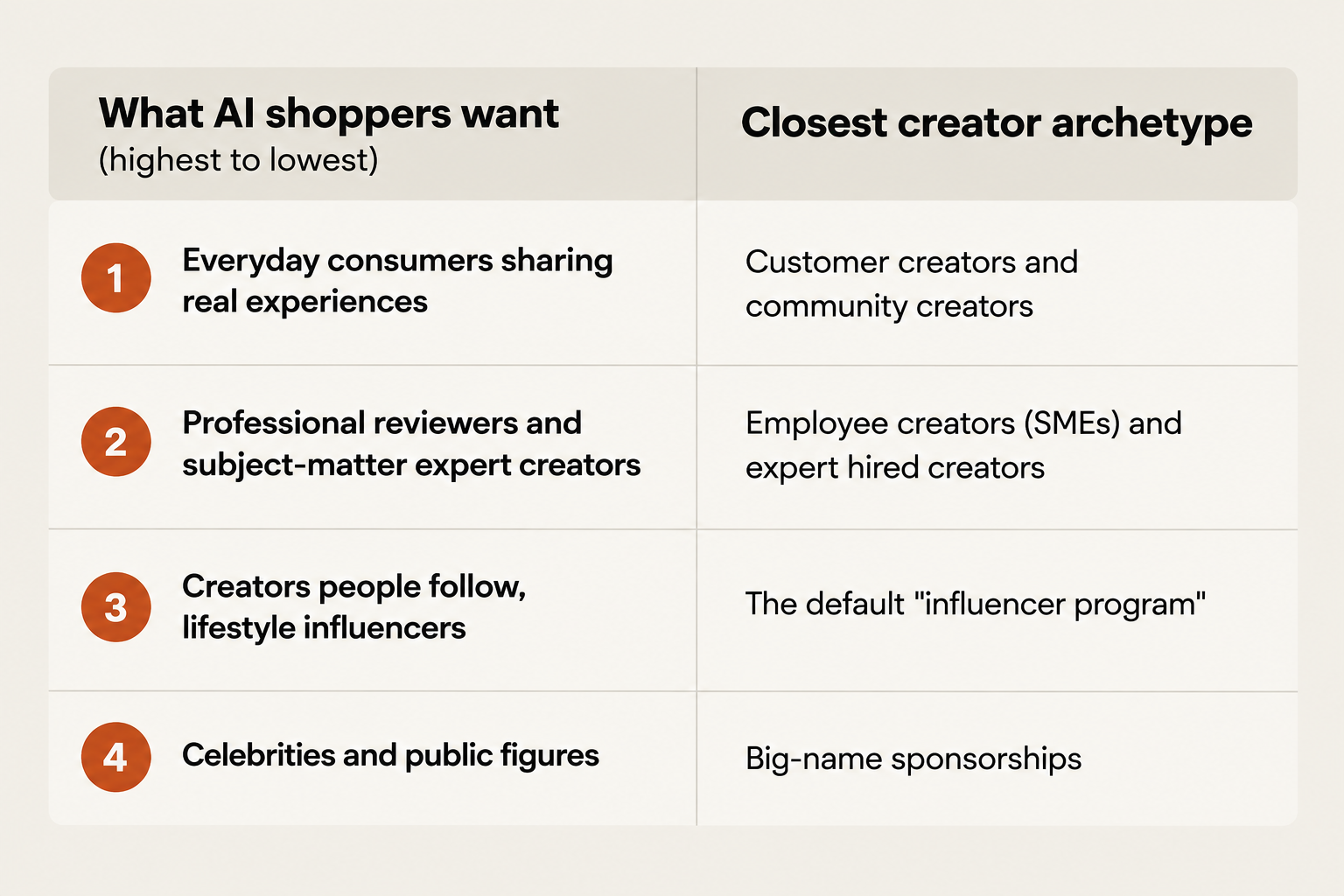
Here's the thing: when most B2B teams say "creator program," they mean “influencer program.” Find a few influencers, pay a retainer, and have them post about the brand.
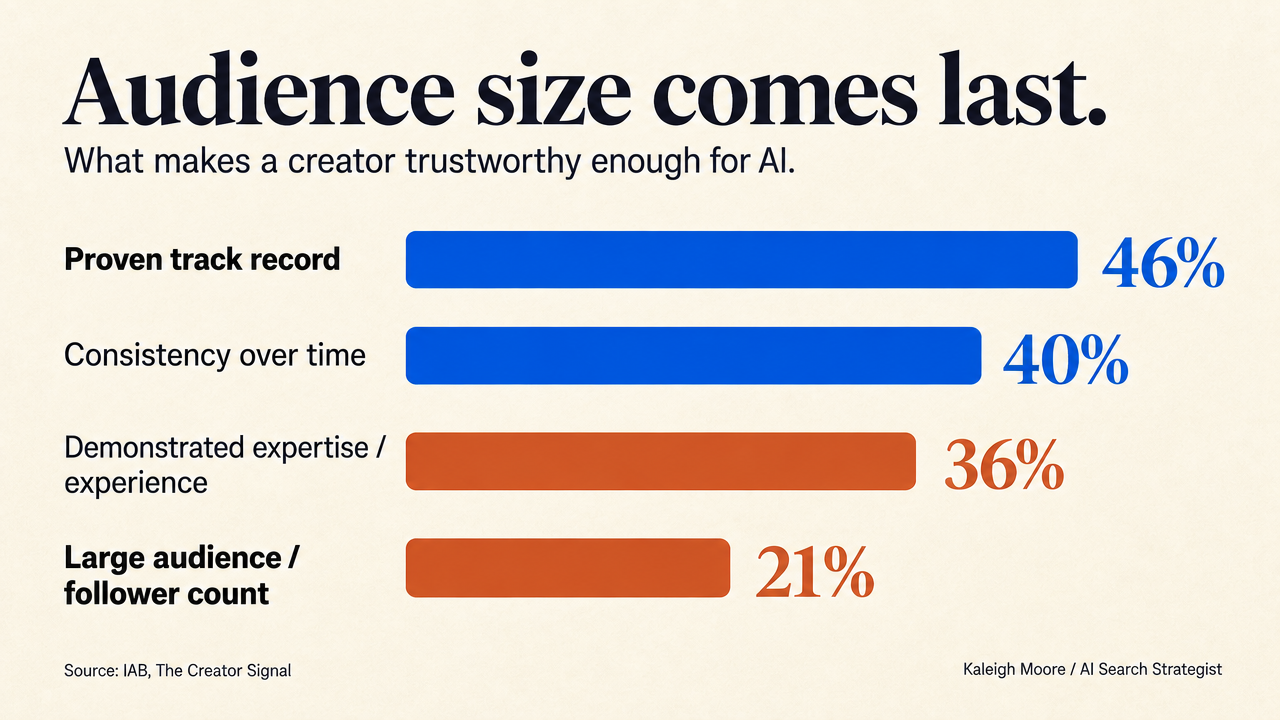
But the people using AI to make decisions are telling us they want the top two rows: people with real experience and real expertise. The data backs this up. When IAB asked what makes a creator trustworthy enough for AI to rely on, the top answers were:
A proven track record (46%)
Consistency over time (40%)
Demonstrated expertise or product experience (36%)
A large audience or follower count? Just 21%. (This lines up with what the AI citation data shows, which I covered in The Creator Citation Effect.)
One more stat I can't stop thinking about
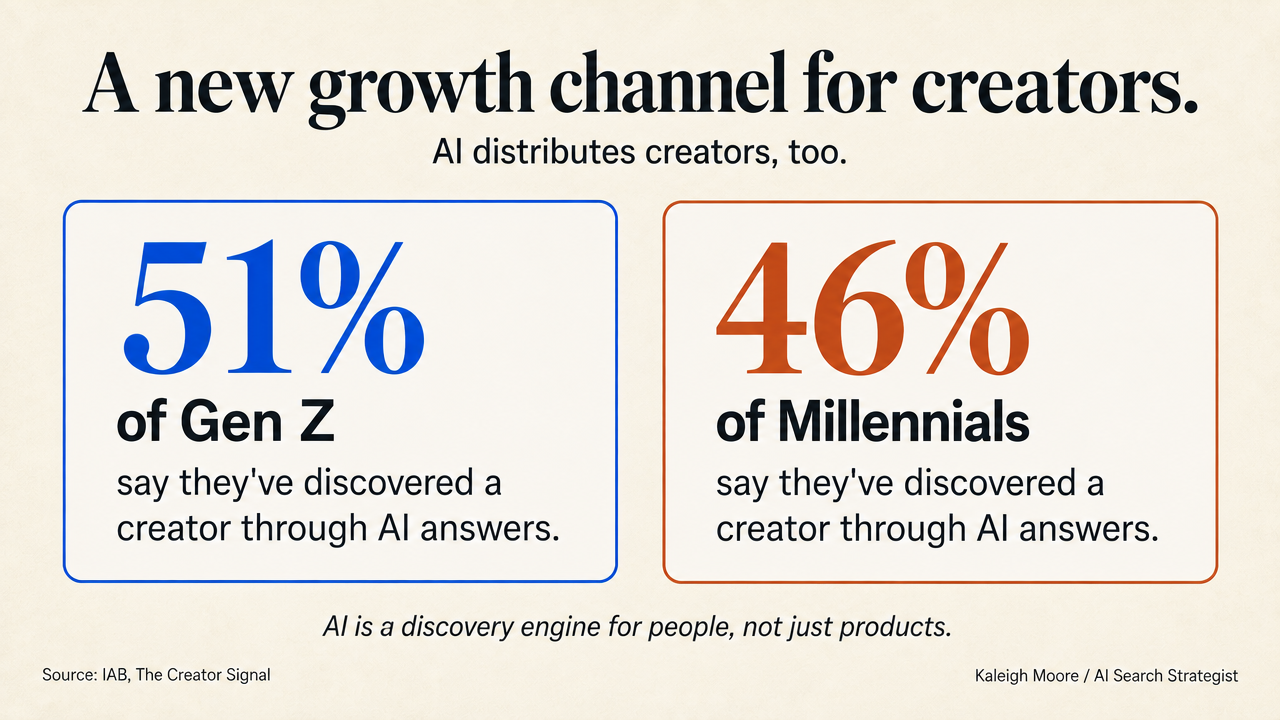
51% of Gen Z and 46% of Millennials say they've discovered a creator through AI answers.
AI isn't just citing creators; it's distributing them. For half of younger shoppers, an AI answer has already worked like a recommendation engine for people, not just products. For creators, that's a new growth channel that doesn't depend on any platform's feed algorithm.
For brands, it means the creators you partner with today could be the ones AI introduces to your next buyers. Which makes "can AI read this person's content?" an even more important question when you pick creator partners.
What this data can't tell us
In keeping with how I try to handle every study I share here, a few honest notes on this data set and its limitations:
Despite the title, this isn't about how AI systems work. The report is called How AI Systems Interpret Influence in Commerce, but it's a survey of people. It measures what shoppers say they want AI to cite, not what AI actually cites.
It's consumer shopping, not B2B software buying. The patterns are useful directionally, but B2B buying committees behave differently.
Where you sell changes the picture. Nearly half the sample (1,000 of 2,200) was from the U.S., so the global numbers lean American.
Implications for Creator AEO
Creators belong in your AI search strategy, but they have a specific job: building trust and earning a spot on the shortlist, early in the journey.
“Audience size alone is not the signal consumers value most. Content that demonstrates credibility, consistency, practical knowledge, and authentic experience can become increasingly valuable as AI reshapes product discovery.”
IAB's own advice to advertisers is to build creator partnerships around utility, not just reach, (and I'd agree.)
The creators who are best at boosting AI visibility and nudging consumers toward a purchase are the ones with real experience using your product or service and real expertise. That means they’re already paying customers, and can speak from real experience about problems they’ve solved with your offering.
Authenticity registers with consumers, so customer creators are always a stronger option here.
FAQ About Creators’ Impact on AI Answers
Do people want AI shopping assistants to include creator reviews?
Yes, for many shoppers. According to IAB's report The Creator Signal, 56% of people who shop with AI prefer recommendations that pull from creator or influencer reviews, and 65% say credible creator reviews make them more confident in an AI recommendation.
What kind of creators do people trust most in AI answers?
Everyday customers sharing real experiences, by a wide margin. 52% of respondents said AI should prioritize them, followed by professional product reviewers and subject-matter experts. Celebrities and public figures ranked last, at just 13%.
Does follower count matter for creator credibility in AI search?
Not much. Only 21% of respondents said a large audience makes a creator trustworthy enough for AI to rely on. A proven track record (46%), consistency over time (40%), and demonstrated expertise or product experience (36%) mattered far more.
Do different generations feel differently about creators in AI recommendations?
Yes. Interest in creator-informed AI recommendations drops steadily with age: 65% of Gen Z and Millennials want them, compared to 53% of Gen X and 34% of Boomers.
Where do creators fit in the buying journey?
Creators are most valuable during research and consideration, when buyers are getting oriented and building a shortlist. They aren't the top input people want AI to rely on for final purchase decisions; consumer ratings, retailer information, and subject-matter expertise rank higher.
Is AI helping people discover new creators?
Yes. 51% of Gen Z and 46% of Millennials say they've discovered a creator through an AI answer, which means AI is starting to act as a distribution channel for creators, not just products.
What does this data mean for B2B brands?
B2B buying committees often span several generations, so one type of creator likely won't reach everyone. Customer and community creators may resonate with hands-on practitioners, while employee experts and established category voices may carry more weight with senior decision-makers. Note that this is an inference from consumer data, not a B2B-specific finding.
What are the limitations of the IAB report?
It's a survey of what 2,200 shoppers say they want AI to cite, not an analysis of what AI actually cites. It covers consumer shopping rather than B2B buying, and nearly half the sample came from the U.S., so global numbers lean American.
What's the best type of creator for a creator AEO program?
Customer creators. They have real experience with your product, can speak to problems they've actually solved, and match the credibility signals shoppers say they value most.