Creator AEO Should Start With Employees
B2B companies working on Answer Engine Optimization (AEO) right now are looking closely at how they can leverage creators within the off-site piece of the puzzle, as this is where much of the opportunity lies.
We know this because data shows that 85% of citations come from off-site work (AKA not your company’s website, but rather places like LinkedIn, YouTube, and Reddit.)
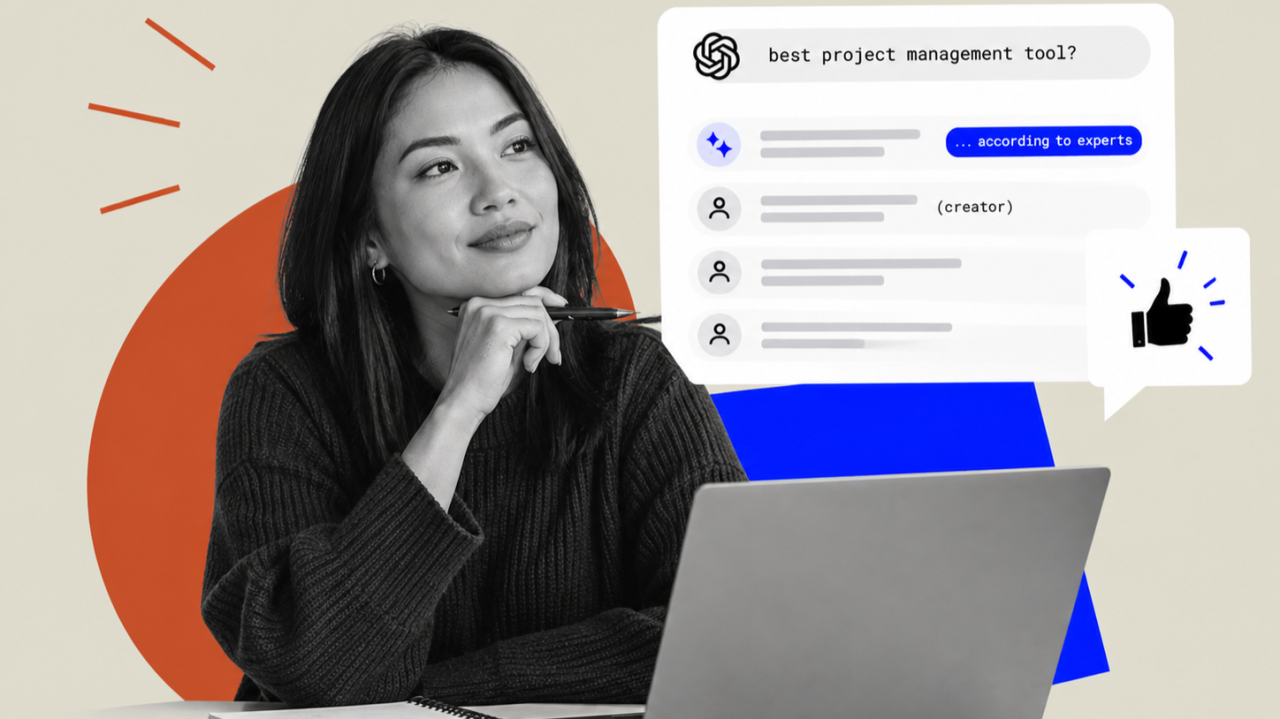
I’ve written extensively about how Creator AEO is emerging as its own discipline within the larger AI visibility discussion, as creators (of all kinds!) offer brands a way to get a jumpstart on earning those offsite and third-party mentions across these key platforms.
But I think a lot of teams are still going about this work completely backwards.
The Creator AEO discussion I hear about always starts with a spreadsheet with 10-12 creators sorted by follower count and a ballpark budget for each.
Yet three floors down, a solutions engineer is answering a question in a LinkedIn comment that would make for an incredible article on that same platform. And, in fact, she has done this a few hundred times over three years. Under her own name. In public. For free.
She only has 1,100 LinkedIn followers, eighteen months of posts about one narrow technical subject, and a Reddit account older than the company's Series B. Ask ChatGPT who understands that problem, and her name comes up.
And herein likes the mistake: This team is about to spend the next three months and a large retainer fee to buy expertise they actually already have on staff.
AJ Ecksteinof Creator Match said this:
“You need to show leadership some glimpses of success [around Creator AEO] before they unlock budget for this new initiative. Employees are the easiest place to start because no money has to move and there's no conversation about usage rights.”
Remember:
Your company website accounts for 5 to 10% of what LLMs pull from when they answer questions about you, per McKinsey.
When LinkedIn content gets cited, 59% of it comes from individual profiles rather than company pages, per Semrush's analysis of 325,000 prompts earlier this year.
If you have employees willing to act as creators and experts on platforms like LinkedIn, Reddit, and/or YouTube, you should start your Creator AEO work there.
But…which employees? How do you find them and screen for the best fit for this work, as well as motivate them to go and consistently do this work?
I’m going to give you my exact step-by-step for this, and how I go about it when a company brings me onboard to head up this initiative.
Creator AEO is a long game built on human expertise
First: Let’s set the stage for why an employee makes sense for the first stage of Creator AEO work.
When looking for a source to cite, the pattern seems to be that LLMs are looking for individual humans it can corroborate as reliable, consistent, and hands-on expertise-informed sources on a niche topic.
Translation: AI wants to cite a quality source. It’s looking for an expert who’s consistently talking about the same focused topic across multiple independent surfaces, like a LinkedIn article, a podcast, a Reddit thread, a conference talk, and a trade publication quote. (Also: consistently means months and years, not weeks!)
This is the same filter I would use when I was a journalist looking for sources on an article I was writing:
Who is a person who can speak specifically to this niche topic I’m writing about, and how can I validate that their expertise is relevant based on the public track record that’s tied to their work when I search for them online?
And guess what? Employees working at your company are hands-on with your product or service every single day. They have years of expertise within their department or role.
The question is: Have you put out a call to see who’s willing to raise their hands for this work?
Brands like Haus are in the thick of experimenting with this work and seeing it pay off.
“The idea is that our internal subject matter experts feel supported talking about what they know best; not talking about our company specifically. In doing so, they build trust and credibility as a subject matter expert, and ultimately Haus continues to build a reputation of hiring well-known, respected topical authorities in our industry.” -Emily K. Schwartz, Head of Comms + Media at@haus
She went on to explain that when she said these employees "feel supported," she’s referring to supporting individuals in creating content, distributing content, and amplifying their voices.
“Whenever someone shares something, it gets posted to an internal Slack channel where the organization can chime in with likes, comments, and reposts to broaden the organic reach radius,” she said.
Step 1: Build the employee creator candidate list
Open a spreadsheet and add four columns: Employee name, role, LinkedIn URL, and follower count. Then start looking at your employee roster and past activity to start scouting potentials.
Go to your LinkedIn company page’s "people" tab and sort by follower count. This is the fastest way to jumpstart your shortlist.
Check your internal Slack. If there’s a channel people use to drop their own posts and ask for engagement, you’ve got a self-identified list of employees who already have expressed a desire and willingness to publish.
Review your podcast and webinar guest history. Anyone who has represented you on someone else's platform can already talk about the work without a script.
Support, customer service, and community teams. The people answering questions in Slack communities, subreddits, and forums already produce citable material daily.
Sales engineers and solutions architects. These team members are deeply technical, deeply specific in their expertise…and almost never on anyone's content list.
Pro tip: Don’t filter anyone out on title, and don’t assume the marketing team is where the citable people live. Cap the list at 10 to 15 names, as you’re going for quality over quantity.
Step 2: Score each person on core Creator AEO signals
Next, you want to start looking at the real potential for citation generation, which means cross-checking these employees’ existing content against the patterns that seem to point to the highest likelihood of earning an AI citation.
1. Original content with opinions or thought leadership
Open each employee’s LinkedIn profile and read the last 20 posts. (Or, if you’re focused on Reddit, find them there.)
Are they publishing under their own name, in their own voice, with their own opinions, or is their feed a wall of reshares with "Great insights!" stapled on top? Reshares do nothing here. AI models are looking for opinionated authors, not amplifiers.
Pass: At least 10 of the last 20 posts are original.
2. Topical focus and consistency
What topic has this person written most about over the last 12 months? Is there a clear, consistent theme or subject matter they focus on?
If the answer is yes, you’ve got a good-fit employee creator. Random or unfocused posting produces no entity association (AKA there’s nothing that an AI model can clearly attribute to this person as their subject matter expertise.) Twelve months circling one subject, however, produces a strong one.
Pass: You can write a sentence about their topical expertise in under 30 seconds.
3. Standing and reach
LinkedIn has confirmed that members with 3,000+ followers are more likely to be cited (but I will say: treat that as a soft line rather than a gate.) Impressions and engagements on their last 30 days of content can be a useful measuring stick, too, although you’ll need to ask for these metrics tied to personal accounts, as they’re not available to anyone but the individual user.)
Then look beyond LinkedIn. I’d say: Start with Reddit and evaluate the employee’s account age and karma in subreddits that matter. Then look for YouTube videos, podcast guest spots, trade or press publication quotes. Does the employee show up as an expert across multiple surfaces?
Pass: Has a meaningful presence on at least two surfaces.
Step 3: Run the 10-prompt visibility test
Run these in ChatGPT, Perplexity, and Google AI Mode (or whatever AI tool you’re focused on.) Do a fresh session every time: no memory, no personalization, no logged-in history skewing results.
Swap in your category and your people:
Who are the leading experts on [topic]?
Who should I follow to learn about [topic]?
What is [Employee Name]'s point of view on [topic]?
Best [category] tools for [use case]?
Who has written about [specific sub-topic]?
What are the main debates in [topic] right now?
Who is doing interesting work on [narrow sub-topic]?
What should I read to understand [topic]?
Which practitioners publish regularly on [topic]?
Who disagrees with the conventional wisdom on [topic]?
Score each result three ways:
Cited (linked as a source)
Mentioned (named in the answer body)
Absent
Run these ten prompts across three engines and you get 30 data points, and about twenty minutes of time.
Note: Absent across all 30 is the normal result for most companies right now.
Save this prompt list and run it again on day 90 and day 180. That before-and-after is the proof you will have when your boss asks what the program did and how it improved AI visibility.
Step 4: Assess what you found
Three profiles show up in almost every audit.
The Already Cited. Rare and valuable! Don’t restructure their content, don’t hand them a messaging doc or rigid brief, and don’t squash what’s already working. Give them more surfaces, more resources (like paid spend behind their best performing content) and get out of the damn way.
The Consistent but Invisible. This is the most common finding and the biggest opportunity on your list. If they have a track record of publishing regularly over the last twelve months, help them narrow in on a niche topic. The effort, willingness, and consistency is there, but it needs some subject matter focus and distribution help. This is fixable!
The Enthusiastic Generalist. This is the employee with a high follower count, great engagement, posts that are fun to read…but no identifiable topical focus. They may not be your best bet for boosting AI visibility, but they are GREAT candidates for amplifying your marketing moments, are sometimes eager to help with video content, and should be leveraged as a company influencer of sorts.
Give your shortlisted employees a reason to participate
Now, let’s be real: You are about to ask employees to do extra work that is not in their job description.
A post with a real POV or a valuable answer to a tough question takes an hour (or often, much more) of thinking, not the ten minutes it takes to fire off a shower thought.
Most companies call this work “employee advocacy” and create a leaderboard with a small gift card or an extra day of PTO up for grabs to the top performer.
That, my friends, is not going to cut it.
My recommendations:
Put it in the role, or pay for it separately. Either this is a named percentage of someone's time that their manager knows about (and other work is being taken off their plate to make room for this new work), or it’s a stipend on top of salary. A verbal request from marketing never reaches the person's actual priorities, and their day job wins every time. It should. Make it a line item (it’s a verifiable marketing expense.)
Invest in a springboard. Idea-generation is often what kills consistency. Give people an editor or a standing 20-minute call where someone (like me!) who’s skilled at interviewing can extract their best, most experience-informed insights. Then, you can hand employees a working draft they can tweak to their liking and then post from their accounts. You outsource that extra time they would have spent drafting from scratch.
Be honest about who owns the audience. To be clear: The employee creator owns his or her audience built from doing this work, and as such, it goes with them wherever they go next. Some executives hate that, but it is also the whole reason AI models trust them. It is your best answer to: “Well, what do I get out of this?” because a named track record on a topic outlasts any bonus you could attach to it.
Some will say no anyway. Let them, and mean it! A program built on obligation reads that way. If you have employees who are excited about this work, give them an incentive to do it well and support them as best you can.
Then, once this layer is in place, you can start thinking about supplementing with additional hired creators who are external to your organization.
Are you an employee expert who wants to build up your AI visibility (either as a side career or to up-level at work?)
Sign up for my Maven session next month to get a strategy in place for how to start doing this work. Seat are limited!
FAQ About Employee-Led Creator AEO
What is Creator AEO? It's the off-site side of Answer Engine Optimization: earning mentions and citations for your expertise on platforms like LinkedIn, YouTube, and Reddit instead of only on your own website. That's where the opportunity is — about 85% of citations come from off-site sources, and your website accounts for just 5 to 10% of what LLMs pull from when they answer questions about you.
Why start with employees instead of hiring outside creators? No money has to move and there's no conversation about usage rights, so it's the easiest way to show leadership early proof before budget gets unlocked. Your employees are also hands-on with the product every day and already have years of role-specific expertise. On LinkedIn, 59% of cited content comes from individual profiles rather than company pages, per Semrush's analysis of 325,000 prompts.
Which employees should I look at? Start with your LinkedIn company page's "people" tab sorted by follower count, your internal Slack channel where people share their own posts, and your podcast and webinar guest history. Then look at support and community teams, plus sales engineers and solutions architects — deeply technical, deeply specific, and almost never on anyone's content list. Cap the list at 10 to 15 names and don't filter on title.
How do I know if someone's a good fit? Three signals. They publish original posts with their own opinions, not reshares (at least 10 of their last 20). They've circled one topic consistently over the last twelve months. And they show up on at least two surfaces — LinkedIn plus Reddit, YouTube, podcasts, or press.
Do they need a big following? LinkedIn has confirmed that members with 3,000+ followers are more likely to be cited, but treat that as a soft line, not a gate. Topical consistency matters more than reach.
How do I check where we stand today? Run ten prompts about your category and your people through ChatGPT, Perplexity, and Google AI Mode, using a fresh session every time so memory and personalization don't skew results. Score each result as Cited, Mentioned, or Absent. That's 30 data points in about twenty minutes. Save the list and run it again on day 90 and day 180 — that before-and-after is your proof.
What if nobody shows up at all? Absent across all 30 is the normal result for most companies right now. That's your baseline, not a failure.
How do I get employees to actually do this? Put it in the role or pay for it separately. Either it's a named percentage of someone's time their manager knows about, with other work removed to make room, or it's a stipend on top of salary. A gift-card leaderboard won't cut it — a post with a real POV takes an hour of thinking. Also give people a springboard: an editor or a standing 20-minute interview call that turns their expertise into a working draft they can tweak and post.
Who owns the audience the employee builds? They do, and it goes with them wherever they go next. Some executives hate that, but it's the whole reason AI models trust them — and it's your best answer when someone asks what they get out of this.